 India's No.1 PU & Degree With Integrated IAS & IPS(UPSC/PSC) Training College.



Daily Current Affairs Digest | 3rd July 2026
Daily Current Affairs Digest | 3rd July 2026
1. India-Japan Defence Co-development Pact: UNICORN Naval Mast System
India and Japan signed their first-ever defence co-development agreement, centred on the UNICORN naval mast system. This marks an important shift in India-Japan defence relations from dialogue and cooperation towards actual co-development of advanced military technology. The agreement was part of a broader India-Japan cooperation package covering artificial intelligence, metals, energy, defence and economic security.
 The UNICORN system is linked to integrated naval mast and antenna technology. It helps improve the stealth profile of warships by reducing radar visibility and better managing communication and sensor systems. For India, this is significant because future naval warfare will increasingly depend on stealth, electronic warfare, network-centric operations and maritime domain awareness.
This development also strengthens the India-Japan Special Strategic and Global Partnership. Both countries share concerns over maritime security in the Indo-Pacific and are members of the Quad along with the United States and Australia. For UPSC, this topic can be linked with Indo-Pacific strategy, defence indigenisation, technology transfer and maritime security.
2. Skyroot’s Vikram-1: India’s Private Orbital Launch Moment
Skyroot Aerospace’s Vikram-1 rocket is another major development. Vikram-1 is being seen as India’s first privately developed orbital launch vehicle, with Mission Aagaman expected to open a new chapter in India’s private space sector. The announced launch window is from July 12 to August 4, 2026.
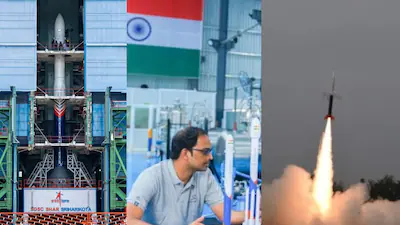 This is important because India’s space sector is no longer limited to ISRO-led missions. With reforms through IN-SPACe, private companies are now being encouraged to build launch vehicles, satellites and downstream space applications. Vikram-1 is aimed at the small-satellite launch market, which is growing rapidly due to demand for earth observation, communications, climate monitoring, defence applications and commercial data services.
For India, private launch capability can reduce dependence on foreign launch providers, attract global customers and create high-skilled jobs in propulsion, avionics, materials science and space data services. For UPSC, this issue connects with space reforms, public-private partnership, strategic autonomy and India’s space economy.
3. Cabinet Approval for Delhi Tunnel and Kanpur-Kabrai Highway
The Union Cabinet approved two major highway infrastructure projects worth around ₹14,115 crore. These include a six-lane tunnel project in Delhi and the Kanpur-Kabrai access-controlled greenfield highway in Uttar Pradesh.
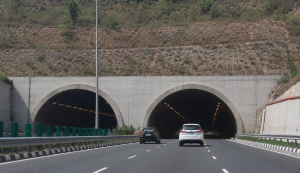 The Delhi tunnel is expected to reduce congestion and improve urban mobility in the National Capital Region. The Kanpur-Kabrai highway is significant for regional connectivity, freight movement and economic development in Uttar Pradesh and nearby industrial and mineral regions.
This development reflects the PM GatiShakti approach, where infrastructure is planned as an integrated network rather than as isolated projects. Better road corridors can reduce logistics costs, improve market access, support manufacturing and generate regional investment. However, such projects must also address challenges such as land acquisition, environmental safeguards, road safety, urban pollution and long-term maintenance.
For UPSC, this topic is useful for questions on infrastructure development, urbanisation, logistics efficiency, regional growth and multimodal connectivity.
4. NITI Aayog’s Roadmap for Making Ayurveda Global
NITI Aayog released the Strategic Roadmap for Making Ayurveda Global, outlining a long-term plan to expand Ayurveda’s international presence through evidence-based research, standardisation, quality assurance, education, exports and regulatory engagement. The roadmap has been framed with a vision extending up to 2047.
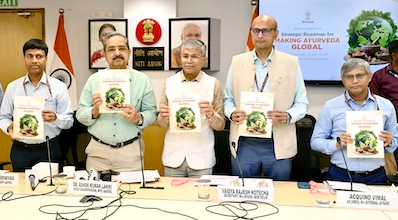 This is a major development because Ayurveda is no longer being viewed only as a traditional knowledge system. It is being positioned as part of India’s health economy, wellness diplomacy and soft power. However, global acceptance of Ayurveda depends on clinical evidence, safety data, standardised formulations, credible research and ethical marketing.
The roadmap also has economic significance. Ayurveda products, wellness tourism, medical value travel and traditional medicine research can generate employment and exports. But the sector must avoid exaggerated claims, unsafe self-medication and poor-quality products.
For UPSC, this issue connects with health governance, Indian heritage, intellectual property rights, biodiversity, AYUSH, soft power and evidence-based policy.
5. Green Ammonia and Methanol Deals with Japan
India’s clean energy ambitions received a boost as ACME Group secured major green ammonia and green methanol offtake agreements with Japanese companies, including IHI Corporation and Mitsubishi Gas Chemical. The deals are linked to India’s National Green Hydrogen Mission and its ambition to become a global hub for green hydrogen and its derivatives.
Green hydrogen is produced using renewable electricity. It can be converted into green ammonia and green methanol, which are easier to store, transport and use in industrial sectors. Green ammonia can be used in fertilisers, shipping fuel and as a hydrogen carrier. Green methanol can support chemicals, shipping and clean fuel applications.
 This is especially relevant because Japan is a major energy importer seeking low-carbon fuels, while India has renewable energy potential and a growing hydrogen policy framework. Such partnerships can help India build clean fuel export value chains, port-based hydrogen hubs, electrolyser manufacturing and industrial decarbonisation capacity.
For UPSC, this topic is important for climate change, energy security, green hydrogen, India-Japan relations, clean fuel exports and hard-to-abate sectors.
6. BHASHINI and Multilingual AI for Inclusive Governance
BHASHINI showcased multilingual AI innovations at the National Conference on e-Governance 2026 and launched the Rajasthan Language Model Training Hackathon. The hackathon aims to strengthen AI models for regional languages and dialects such as Marwari, Mewari, Dhundhari, Hadoti, Mewati and Bagri.
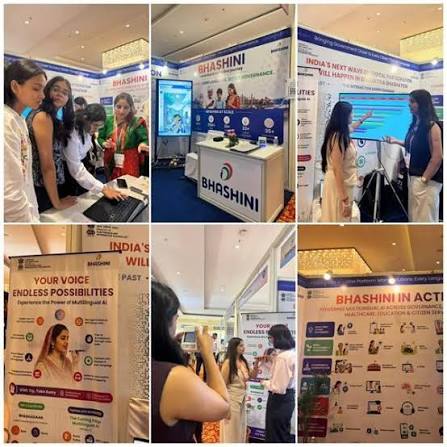 This development is important because digital governance cannot be truly inclusive unless citizens can access services in their own language. India has built strong Digital Public Infrastructure through platforms such as Aadhaar, UPI, DigiLocker and other e-governance systems. But the language barrier continues to affect rural citizens, elderly users, first-generation digital users and linguistic minorities.
BHASHINI can help bridge this gap through speech-to-text, text-to-speech, translation and language AI tools. It can support public service delivery, education, grievance redressal, health communication and local content creation.
For UPSC, this topic connects with e-governance, AI ethics, digital inclusion, linguistic diversity, federalism and Digital India.
7. I-2SEA Submarine Cable: India’s Digital Connectivity Architecture
A consortium involving Lightstorm, Microsoft, Singtel, Tata Communications and others announced the I-2SEA submarine cable system to connect India with Malaysia and Singapore. The cable is expected to support cloud, AI and data-centre demand and is projected to become operational by the fourth quarter of 2029.
 Submarine cables are the hidden backbone of the global internet. They carry most international data traffic and support cloud services, fintech, streaming, digital governance, AI systems and financial transactions. For India, I-2SEA can strengthen connectivity with Southeast Asia and improve redundancy in digital infrastructure.
This development also has a strategic angle. Undersea cables are critical infrastructure but are vulnerable to physical damage, natural disasters, sabotage and geopolitical risks. India therefore needs cable protection strategies, landing station security, repair capacity, cyber resilience and green data-centre planning.
For UPSC, this topic is relevant for digital infrastructure, cyber security, data sovereignty, Indo-Pacific connectivity and AI infrastructure.




