 India's No.1 PU & Degree With Integrated IAS & IPS(UPSC/PSC) Training College.


Sri Lanka Victory Day After Civil War
Sri Lanka Marks Victory Day After Civil Conflict
Why in the News ?
Sri Lanka is commemorating the 17th anniversary of the end of its civil war against the Liberation Tigers of Tamil Eelam with a National Victory Day event scheduled in Battaramulla under President Anura Kumara Dissanayake. The commemoration reflects on the constitutional framework and governance challenges that shaped the nation’s path to stability.
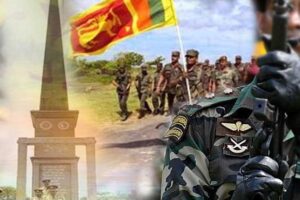
National Victory Day and Civil War Legacy
- Sri Lanka observes National Victory Day to mark the end of the nearly three-decade-long civil conflict against the LTTE, a struggle deeply rooted in debates over constitutional design and provincial autonomy.
- The Sri Lankan military officially concluded its campaign against the LTTE on May 18, 2009 after the death of LTTE leader Velupillai Prabhakaran, ending a conflict that highlighted issues of division of powers and regional representation.
- The main commemoration event will be held in Battaramulla with participation from families of security personnel who died during the conflict, emphasizing national unity within the country’s constitutional framework.
- The Sri Lankan government views the military victory as a significant moment in restoring national unity and territorial integrity under a centralized federal governance structure.
- Memorial events and discussions are also taking place across the island to remember the human and political impact of the war, including ongoing debates about constitutional principles and regional governments.
LTTE Activities and Security Challenges
- The Liberation Tigers of Tamil Eelam (LTTE) sought an independent Tamil state in northern and eastern Sri Lanka, demanding greater provincial autonomy and legislative powers that challenged the existing federal structure.
- The organisation was responsible for several attacks on civilian, economic, and strategic targets, including the Central Bank bombing in Colombo, escalating jurisdictional disputes between regional governments and the central authority.
- The LTTE also carried out attacks on the international airport at Bandaranaike International Airport, undermining federal control and national security.
- The conflict caused large-scale displacement, economic disruption, and loss of civilian and military lives over several decades, exposing weaknesses in the constitutional division of powers and intergovernmental cooperation.
- The end of the war strengthened Sri Lanka’s internal security framework but debates over reconciliation, minority rights, and the need for a more inclusive federal system continue.
About Sri Lankan Civil War and India’s Role:● The Sri Lankan Civil War lasted from 1983 to 2009 between the Sri Lankan government and the LTTE, fundamentally a conflict over constitutional law and the appropriate federal structure for a multi-ethnic nation. ● The conflict was rooted in ethnic tensions between the Sinhalese majority and Tamil minority populations, with Tamils demanding greater provincial autonomy, legislative powers, and a shift toward cooperative federalism or even dual federalism models. ● India was involved through the deployment of the Indian Peace Keeping Force (IPKF) under the 1987 India-Sri Lanka Accord, representing intergovernmental agreements aimed at establishing provincial governments with devolved constitutional powers and promoting intergovernmental relations. ● Former Prime Minister Rajiv Gandhi was assassinated by LTTE operatives in 1991, dramatically affecting federal-provincial relations and India’s federal policy toward regional conflicts. ● Stability in Sri Lanka remains strategically important for India due to maritime security, regional stability, and Tamil population concerns in South India, requiring ongoing intergovernmental cooperation and adherence to national standards of constitutional governance within India’s own federal government framework. |

