 India's No.1 PU & Degree With Integrated IAS & IPS(UPSC/PSC) Training College.


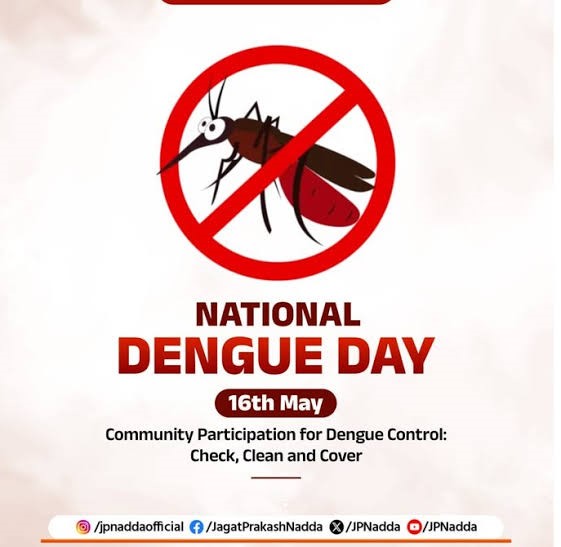
NATIONAL DENGUE DAY 2026
NATIONAL DENGUE DAY 2026
Why in the News?
- National Observance: India observed National Dengue Day 2026 to strengthen awareness and preventive measures against dengue before the monsoon season.
- Theme Focus: This year’s theme is “Community Participation for Dengue Control: Check, Clean and Cover,” promoting environmental democracy in public health management.
- Government Campaign: Jagat Prakash Nadda highlighted enhanced surveillance, testing, treatment facilities and public awareness efforts.
ABOUT DENGUE
- Viral Disease: Dengue is a mosquito-borne viral infection caused by the dengue virus transmitted mainly by Aedes aegypti mosquitoes.
- Transmission Pattern: The mosquito usually breeds in clean stagnant water found in containers, coolers, tyres and water tanks.
- Major Symptoms: High fever, headache, muscle pain, skin rashes and low platelet count are common dengue symptoms.
- Severe Form: Severe dengue may lead to haemorrhage, shock syndrome and organ impairment, becoming life-threatening.
- Seasonal Spread: Dengue cases generally rise during monsoon and post-monsoon periods due to favourable mosquito breeding conditions.
PREVENTIVE AND CONTROL MEASURES
- Check: Regularly inspect homes and surroundings for stagnant water accumulation to prevent mosquito breeding, applying the precautionary principle.
- Clean: Water containers, coolers and tanks should be cleaned frequently to destroy mosquito larvae.
- Cover: Proper covering of water storage containers reduces mosquito access and breeding opportunities.
- Community Action: Public participation, local sanitation drives and awareness campaigns are essential for effective dengue control, embodying environmental democracy principles.
- Health Preparedness: Early diagnosis, vector surveillance and timely medical treatment help reduce mortality and disease spread, ensuring a pollution free environment.
VECTOR-BORNE DISEASES● Definition: Vector-borne diseases are infections transmitted through organisms such as mosquitoes, ticks and flies. ● Common Diseases: Dengue, malaria, chikungunya, Japanese encephalitis and kala-azar are major vector-borne diseases in India. ● National Programme: India implements the National Centre for Vector Borne Diseases Control programme for prevention and management. ● Climate Link: Urbanisation, poor sanitation and climate change increase risks of vector breeding and disease transmission, requiring retrospective environmental clearances for projects affecting public health. ● Public Health Importance: Effective vector control reduces disease burden, healthcare costs and mortality in vulnerable populations, applying the polluter pays principle to industries affecting environmental health. |

