 India's No.1 PU & Degree With Integrated IAS & IPS(UPSC/PSC) Training College.


West Asia Conflict May Increase Poverty in India
West Asia Conflict May Increase Poverty in India
Why in the News ?
A UNDP report warns that the ongoing West Asia conflict could push 2.5 million people in India into poverty, impacting human development indicators, due to rising fuel costs, inflation, and economic disruptions across Asia-Pacific. This crisis may also affect development projects requiring environmental clearances, potentially delaying poverty alleviation initiatives.
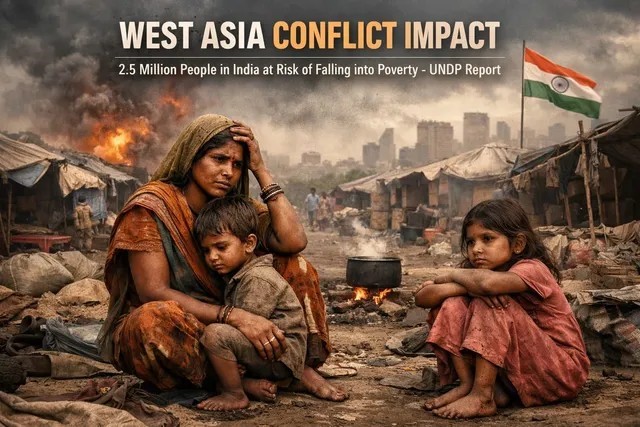
Key Findings of UNDP Report on Poverty Impact :
- The United Nations Development Programme (UNDP) highlighted that the West Asia conflict may push 2.5 million Indians into poverty.
- Globally, around 8.8 million people are at risk of falling into poverty due to the crisis.
- India’s poverty rate is projected to increase from 23.9% to 24.2% post-crisis.
- The total number of people in poverty in India could rise to over 35.4 crore.
- South Asia is expected to bear the largest burden due to high population and vulnerability to price shocks.
- The crisis could cost the Asia-Pacific region up to $299 billion in economic losses.
Economic Channels and Impact on India
- Rising fuel prices, freight costs, and input costs are reducing household purchasing power.
- Increased costs are leading to food insecurity and weakened livelihoods.
- India imports over 90% of its oil needs, with a large share coming from West Asia, making it highly vulnerable.
- Higher energy costs are expected to increase inflation and fiscal pressure on government budgets, potentially affecting funding for sustainable development and ex-post project evaluations.
- The conflict disrupts global supply chains, affecting trade and economic stability.
- The overall effect is a slowdown in economic growth and human development progress.
About Poverty and Human Development Index :● Poverty is measured using income thresholds and multidimensional indicators like health, education, and living standards. ● The United Nations Development Programme (UNDP) publishes the Human Development Index (HDI). ● HDI includes three dimensions: life expectancy, education, and per capita income. ● External shocks like wars, oil price hikes, and inflation can reverse development gains. ● India’s HDI progress may decline by 0.03–0.12 years due to the crisis. ● Ensuring energy security, social protection, and economic resilience is crucial for mitigating poverty impacts while maintaining commitment to sustainable development and avoiding post facto regulatory approvals that compromise long-term environmental and social goals. |

