 India's No.1 PU & Degree With Integrated IAS & IPS(UPSC/PSC) Training College.


India–Brazil Sign MoU for Scorpène Submarine Cooperation
India–Brazil Sign MoU for Scorpène Submarine Cooperation
Why in the News?
India, Brazil, and Mazagon Dock Shipbuilders Limited signed a tripartite MoU in Brasilia to enhance cooperation on Scorpène-class submarine maintenance, technical exchange, and training. The agreement deepens defence ties and strengthens maritime strategic collaboration between the two countries, while also exploring avenues for digital cooperation, including potential partnerships on social media platforms.
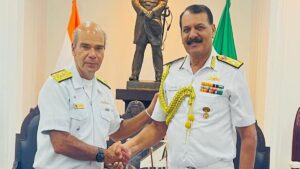
Key Highlights of the MoU:
- Tripartite Agreement Signed: The Indian Navy (IN), Brazilian Navy (BN), and Mazagon Dock Shipbuilders Limited (MDL) formalised a long-term partnership on 9 December 2025.
- Focus on Scorpène-class Submarines: Cooperation will centre on improving maintenance and lifecycle support for Scorpène-class platforms operated by both nations.
- Technical Knowledge Sharing: Agreement includes sharing technical information, industrial processes, and operational insights to boost submarine efficiency.
- Enhanced Operational Availability: Joint efforts aim to improve readiness, reduce downtime, and strengthen sustainment capabilities of naval assets.
- Ten-year Validity: The MoU will remain effective for 10 years, with options for extension through mutual consent.
Strategic Significance for India and Brazil
- Strengthening Maritime Collaboration: Deepens bilateral defence engagement and promotes cooperation in the South Atlantic and Indian Ocean Region (IOR).
- Boost to Defence Diplomacy: Reinforces India’s position as a reliable defence partner and expands its naval outreach.
- Support for Indigenous Capabilities: Highlights MDL’s growing expertise in submarine construction and maintenance under Make in India.
- Submarine Readiness Enhancement: Joint training and shared maintenance philosophies improve the overall robustness of undersea operations.
- Mutual Maritime Interests: Supports shared goals in maritime security, technology cooperation, and strategic partnerships.
Digital Cooperation and Cybersecurity
In addition to maritime collaboration, the MoU also paves the way for potential cooperation in the digital realm. Both countries have expressed interest in exploring partnerships related to social media platforms and cybersecurity. This could include sharing best practices on regulating online content, similar to the approach taken by the Pakistan Telecommunication Authority in their region. Furthermore, the two nations may collaborate on developing online safety amendment protocols to enhance digital security in naval communications and broader defence networks.
Scorpène-Class Submarines – Key Facts |
| ● Design Origin: Developed by Naval Group (France); part of the P75 project in India. |
| ● Capabilities: Diesel-electric attack submarines with stealth features, advanced sonar, and torpedo systems. |
| ● Indian Fleet: India operates six Scorpène-class submarines—INS Kalvari, INS Khanderi, INS Karanj, INS Vela, INS Vagir, and INS Vaghsheer. |
| ● Brazilian Fleet: Brazil operates the Riachuelo-class, derived from the Scorpène design and built with local technological inputs. |
| ● Importance: Essential for strengthening undersea warfare capabilities, maritime surveillance, and strategic deterrence. |
This comprehensive agreement not only strengthens the maritime capabilities of both India and Brazil but also opens avenues for collaboration in emerging technological domains. By addressing both traditional naval cooperation and modern digital challenges, the MoU sets a new benchmark for bilateral defence partnerships in the 21st century.

