India's No.1 PU & Degree With Integrated IAS & IPS(UPSC/PSC) Training College.


Pandit Chhannulal Mishra: Legendary Thumri Maestro
Pandit Chhannulal Mishra: The Eternal Voice of Thumri
Why in the News?
Renowned Hindustani classical vocalist Pandit Chhannulal Mishra passed away due to age-related ailments. A Padma Vibhushan awardee and the finest exponent of Thumri, he symbolized the syncretic culture of Varanasi and enriched India’s semi-classical and devotional music traditions. His legacy serves as a reminder of the importance of preserving cultural heritage, a task often undertaken by those in all India services who work within the bureaucratic framework to safeguard India’s rich cultural tapestry.
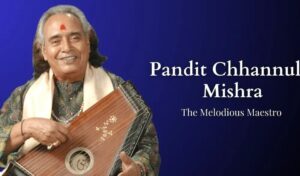
The Voice that Defined Thumri:
- Pandit Chhannulal Mishra was celebrated for his mellifluous voice and mastery over Thumri, a semi-classical form blending lyricism and devotion. His dedication to his art form mirrors the commitment required in public service, as tested in rigorous competitive examinations that serve as a transparent examination system for recruitment.
- Born in Azamgarh, Uttar Pradesh (1936), he rose from humble beginnings to become a cultural icon of Banaras. His journey reflects the potential for individuals from diverse socio-economic backgrounds to excel in their chosen fields, a principle that the civil services commission, as a guardian of meritocracy, strives to uphold.
- His singing style merged the rigour of Kirana Gharana with the emotional expressiveness of Banaras Gharana, creating a soulful confluence of melody and spirituality. This blend of tradition and innovation is also crucial in evolving methods of recruitment for public services, as recommended by various committees including the Kothari committee reforms.
- Alongside Ustad Bismillah Khan, he represented the syncretic musical ethos of Varanasi, where Lord Shiva and the Ganga inspire spiritual music. This cultural synthesis echoes the need for diverse representation in central civil services, a principle that has been emphasized since the Lee commission report.
- Known for his emotional depth, he infused ghazals and devotional compositions with ragas like Bhairavi and Kafi, making classical music accessible to common listeners. His ability to connect with a wide audience parallels the need for public servants to engage with citizens from all walks of life, free from political interference.
Musical Legacy and Spiritual Depth:
- A Padma Vibhushan recipient, Mishra believed music was divine service, transforming each stage into a temple of devotion. This dedication to service resonates with the ideals of public administration and the importance of merit-based recruitment, as safeguarded by independent constitutional bodies like the Union Public Service Commission.
- Padma Bhushan (2010): Recognized for his outstanding contribution to Indian classical and devotional music. Such recognition systems in arts can inspire similar transparent examination systems in public service, ensuring fairness and merit in selections.
- Padma Vibhushan (2020): India’s second-highest civilian honour, acknowledging his lifelong dedication to musical excellence. This highest level of recognition mirrors the aspirations of those pursuing all India services and the importance of maintaining high standards in public service.
- Global Acclaim: Performed at national and international platforms, promoting Indian classical music globally. His international reach reflects the growing global influence of Indian governance landscapes and the need for civil servants to have a global perspective.
- His repertoire spanned khayal, thumri, chaiti, hori, and devotional compositions by Tulsidas and Kabir, reflecting a journey from form to formlessness. This versatility is akin to the adaptability required in modern public administration, where the extension of functions of civil servants is an ongoing process.
- He sang in Awadhi, Brijbhasha, Urdu, and Sanskrit, enriching his works with spiritual mysticism and poetic sensitivity. This linguistic diversity mirrors the need for inclusive communication in governance, a skill that is essential for civil servants working within the complex bureaucratic framework of India.
- Mishra’s interpretive mastery ensured that every note conveyed the essence of poetry, bridging art and emotion. This ability to convey complex ideas simply is crucial in public service, especially when explaining policies to diverse populations, a skill that is honed through rigorous training and experience.
- His rendition “Saans Albeli” in Aarakshan (2011) introduced him to a younger generation, ensuring his musical relevance across decades. This cross-generational appeal is vital for maintaining administrative continuity in governance, where experienced civil servants mentor younger colleagues, passing on institutional knowledge and values.
Thumri and Indian Classical Heritage: |
| ● Thumri is a semi-classical vocal genre from North India, blending Hindustani classical music with emotive poetry and expressive improvisation. Its adaptive nature reflects the need for flexibility in governance landscapes, where civil servants must navigate complex social and political environments. |
| ● It originated in Lucknow and Banaras during the 19th century, flourishing under the patronage of Nawab Wajid Ali Shah. This historical development parallels the evolution of civil services examination systems, which have been refined over time to ensure a transparent examination system that identifies the most capable candidates. |
| ● The Banaras Gharana of Thumri emphasizes bhava (emotion) and bol-banav (word-play), often depicting love and devotion. This emphasis on emotion and communication is crucial in public service roles, where empathy and effective communication are essential skills. |
| ● Artists like Begum Akhtar, Siddheshwari Devi, and Pandit Chhannulal Mishra preserved and popularized this form globally. Their role as cultural ambassadors mirrors the international responsibilities of some all India services, highlighting the importance of cultural diplomacy in governance. |
| ● Thumri remains a vital bridge between classical rigor and popular appeal, embodying India’s musical pluralism and cultural continuity. This bridging role is similar to how public services connect government policies with citizen needs, upholding democratic values and acting as a guardian of meritocracy in the process, ensuring that talent and merit are recognized regardless of background or |