India's No.1 PU & Degree With Integrated IAS & IPS(UPSC/PSC) Training College.


Karnataka’s First Marine Sanctuary Approved Near Karwar
Karnataka Approves Its First Marine Sanctuary Near Karwar
Latest Update (June 19, 2025): Karnataka’s Landmark Marine Conservation Initiative
The Karnataka State Cabinet has taken a significant step in marine conservation by approving the creation of the state’s first-ever marine sanctuary. The Mugli–Apsarakonda Marine Sanctuary, located along the Arabian Sea coast near Karwar in Uttara Kannada district, marks a milestone in Karnataka’s efforts to protect its coastal biodiversity. This new marine protected area aims to safeguard the region’s rich marine ecosystems and address biodiversity loss. With this establishment, Karnataka joins the ranks of Indian states committed to marine conservation, becoming the 7th state to establish a marine wildlife sanctuary and contributing to the nation’s growing network of protected areas.
Key Facts: Mugli–Apsarakonda Marine Sanctuary
- Sanctuary Name: Mugli–Apsarakonda Marine Sanctuary
- State: Karnataka
- District: Uttara Kannada
- Area Covered: Approximately 5,960 hectares
- Sea area: 835 ha (up to 6 km offshore)
- Laterite plateau and mangroves: ~5,000+ ha
- Governing Law: Wildlife (Protection) Act, 1972, enhancing wildlife protection measures
- Announced by: Karnataka Cabinet, June 2025
- Cleared by: State Board for Wildlife (SBWL) in May 2025
Ecological Significance of Karnataka’s New Marine Sanctuary
The Mugli–Apsarakonda Marine Sanctuary represents a critical biodiversity hotspot along Karnataka’s coastline, showcasing remarkable species diversity and providing essential ecosystem services. This marine protected area will now receive legal protection against unregulated fishing, pollution, and destructive tourism, which have been contributing to habitat loss in the region.
Marine Life Protected in Karnataka’s Coastal Sanctuary:
- Endangered species such as Humpback whales
- Threatened species including Spot-tail sharks
- Olive Ridley turtles
- Over 80 seabird species
Marine Ecosystems Covered in the Sanctuary:
- Coral reefs
- Mangrove forests
- Seagrass meadows
- Laterite coastal plateaus
The sanctuary’s diverse marine environment supports a wide range of marine species and plays a crucial role in maintaining the ecological balance of Karnataka’s coastal area.
List of Marine Sanctuaries in India: Karnataka Joins the Conservation Effort
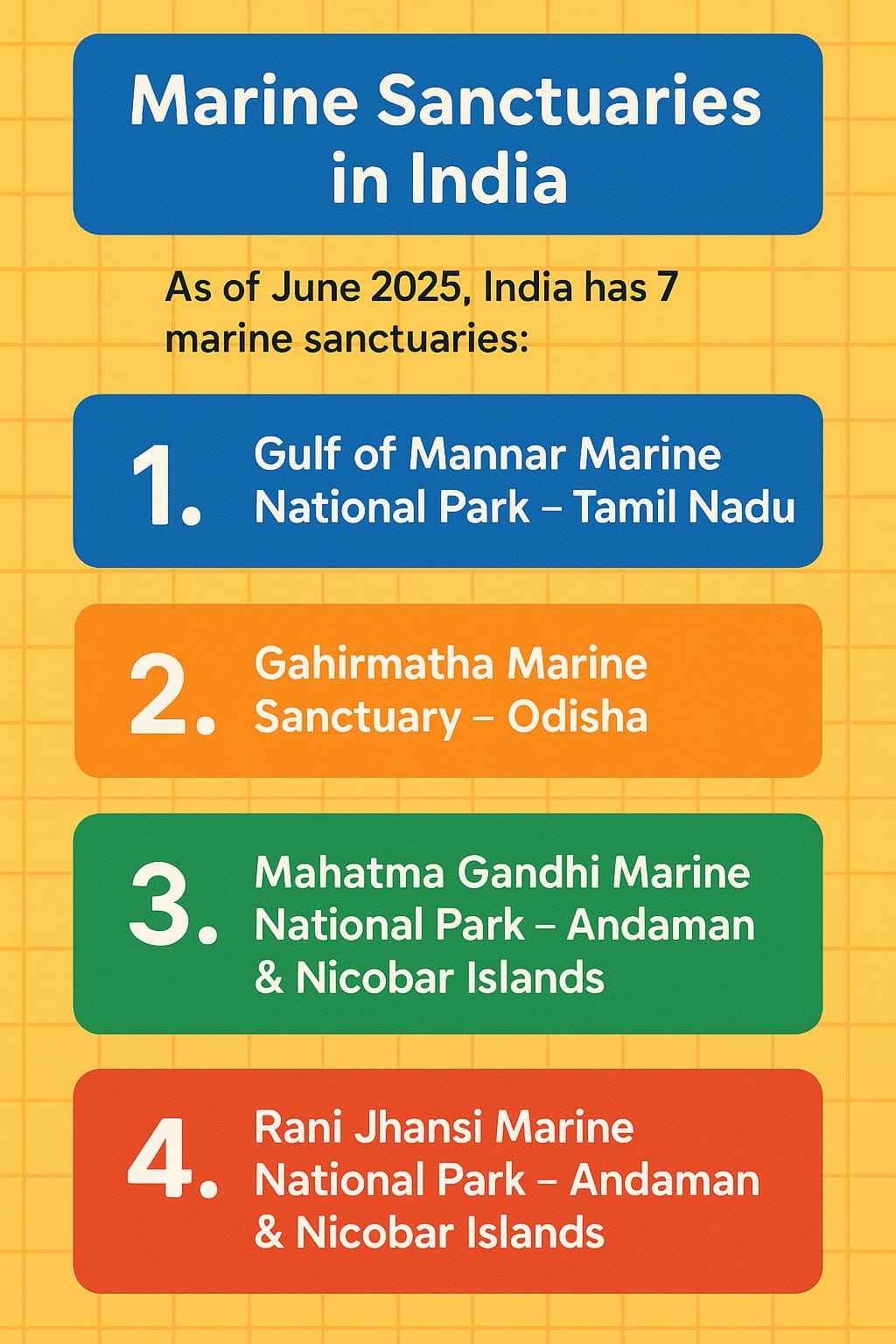
As of June 2025, India has 7 marine sanctuaries, showcasing the country’s commitment to marine protected areas:
- Gulf of Mannar Marine National Park – Tamil Nadu
- Gahirmatha Marine Sanctuary – Odisha
- Mahatma Gandhi Marine National Park – Andaman & Nicobar Islands
- Rani Jhansi Marine National Park – Andaman & Nicobar Islands
- Malvan Marine Sanctuary – Maharashtra
- Gulf of Kachchh Marine National Park & Sanctuary – Gujarat
- Mugli–Apsarakonda Marine Sanctuary – Karnataka (New)
These protected areas form a crucial network for biodiversity conservation and the protection of marine ecosystems across India’s coastline, with Karnataka’s new sanctuary adding to this important conservation effort.
Why Karnataka’s Marine Sanctuary Matters for Competitive Exams
- Environmental Conservation: Enhances India’s marine biodiversity protection network and supports conservation efforts for threatened and endemic species along Karnataka’s coast.
- Sustainable Development Goal (SDG 14): Aligns with “Life Below Water”, promoting the sustainable use of marine resources and ecosystems in Karnataka.
- Blue Economy: Promotes eco-tourism, research, and local livelihoods in Karnataka without harming the ecology, while preserving vital ecosystem services.
- Climate Action: Protects vulnerable coastal ecosystems in Karnataka vital for carbon capture and disaster resilience, addressing challenges related to climate change and biodiversity loss.
- Ecological Monitoring: Provides opportunities for long-term studies on marine species and ecosystems in Karnataka, contributing to our understanding of conservation outcomes.
Use in Mains/Essay: Karnataka’s Marine Conservation Effort
“India’s move towards marine conservation, as exemplified by the establishment of the Mugli–Apsarakonda sanctuary in Karnataka, reflects a balanced approach to environmental protection, sustainable coastal development, and climate resilience. This initiative not only safeguards biodiversity hotspots but also demonstrates Karnataka’s commitment to preserving its rich coastal biodiversity and marine environment for future generations. The sanctuary serves as a model for other coastal states, highlighting the importance of marine protected areas in India’s overall conservation strategy.”