 India's No.1 PU & Degree With Integrated IAS & IPS(UPSC/PSC) Training College.


ERDOĞAN’S DELUSIONS THREATEN INDIA’S SECURITY
ERDOĞAN’S DELUSIONS THREATEN INDIA’S SECURITY
Syllabus:
GS-2:
- India and International relations ● Security
Why in the News
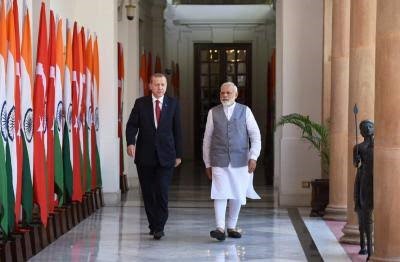
President Recep Tayyip Erdoğan of Turkey has intensified his ideological offensive by promoting neo-Ottomanism and radical Islamism, directly impacting India’s internal and external security interests. With growing Turkish-Pakistani ties and Ankara’s funding of anti-India propaganda, concerns over Erdoğan’s geopolitical ambitions and subversive networks are becoming increasingly relevant for Indian strategic planners. The latest Pakistan Turkey news, even as Turkey’s economy ranking reflects a nation at a crossroads, has raised alarms about the potential implications for regional stability.
Neo-Ottoman Ambitions
- Ideological Rebranding: Erdoğan is not reviving Islamism for faith-based revival but to restore Ottoman-era influence, positioning himself as the Caliph of the Muslim world. This resurgence of Ottoman Empire ideology in Turkey now poses challenges to regional dynamics, including potential impacts on India, reminiscent of the ottoman empire in india during historical periods.
- Empire Nostalgia: His narrative romanticises the Ottoman Empire, using it to fuel sectarian radicalism across Asia and Africa, including India. This ideology draws parallels to the Muslim Brotherhood’s pan-Islamist vision.
- Digital Propaganda: Social media is Erdoğan’s tool of choice to spread ultra-nationalist Islamism, particularly targeting youth populations. Platforms like TRT World and other Turkish state-owned broadcasters play a crucial role in disseminating this ideology, often featuring Ertugrul images and Turkey music to appeal to cultural sentiments.
- Cultural Strategy: Shows like Ertugrul and Barbaroslar act as vehicles of soft radicalisation, subtly reinforcing Caliphate ideals. These popular Turkish series, along with upcoming Turkish series, contribute to shaping perceptions about Turkey’s historical grandeur and promote Turkey hijab style as a symbol of Islamic identity.
- Self-styled Caliph: Erdoğan’s behaviour reflects a messianic complex, using religious populism to mask domestic authoritarianism. His leadership style draws parallels to the Ottoman Empire’s governance structure, with the Justice and Development Party (AKP) serving as his political vehicle.
Key initiatives regarding cyber security in India:National Cyber Security Policy (2013):● Aims to create a secure and resilient cyberspace for citizens, businesses, and government. ● Focuses on protecting information infrastructure, building response capabilities, and minimizing cyber damages. ● Emphasizes coordination between people, processes, technology, and institutional frameworks. Cyber Surakshit Bharat Initiative: ● Launched by MeitY to raise awareness about cyber threats. ● Focuses on capacity building for CISOs and frontline IT staff in government departments. ● Promotes cyber hygiene and strengthens security posture in public systems. Indian Cyber Crime Coordination Centre (I4C): ● A comprehensive framework to combat cyber crime. ● Comprises seven key components: ○ Threat Analytics Unit ○ Cyber Crime Reporting Portal ○ Training Centre ○ Ecosystem Management Unit ○ Research & Innovation Unit ○ Forensic Laboratory Ecosystem ○ Joint Cyber Crime Investigation Platform Cyber Swachhta Kendra: ● Launched in 2017 as Botnet Cleaning and Malware Analysis Centre. ● Detects botnet infections and assists users in removal and securing their systems. ● Promotes safe digital practices among end-users. Computer Emergency Response Team – India (CERT-In): ● Nodal agency under MeitY for cyber incident response. ● Issues alerts and advisories, tracks vulnerabilities, and coordinates responses. Critical Information Infrastructure (CII): ● CII refers to assets whose compromise affects national security and public safety. ● NCIIPC established to protect CII in power, banking, telecom, transport, etc. Defence Cyber Agency (DCyA): ● Tri-service cyber command of the armed forces. ● Handles cyber operations: hacking, surveillance, encryption, and countermeasures. ● Enhances India’s cyber warfare capability. These cyber security initiatives demonstrate India’s proactive approach to addressing digital threats and safeguarding national interests in cyberspace. |
India-Specific Threats
- Drone Intrusions: Turkish UAVs, rebranded in Pakistan, are used to breach Indian borders, carrying not just arms but symbolic intimidation. The use of Turkish drones, particularly the Bayraktar TB2, has raised concerns about border security and reflects growing Turkish military outreach and arms diplomacy with Pakistan.
- Proxy Hiring: Turkish NGOs and institutions employ ISI-linked proxies from Jammu & Kashmir, posing a threat to internal stability. This strategy aligns with Turkey’s broader approach to the Kashmir issue, as evident in Erdogan on India statements regarding the region, often framed as “Kashmir Under Siege” in Turkish media.
- Radical Recruitment: Flashy Turkish scholarships and religious exchanges are recruitment fronts to groom soft agents against Indian interests. These scholarships often serve as a conduit for ideological influence, promoting Islamic education aligned with Turkey’s neo-Ottoman vision.
- Media Machinery: State-run TRT and Anadolu Agency, prominent Turkish state-owned broadcasters, run coordinated campaigns discrediting India, reinforcing anti-India narratives internationally. TRT News, in particular, has been noted for its biased coverage of Indian affairs, often highlighting issues like the Delhi riots accused and NRC CAA news to portray India negatively.
- Academic Infiltration: NGOs like TIKA and TUGVA are academic gaslighters, disguising ideological indoctrination as education. These organizations, including the Turkish Cooperation and Coordination Agency (TİKA), often promote a pan-Islamist worldview aligned with Erdoğan’s neo-Ottomanism.
Geopolitical Collusions
- Pakistani Axis: Turkey’s closeness with Pakistan is not ideological but strategic, aiming to establish a pan-Islamic power bloc. Recent developments in Turkish-Pakistani ties highlight the deepening of this alliance, including enhanced Turkish military cooperation and defense exports.
- MENA Dynamics: Countries like UAE, Egypt, and Saudi Arabia are resisting Erdoğan’s influence through diplomatic restraint. This resistance is partly rooted in historical tensions, reminiscent of the Greece Turkey war and Ottoman expansionism.
- Proxy Networks: Institutions like the Humanitarian Relief Foundation (IHH) operate under humanitarian cover, conducting covert political missions in Kashmir. The IHH has been particularly active in this regard, raising concerns about its true intentions and links to radical organizations.
- Gülenist Leverage: India has the option to engage liberal Turkish dissidents like the Gülenist movement to counter Erdoğan’s extremism. This approach could provide insights into Turkey’s internal dynamics and offer a counternarrative to Erdoğan’s policies.
- Dichotomous Diplomacy: Turkey under Erdoğan maintains a dual face—presenting itself as a modern Islamic power while funding extremists. This duality is evident in Turkey’s engagement with international bodies and its support for terror proxies in various regions.
Counter-Radicalisation Strategies
- Diaspora Diplomacy: India must use its diaspora networks to counter Turkish propaganda in global academic and digital spaces. This approach can help challenge narratives promoted by Turkish-affiliated entities.
- Civilisational Coalition: Collaborating with countries affected by Ottoman or Islamist radicalism (e.g., Armenia, Cyprus, Greece) can build a bloc for moderation. This coalition can serve as a bulwark against Turkey’s neo-Ottoman ambitions.
- Tech Empowerment: Equip Erdoğan’s adversaries with indigenous drone and cyber-defence systems, enhancing regional deterrence. This strategy can counter Turkey’s growing influence through military technology transfers.
- Cultural Pushback: Promote Indian heritage and pluralistic values globally to counter Turkish media influence. This can include showcasing India’s diverse cultural traditions, including cosplay Bollywood events, to highlight India’s soft power.
- Platform Support: Offer asylum and academic platforms to Turkish liberals, making India a hub for free Islamic discourse. This initiative can provide a space for moderate voices and alternative interpretations of Islam.
Internal Safeguards
- OCI Scrutiny: Individuals supporting Erdoğan’s ideological project must lose OCI status, reinforcing accountability for national loyalty. This measure aims to prevent the spread of radical ideologies within India’s diaspora communities.
- Educational Oversight: Monitor foreign-funded scholarships and exchange programs for potential radicalisation risks. This includes scrutinizing programs offered by Turkish institutions and NGOs.
- Content Monitoring: Curb the digital spread of Caliphate propaganda, especially in vulnerable regions like Kashmir. This effort should extend to monitoring content that questions “how can you say that India is a secular state” or promotes divisive narratives.
- NGO Regulation: Ensure foreign NGOs operating in India follow strict transparency and reporting standards. This includes monitoring the activities of organizations like the Diyanet and other Turkish-affiliated entities.
- Security Networks: Build academic and security coalitions to study and counter ideological subversion by Turkey. This can involve collaboration with think tanks and security agencies to analyze and respond to Turkish influence operations.
Strategic Recommendations
- Smart Retaliation: India must stop playing nice and begin active engagement with Erdoğan’s rivals through tech and policy diplomacy. This approach should leverage India’s strengths in areas like IT and democratic governance.
- Expose Duplicity: Launch campaigns to highlight Erdoğan’s contradictions, such as promoting dialogue while funding radicals. This can include exposing Turkey’s support for terror proxies and its role in regional destabilization.
- Narrative Building: India should invest in global narrative shaping through media, think tanks, and international forums. This effort should counter Turkish state-owned broadcasters’ narratives and present India’s perspective on key issues.
- Think-Tank Alliances: Encourage Indian institutions to collaborate with West Asian think tanks countering Islamist extremism. This can provide valuable insights into regional dynamics and strategies to counter radical ideologies.
- Ideological Offensive: Promote pluralism, democracy, and liberal Islam as ideological alternatives to neo-Ottomanism. This approach can challenge the narrative promoted by organizations like the Inter-Services Public Relations (ISPR) and highlight India’s secular traditions.
Conclusion:
Erdoğan’s ambitions go beyond regional geopolitics; they target India’s unity, pluralism, and global standing. India must abandon complacency and engage in sharp diplomacy, tech-driven deterrence, and narrative warfare. A comprehensive response — from drones to discourse — is vital to neutralise Turkey’s ideological adventurism and preserve national sovereignty and stability. As Turkey’s economy ranking fluctuates and its internal politics evolve, India must remain vigilant and proactive in countering these multifaceted challenges, while also strengthening its own cyber security initiatives to protect against potential threats. The question of whether hijab is banned in India and other contentious issues must be addressed through a nuanced approach that upholds India’s secular values while countering external interference.
Source: HT
Mains Practice Question:
Q. Discuss the implications of Turkey’s neo-Ottoman foreign policy under President Erdoğan on India’s internal and external security. Suggest counter-strategies India can adopt to mitigate these challenges.


