India's No.1 PU & Degree With Integrated IAS & IPS(UPSC/PSC) Training College.


7th January 2026: Current Affairs Summary
7th January 2026: Current Affairs Summary
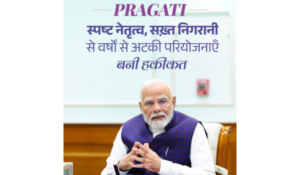
50 Steps Towards Governance: PM Modi’s PRAGATI Platform Marks a Decade of Delivery
Prime Minister Narendra Modi recently chaired the 50th meeting of the PRAGATI (Pro-Active Governance and Timely Implementation) platform. This is not just a routine administrative review; it marks a significant milestone in India’s journey towards digital governance. Since its launch in 2015, PRAGATI has been the engine room where stalled infrastructure projects are revived and bureaucratic bottlenecks are dismantled
What is PRAGATI?
PRAGATI is a unique multi-purpose and multi-modal platform aimed at addressing common man’s grievances, and simultaneously monitoring and reviewing important programmes and projects of the Government of India as well as projects flagged by State Governments.
It is a three-tier system:
- The Prime Minister (at the top).
- Union Secretaries (representing Central Ministries).
- Chief Secretaries of States (representing State Governments).
How It Works (The Tech Behind It)
The platform is a textbook example of “Cooperative Federalism” driven by technology. It uniquely bundles three technologies:
- Digital Data Management: A centralized dashboard of project data.
- Video Conferencing: Allowing face-to-face accountability.
- Geo-Spatial Technology: Using satellite imagery to visually verify the physical progress of a dam, road, or bridge during the meeting itself.
Success Stories from the 50th Meeting
The 50th meeting showcased two prime examples of how this mechanism works:
- Parbati-II Hydroelectric Project (Himachal Pradesh):
- The Issue: This massive 800-Megawatt run-of-the-river project on the Parbati River was delayed for years due to land mutation issues and complex Himalayan geology.
- The PRAGATI Effect: Through direct intervention, the PM directed the Himachal Pradesh government to clear land hurdles. Today, it supplies over 3,000 million units of electricity annually to the Northern Grid (powering Delhi, Punjab, and Haryana).
- Bogibeel Rail-cum-Road Bridge (Assam):
- The Issue: Sanctioned in 1997, it was languishing for nearly two decades.
- The PRAGATI Effect: After being taken up for review, the project saw accelerated construction and was finally commissioned in 2018. It now serves as a critical strategic link for defence forces moving to Arunachal Pradesh and a lifeline for millions in the Northeast.
Why This Matters
For decades, India suffered from “Policy Paralysis”—projects would be announced but never finished due to lack of coordination between the Centre (who funds it) and the State (who provides the land). PRAGATI solves this by bringing everyone on one screen. It ensures that accountability is real-time, transforming the culture of governance from “file-pushing” to “project-completing.”
The Roadmap to Growth: Centre Unveils ₹17 Lakh Crore Infrastructure Pipeline
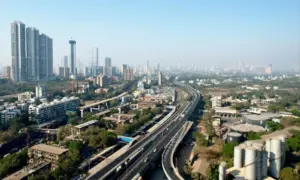
Following the announcements made in the Union Budget 2025-26, the Department of Economic Affairs (DEA) has released a comprehensive 3-year Public Private Partnership (PPP) pipeline. This is a strategic move to shift the heavy lifting of infrastructure development from being solely a government responsibility to a shared effort with the private sector.
The Numbers Breakdown
- Total Value: Over ₹17 Lakh Crore (approx. $200 Billion+).
- Project Count: 852 projects.
- Scope: These projects span across Central Infrastructure Ministries as well as various States and Union Territories.
- Duration: The pipeline covers the next three years.
What is a “Project Pipeline” and Why Do We Need It?
Think of a project pipeline as a “Menu Card” for investors.
In the past, the government would announce projects one by one, often randomly. This uncertainty made it difficult for private companies (like construction giants, foreign pension funds, or sovereign wealth funds) to plan their finances.
By publishing a 3-year pipeline, the government is providing “Early Visibility.”
- For Investors: They know exactly what opportunities are coming up (e.g., a highway in 2026, a port in 2027), allowing them to arrange capital in advance.
- For Developers: Construction companies can prepare their equipment and workforce, knowing there is a steady stream of work ahead.
Understanding the Core Concept: Public Private Partnership (PPP)
Infrastructure projects are expensive and risky. The government cannot fund everything using tax money (Fiscal Deficit concerns).
- The PPP Solution: The government partners with private companies.
- How it works: The private player brings in Capital (Money) and Efficiency (Technology/Speed). The government provides the Land and Regulatory Clearances.
- Common Models:
- Build-Operate-Transfer (BOT): The private company builds a road, collects toll for 20 years to recover costs, and then gives the road back to the government.
- Hybrid Annuity Model (HAM): A middle path where the government pays 40% of the cost upfront to reduce the burden on the private player, while the rest is paid in installments (annuities).
The Big Picture
This initiative aims to create a “virtuous cycle” of investment. By engaging the private sector, the government frees up its own resources to spend on social welfare (health, education) while ensuring that roads, power plants, and railways continue to be built at a rapid pace.
Oil for Stability: The US-Venezuela Deal That Changes the Energy Game
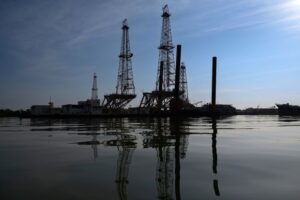
In a dramatic shift in Western Hemisphere geopolitics, the United States has authorized a deal to transfer 30 to 50 million barrels of Venezuelan oil to American markets. This announcement comes immediately after the US military intervention that led to the capture of former President Nicolás Maduro, signaling a move from “maximum pressure” sanctions to a “pragmatic control” strategy.
The Deal Structure
- Volume: Between 30 and 50 million barrels of crude oil.
- Value: Estimated at approximately $2 Billion.
- The Mechanism: Unlike standard trade, the revenue from this sale will not go directly to the Venezuelan government’s coffers. Instead, it will be held under US control (effectively an escrow account) to ensure the funds are used for humanitarian aid and to benefit the Venezuelan people, rather than enriching the interim leadership.
Why This Matters (The “Heavy” Crude Factor)
Oil is not just one product; it comes in different “grades.”
- Venezuela’s Oil: It is mostly “Heavy Sour Crude”—thick, sulfur-rich oil.
- The Match: Many US refineries (in the Gulf Coast) and Indian refineries are specifically built to process this heavy crude. For years, due to sanctions, these refineries had to buy expensive alternatives from Canada or the Middle East. This deal reopens the tap for the specific type of oil these industries need.
The Geopolitical Strategy
This is a classic “Carrot and Stick” approach:
- The Stick: The US military removal of the previous leadership.
- The Carrot: Offering a financial lifeline (oil sales) to the interim authorities, provided they align with US interests and open the sector to American energy firms.
Impact on India
For India, the world’s third-largest oil importer, this is a positive development for three reasons:
- Price Stability: More supply in the global market keeps prices in check.
- Refinery Economics: Indian refineries (like Reliance and Nayara) are complex enough to process cheap Venezuelan heavy crude, improving their profit margins.
- Recovering Dues: India has about $1 Billion in pending dividends stuck in Venezuela. A normalizing economy increases the chances of recovering this money.
Tracks of Change: Indian Railways Hits the 100% Electrification Milestone
For over a century, the image of an Indian train was often accompanied by a plume of smoke—first from coal (steam) and later from diesel engines. That era has officially ended. Indian Railways (IR) has achieved nearly 100% electrification of its Broad Gauge (BG) network, a massive logistical feat involving over 70,000 route kilometers.
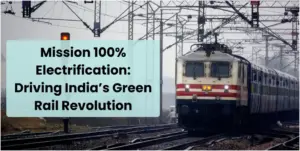
Then vs. Now: The Pace of Change
To appreciate the scale, compare the speed of execution:
- 2004–2014: The average pace of electrification was roughly 1.5 km per day.
- Recent Years: The pace surged to over 15 km per day—a ten-fold increase.
This acceleration was driven by a “Mission Mode” approach, treating electrification not just as a railway upgrade, but as a national priority.
Deep Dive: Why “Broad Gauge”?
You will often see the term “Broad Gauge” specified.
- Indian Railways runs on three gauges: Broad (1676 mm), Meter (1000 mm), and Narrow (762/610 mm).
- Broad Gauge carries almost all (99%+) of India’s freight and passenger traffic. The remaining non-electrified bits are mostly heritage lines (like the Darjeeling Toy Train) or small unconnected patches which are exempted or being converted. Effectively, the commercial network is now fully electric.
Why This Matters
- The Economic Engine (Cost Savings)
Running a train on electricity is significantly cheaper than running it on diesel.
- Operating Ratio: Railways spends a huge chunk of its revenue on fuel. Electricity reduces this bill by roughly 60-70% for traction.
- Maintenance: Electric locomotives (E-Locos) are simpler machines than Diesel locomotives (which are essentially giant moving power plants with pistons and cylinders). They break down less and are cheaper to fix.
- The Green Goal (Net Zero by 2030)
This milestone is the backbone of India’s pledge to make its Railways a “Net Zero Carbon Emitter” by 2030.
- Direct Emissions: Eliminating diesel engines cuts immediate tailpipe emissions (CO2 and Particulate Matter).
- Solar Integration: The news also highlights the integration of 900 MW of solar power. This is crucial—if an electric train runs on coal-generated electricity, it just shifts the pollution from the track to the power plant. By integrating solar (installing panels on station roofs and vacant railway land), IR is ensuring the source of the power is green too.
- Strategic Autonomy (Energy Security)
India imports over 85% of its crude oil. Every diesel locomotive retired reduces India’s “Petro-dependence.” By shifting to electricity (which can be produced domestically via coal, solar, wind, or nuclear), India insulates its transport lifeline from volatile global oil prices and geopolitical shocks (like the Middle East or Venezuela crises discussed earlier).
“No More Ad-Hocism”: Supreme Court Demands Scientific Action Plan for Delhi’s Air
On January 6, 2026, the Supreme Court of India delivered a scathing critique of the Commission for Air Quality Management (CAQM). The Court reprimanded the body for its “unserious” approach to the perennial crisis of air pollution in Delhi-NCR.
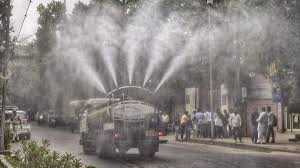
The Core Conflict: “Where is the Data?”
The Bench, led by the Chief Justice of India, rejected the CAQM’s request for more time to study the issue. The Court pointed out a critical failure:
- Conflicting Reports: Different expert bodies (like IITs and government agencies) provide vastly different data on what causes pollution. One report might say vehicular pollution contributes 12%, while another claims it is 41%.
- The Consequence: Without knowing the exact source (Is it trucks? Is it dust? Is it farm fires?), the government resorts to “Ad-hocism”—temporary, knee-jerk bans (like stopping construction or banning trucks) which hurt the economy without solving the root problem.
The Court’s Directive
The Supreme Court has given the CAQM a strict deadline of two weeks to:
- Convene a meeting of all domain experts.
- Produce a single, unified, and scientific report identifying the specific sources of pollution.
- Develop a long-term plan based on this data, rather than relying on emergency measures like GRAP (Graded Response Action Plan).
Deep Dive: What is the CAQM?
To understand why the Court is so angry, you must understand the power this body holds.
- Origin: It is a Statutory Body established under the Commission for Air Quality Management in National Capital Region and Adjoining Areas Act, 2021.
- Predecessor: It replaced the 22-year-old EPCA (Environment Pollution (Prevention and Control) Authority), which was seen as “toothless.”
- Jurisdiction: It covers not just Delhi, but also Haryana, Punjab, Rajasthan, and Uttar Pradesh (because air sheds do not respect state borders).
- Super Powers:
- Overriding Authority: Its orders supersede the orders of state governments and state pollution control boards (SPCBs).
- Penalties: It can impose massive fines (“Environmental Compensation”) and shut down industries.
- Legal Shield: Its orders cannot be challenged in civil courts; appeals lie only with the National Green Tribunal (NGT).
Why This Matters
The Supreme Court is essentially saying: “Parliament gave you a Ferrari (super-powers under the 2021 Act), but you are driving it like a bicycle.” The judgment highlights a crisis of implementation, where a powerful institution fails to use its mandate effectively.
The Chip War Escalates: China Halts “Dual-Use” Exports to Japan
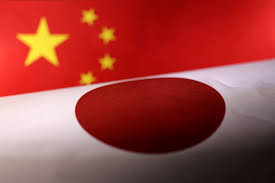
In a sharp escalation of geopolitical tensions, China has officially banned the export of “Dual-Use Goods” to Japan. This move is widely seen as retaliation against Japan’s alignment with US-led restrictions on semiconductor technology and rising tensions over Taiwan.
What Are “Dual-Use Goods”?
This is the core concept you need to understand.
- Definition: Dual-use goods are items that have both civilian (commercial) and military applications.
- Examples:
- Carbon Fiber: Used in tennis rackets (civilian) but also in missile casings (military).
- Advanced Microchips: Used in PlayStations (civilian) but also in guidance systems for fighter jets (military).
- Sensors & Lasers: Used in autonomous cars (civilian) but also in targeting systems (military).
The “Weaponization of Supply Chains”
For decades, global trade was based on “Efficiency”—buy from where it’s cheapest. Now, it is based on “Security.”
China dominates the global supply chain for many of these critical raw materials (like Gallium, Germanium, and Rare Earth Elements).
- The Strategy: By cutting off supply, China is engaging in “Economic Statecraft” (or coercion). It is essentially saying, “If you restrict our access to high-tech chips, we will restrict your access to the materials needed to make them.”
The Global Watchdog: The Wassenaar Arrangement
To prevent these dangerous goods from falling into the wrong hands (like terrorists or unstable regimes), nations formed a group called the Wassenaar Arrangement.
- What it is: A voluntary export control regime where members exchange information on transfers of conventional weapons and dual-use goods.
- The Goal: Transparency and responsibility.
- India’s Role: India joined this elite club in 2017 as its 42nd member. This was a major diplomatic victory, as it signaled the world’s trust in India’s non-proliferation record, allowing India to access high-tech items that were previously denied.
Why This Matters
This event marks the end of “free trade” in high-tech sectors. We are entering an era of “De-risking” (a term used by the EU and US), where nations try to build their own supply chains to avoid being held hostage by a rival power. For Japan, this ban is a serious blow to its electronics and defense industries.
Digital History: ASI Brings 170+ Monuments to the ONDC Network
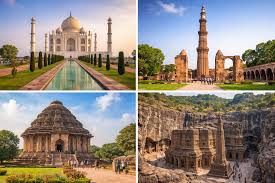
In a major leap for “Digital India,” the Archaeological Survey of India (ASI) has onboarded more than 170 of its protected monuments onto the Open Network for Digital Commerce (ONDC). This means the ticket counters of the Taj Mahal, Red Fort, and Qutub Minar have effectively moved to the cloud.
How It Changes Your Travel Experience
- The Old Way: You had to visit a specific website (like the ASI portal) or stand in long physical queues at the venue.
- The New Way (ONDC): Because ONDC is an “Open Network,” you can book a ticket through any app that is plugged into the network.
- Imagine booking a monument ticket via your banking app (like Yono or HDFC), your ride-hailing app (like Uber/Ola), or a payment app (like Paytm).
- It eliminates “walled gardens.” You don’t need to download a separate “ASI App.”
Deep Dive: What is ONDC?
This is the most critical concept here.
- Full Form: Open Network for Digital Commerce.
- The Logic: ONDC is not an app or a platform (like Amazon or Flipkart). It is a network (like UPI).
- Democratization: Just as UPI allows a Google Pay user to send money to a PhonePe user, ONDC allows a buyer on one app to purchase goods/services from a seller on another app.
- Goal: To break the monopoly of big e-commerce giants and allow even small players (or government bodies like ASI) to reach millions of customers digitally.
Why This Matters
This move serves two purposes:
- Ease of Doing Business (Tourism): It enhances the experience for global tourists who demand seamless digital services.
- Transparency: Digital ticketing creates a clean data trail, reducing revenue leakage (black marketing of tickets) at ground level.
Healing Across Borders: India Leads BIMSTEC Cancer Care Initiative
India is currently hosting the second phase of a specialized capacity-building program for cancer care professionals from BIMSTEC nations. The training is being conducted at the Homi Bhabha Cancer Hospital and Research Centre (HBCHRC) in Visakhapatnam. This initiative follows the first phase held in Mumbai and aligns with the commitments made by Prime Minister Narendra Modi at the 6th BIMSTEC Summit to strengthen regional health security.

Deep Dive: What is BIMSTEC?
To understand the significance, one must understand the grouping.
- Full Form: Bay of Bengal Initiative for Multi-Sectoral Technical and Economic Cooperation.
- The Members (7 Nations): It is a unique mix of South Asia and Southeast Asia.
- South Asia: India, Bangladesh, Bhutan, Nepal, Sri Lanka.
- Southeast Asia: Myanmar, Thailand.
- The Bridge: BIMSTEC acts as a bridge between the Himalayas and the Bay of Bengal, connecting the Indian ecosystem with the vibrant economies of Southeast Asia.
The Program Details
- Participants: 35 medical professionals (doctors and nurses) from member countries.
- Focus Areas: The training covers critical aspects of oncology:
- Onco-Pathology: Accurate diagnosis of cancer cells.
- Radiation Oncology: Advanced treatment techniques.
- Palliative Care: Improving the quality of life for serious patients (a neglected area in many developing nations).
- Preventive Oncology: Strategies to stop cancer before it starts.
Why “Health Diplomacy”?
This is a classic example of Soft Power.
- The Challenge: The BIMSTEC region faces a growing burden of Non-Communicable Diseases (NCDs) like cancer, often lacking the specialized workforce to handle complex cases.
- The Solution: By offering high-quality, free training, India positions itself not just as a political “Big Brother” but as a “First Responder” in healthcare. This reinforces India’s “Neighbourhood First” policy, building goodwill that goes beyond trade deals and border disputes. It cements India’s reputation as the “Pharmacy (and Hospital) of the Global South.”
Thirst in the Trenches: DRDO’s Portable Solution for Coastal Combat
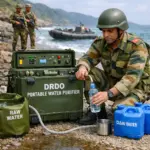
Water is the heaviest logistical burden for any army. It is heavy to carry and impossible to survive without. To solve this for soldiers stationed in coastal areas or aboard small naval vessels, the Defence Laboratory, Jodhpur (DLJ)—a premier lab of the DRDO—has developed an indigenous solution called SWaDeS (Sea Water Desalination System).
What is SWaDeS?
It is a rugged, portable water purification unit designed specifically to turn seawater (which is deadly if consumed due to high salt content) into potable (drinking) water.
The Two Variants:
- Manual Variant:
- Portability: Lightweight enough to be carried by a single soldier in a backpack.
- Capacity: Can generate enough water for 10-12 soldiers.
- Operation: Powered by hand-cranking (muscle power), making it fail-safe in areas with no electricity or fuel.
- Engine-Operated Variant:
- Capacity: Designed for larger platoons (20-25 soldiers).
- Efficiency: It can reduce the Total Dissolved Solids (TDS) from ~35,000 mg/L (seawater salinity) to less than 500 mg/L (safe drinking standard) in just 2-3 minutes.
The Technology: Reverse Osmosis (RO)
At its heart, SWaDeS uses Membrane Technology.
- The Process: It forces saline water at high pressure through a special semi-permeable membrane. The membrane has microscopic pores that allow water molecules to pass but block the larger salt ions.
- The Innovation: The membrane is indigenous and chemically treated to withstand the harsh chloride ions in seawater that usually destroy standard civilian filters.
Hidden in the Hills: Scientists Discover a New Snake Species in Mizoram
Sometimes, the biggest discoveries are hiding in plain sight. For nearly two decades, a small, elusive snake found in the forests of Mizoram was thought to be a common variety found across Southeast Asia. However, a recent study by scientists from Mizoram University (along with international collaborators) has used DNA profiling to prove that this is, in fact, a completely new species unique to India.

Meet the Species: Calamaria mizoramensis
- Scientific Name: Calamaria mizoramensis (named after the state of Mizoram).
- Common Name: Mizoram Reed Snake.
- The Look: It is a small, sleek snake with a dark brown or blackish body and a yellow belly. Its cylindrical shape makes it look almost like a polished reed or a large earthworm at first glance.
- Personality: It is Non-Venomous (harmless to humans), Nocturnal (active at night), and shy.
Deep Dive: What is a “Reed Snake”?
The genus Calamaria is a group of dwarf snakes found mostly in Asia. They are known as “Reed Snakes” because of their slender, tube-like bodies which allow them to move easily through dense vegetation and soil.
Key Terms to Know
- Semi-Fossorial: You will see this term often in snake descriptions. “Fossorial” comes from the Latin word for “dig.” A semi-fossorial animal spends a significant amount of time burrowing underground or hiding under leaf litter (dead leaves on the forest floor). This is why this snake went unnoticed for so long—it lives beneath our feet!
- Endemic: This means the species is found only in that specific location and nowhere else on Earth. This snake is currently known only from the hill forests of Mizoram.
Why This Discovery Matters
Mizoram lies in the Indo-Burma Biodiversity Hotspot, one of the most biologically rich yet threatened regions on the planet.
- The “Cryptic” Diversity: The discovery proves that Indian forests still hold “cryptic species”—animals that look identical to known species but are genetically different.
- Conservation: With this discovery, the official count of reptiles and amphibians in Mizoram has jumped to 169 species. Identifying them is the first step to protecting them from habitat loss.