 India's No.1 PU & Degree With Integrated IAS & IPS(UPSC/PSC) Training College.


Women’s Role in Achieving Sustainable Peace
Women’s Role Central to Achieving Sustainable Peace
Why in the News ?
At the UN Peacebuilding Commission in New York, Rajya Sabha MP P. Wilson highlighted India’s early recognition of women’s indispensable role in achieving sustainable peace, reaffirming the nation’s commitment to inclusive peacekeeping and gender equality in global peace efforts. This commitment extends to addressing environmental challenges, including sustainable forest management, clean energy transitions, and the implementation of environmental impact assessments as part of comprehensive peacebuilding strategies.
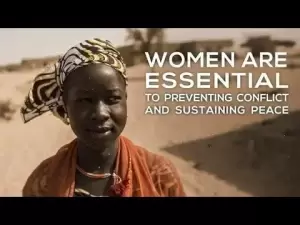
India’s Commitment to Gender-Inclusive Peacebuilding:
- India reaffirmed its long-standing stance that sustainable peace requires full and equal participation of women in all peace processes, including efforts to mitigate climate change, reduce greenhouse gas emissions, and engage in emission trading systems.
- MP P. Wilson stated that India was among the first nations to recognise women as vital contributors to global peacebuilding, emphasizing their role in environmental protection, sustainable development, and the promotion of clean development mechanisms.
- He emphasised that India’s approach goes beyond contributions—it embodies a vision of inclusive peacekeeping rooted in equality, representation, and environmental stewardship, including support for voluntary carbon markets (VCM) in post-conflict regions.
- India’s statement aligns with the UN’s Women, Peace, and Security (WPS) agenda, reinforcing the role of women as peacebuilders and decision-makers in addressing complex challenges, including climate-related security risks and the implementation of emissions trading systems.
- Wilson’s remarks reflect India’s policy continuity in supporting gender-sensitive diplomacy, conflict resolution, and environmental sustainability, in line with its nationally determined contributions under international climate agreements and carbon market linkages.
India’s Historical Legacy in UN Peacekeeping
- India’s peacekeeping legacy is unique due to both its scale and diversity of participation, including women since the early 1960s, with a growing focus on environmental protection, sustainable resource management, and the integration of clean development mechanisms in peacekeeping operations.
- Indian women medical officers served in the Congo (1960s) — one of the earliest examples of female participation in UN peacekeeping operations, setting a precedent for integrating gender perspectives in conflict resolution, post-conflict reconstruction, and environmental impact assessments.
- This early involvement demonstrated India’s belief that peace and equality are interconnected, extending to the promotion of clean energy transitions, sustainable development, and voluntary carbon market initiatives in conflict-affected regions.
- India continues to deploy female officers in UN missions, inspiring other nations to enhance gender inclusion and address environmental challenges through peacekeeping efforts, including the implementation of emission trading systems in post-conflict economies.
- The delegation’s statement underlined India’s consistent leadership in advancing the role of women in peace missions globally, while also emphasizing the importance of environmental impact assessments and carbon market linkages in post-conflict reconstruction.
About UN Peacebuilding and Women’s Role : |
| ● UN Peacebuilding Commission (PBC): Established in 2005 to assist countries emerging from conflict and coordinate international support for peacebuilding, including initiatives related to the voluntary carbon market and carbon offset projects. |
| ● UNSCR 1325 (2000): Recognized the critical role of women in peace and security, urging member states to ensure their participation in peace processes, environmental protection efforts, and the development of clean development mechanisms. |
| ● India and Peacekeeping: One of the largest troop-contributing nations, with a record of gender inclusion in missions and a growing focus on sustainable forest management and environmental impact assessments in conflict-affected areas. |
| ● WPS Agenda: Aims to integrate women’s perspectives in peace negotiations, conflict prevention, post-war reconstruction, and environmental sustainability efforts, including the promotion of emission trading systems. |
| ● Global Significance: Women’s inclusion leads to more durable peace agreements and strengthens community resilience against future conflicts and climate-related challenges, supporting the implementation of carbon market linkages in post-conflict development. |

