 India's No.1 PU & Degree With Integrated IAS & IPS(UPSC/PSC) Training College.


Right to Walk on Footpaths: A New Dimension of Fundamental Rights
Right to Walk on Footpaths: A New Dimension of Fundamental Rights
The Judgment
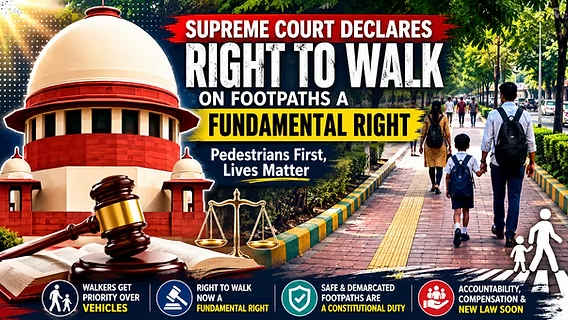
The Supreme Court of India has recognised the right to walk on demarcated footpaths as a fundamental right. The judgment arose from a tragic case in which a five-year-old child died after being hit by a tanker while walking to school. The Court noted that the accident occurred in an area without a proper footpath or pedestrian crossing. This led the Court to examine the larger constitutional issue of safe pedestrian movement.
Fundamental Rights Involved
The Court linked the right to walk with **Article 19(1)(d)** of the Constitution, which guarantees the freedom to move freely throughout the territory of India. It held that movement should not be understood only in terms of vehicles. Walking is the most basic and natural form of mobility.
The Court also connected this right with **Article 21**, which protects life and personal liberty. A person cannot enjoy the right to life with dignity if public roads are unsafe for walking. Thus, safe pedestrian infrastructure becomes part of the constitutional promise of life, liberty and dignity.
Significance of the Judgment
The judgment is significant because it shifts the focus of urban planning from a vehicle-centric approach to a pedestrian-centric approach. For many years, Indian cities have prioritised wider roads, flyovers and faster traffic movement. Pedestrians, especially children, elderly persons, persons with disabilities and the poor, have often been ignored.
The Court observed that the right to walk on a demarcated footpath has priority over motorised traffic. This gives constitutional importance to footpaths as essential public infrastructure.
Duties of Authorities
The Court made it clear that where roads exist, authorities must ensure safe, demarcated and well-maintained footpaths. Urban Development Authorities, Municipal Corporations, Municipalities and Panchayats have a responsibility not only to construct footpaths but also to maintain them and protect them from encroachment.
Remedies and Legal Framework
The Court stated that citizens can seek constitutional and legal remedies if their right to walk safely is violated. This remedy is separate from compensation under the Motor Vehicles Act, 1988. The Court also suggested the need for a specific legal framework to protect pedestrian rights.
Conclusion
This judgment is important for urban governance, public safety and social justice. It shows that development is not only about faster vehicles and wider roads, but also about ensuring that every citizen can walk safely, freely and with dignity.




