 India's No.1 PU & Degree With Integrated IAS & IPS(UPSC/PSC) Training College.


Wolf Supermoon Combines Folklore With Lunar Astronomy
Wolf Supermoon Combines Folklore With Lunar Astronomy
Why in the News ?
The January 2026 Wolf Supermoon peaked on January 2, drawing attention as it combined a traditional full moon name with a supermoon event, offering an opportunity to understand the blend of folklore, astronomy, and visual perception.

What Is A Wolf Supermoon?
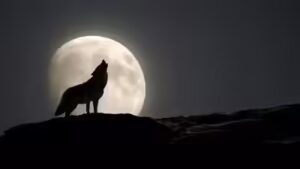
- A Wolf Supermoon is not a scientific term but a popular nickname combining two separate concepts: Wolf Moon and Supermoon.
- The Wolf Moon refers to the first full moon of January, a name rooted in seasonal folklore rather than astronomy.
- Historically, such names were used in almanacs and oral traditions to mark time before the advent of modern calendars.
- The term “wolf” is linked to winter narratives, where wolves were believed to howl more frequently during harsh winter months.
- Importantly, the moon itself does nothing unusual during a Wolf Moon; the significance is purely cultural and traditional.
Astronomical Meaning Of A Supermoon
- A Supermoon occurs when a full moon coincides with perigee, the point at which the moon is closest to Earth in its orbit.
- The moon follows an elliptical (oval-shaped) orbit, leading to variations in its distance from Earth.
- When near perigee, the moon appears slightly larger and brighter than an average full moon.
- The brightness difference is scientifically real but modest, often noticeable mainly in photographic comparisons.
- A common visual effect during such events is the moon illusion, where the moon appears larger near the horizon due to human perception, not actual size change.
Key Lunar Concepts:● Full Moon: The lunar phase when the entire face of the moon visible from Earth is illuminated by the Sun. ● Perigee: The point in the moon’s orbit when it is closest to Earth, influencing apparent size and brightness. ● Apogee: The point where the moon is farthest from Earth, making it appear smaller. ● Elliptical Orbit: The moon’s non-circular path around Earth, responsible for distance variations. ● Moon Illusion: A psychological phenomenon where the moon looks larger near the horizon due to visual context and depth cues, not actual change. |

