 India's No.1 PU & Degree With Integrated IAS & IPS(UPSC/PSC) Training College.


THE ELEPHANT IN INDIA’S DATA ROOM
THE ELEPHANT IN INDIA’S DATA ROOM
Syllabus:
GS 2:
- Governance
- Issues arising out of design and implementation of policies
Why in the News?
Concerns regarding India’s fragmented and non-standardised data ecosystem have resurfaced after repeated parliamentary questions exposed the lack of publicly accessible, interoperable, and reliable government data systems.
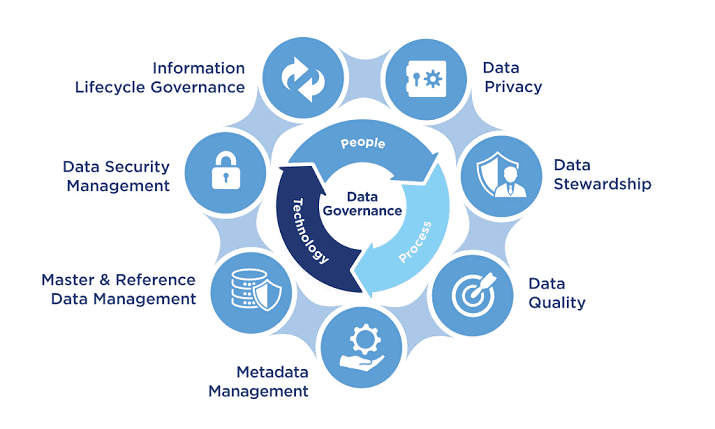
GOOD GOVERNANCE IN INDIA● Transparency Principle: Accessible and standardised data strengthens democratic accountability, citizen participation, environmental democracy, and informed governance processes, similar to how the precautionary principle guides regulatory decisions. ● Efficiency Enhancement: Data-driven governance reduces duplication, delays, corruption, and administrative inefficiencies across public institutions and welfare programmes, much like streamlined environmental clearance processes improve project implementation. ● Evidence Policymaking: Reliable datasets improve policy formulation by grounding decisions in measurable realities, empirical evidence, and objective assessment, comparable to environmental impact assessment methodologies. ● Citizen Administration: Better data systems enable targeted delivery of services and improve responsiveness to public needs, regional disparities, and developmental gaps. ● Digital Governance: Data standardisation is central to India’s vision of Digital India, smart governance, e-governance, and institutional modernisation. |
UNDERSTANDING INDIA’S DATA GOVERNANCE PROBLEM
- Fragmented Ecosystem: Government Ministries and departments collect massive volumes of data independently, but absence of common standards, interoperability, and integrated databases prevents seamless integration and effective policymaking, similar to challenges in coordinating environmental clearances across multiple agencies.
- Parliamentary Dependence: Members of Parliament frequently seek basic information regarding welfare schemes, infrastructure, and beneficiaries because such data is often unavailable in accessible public formats.
- Inconsistent Definitions: Ministries define indicators such as time period, region, beneficiaries, and classifications differently, creating duplication, confusion, and unreliable statistical outcomes.
- Data Abundance: Although India generates enormous administrative data, poor data standardisation limits its usefulness for governance, research, policy formulation, and public accountability.
- Weak Coordination: Lack of coordination among Union Ministries and State governments prevents development of a unified national data architecture necessary for evidence-based governance, affecting domains from welfare delivery to coastal regulation zone management.
STRUCTURAL DEFICITS IN INDIA’S DATA SYSTEM
- Absence Standards: Ministries often use incompatible methodologies, formats, and data collection mechanisms, preventing integration across databases and undermining policy coherence and institutional coordination, much like inconsistent application of the EIA notification across states.
- Duplicate Records: Welfare databases frequently contain repeated beneficiary entries, causing fiscal leakages, inflated expenditure estimates, and inaccurate beneficiary assessments across schemes.
- Limited Accessibility: Many datasets remain outdated, inaccessible, or irregularly updated, weakening transparency, open governance, and reducing policymakers’ ability to make timely interventions.
- Manual Consolidation: Lack of interoperability forces departments to manually reconcile information, increasing administrative costs, delays, and possibilities of human error.
- Weak Accountability: Ministries are rarely evaluated on data quality, standardisation compliance, or transparency, allowing inefficiencies to persist without institutional consequences, unlike the polluter pays principle that enforces accountability in environmental governance.
ECONOMIC AND GOVERNANCE IMPLICATIONS
- Fiscal Leakages: According to policy estimates, duplication and poor data governance contribute to annual expenditure leakages of nearly 4%-7% across welfare programmes and subsidies.
- Savings Cleanup: Removal of fake beneficiaries from schemes such as PM-KISAN, LPG subsidy schemes, and ration card databases has generated substantial fiscal savings for the government, similar to how ex post facto corrections address irregularities in regulatory compliance.
- Reduced Accuracy: Conflicting data estimates often leave policymakers uncertain, encouraging reliance on anecdotal judgments rather than evidence-driven governance.
- Global Rankings: Missing or outdated indicators weaken India’s standing in the Global Innovation Index, affecting investor confidence, global perception, and policy credibility.
- Economic Potential: The Organisation for Economic Co-operation and Development (OECD) estimates efficient public-sector data governance could significantly contribute toward GDP growth, productivity, and economic efficiency.
DATA STANDARDISATION AS THE SOLUTION
- Need Interoperability: Common standards can enable Ministries and States to exchange information seamlessly, reducing duplication and improving administrative efficiency and service delivery.
- Uniform Definitions: Standardised definitions for indicators, beneficiaries, timelines, and classifications can improve statistical reliability and ensure consistency across government programmes.
- Integrated Architecture: A unified framework would support evidence-based policymaking by enabling policymakers to access accurate, comparable, and real-time datasets.
- Real-Time Access: Standardisation can facilitate timely updates and real-time public access to district-level and scheme-level information.
- Public Accountability: Accessible and standardised data enhances transparency, strengthens parliamentary oversight, and promotes informed public discourse.
ROLE OF NATIONAL DATA GOVERNANCE FRAMEWORK POLICY
- Institutional Reform: The proposed India Data Management Office (IDMO) under the National Data Governance Framework Policy (NDGFP) can become the backbone of India’s data reforms, similar to how regulatory bodies oversee environmental clearances under the Forest Conservation Act.
- Binding Authority: The IDMO should possess authority to enforce common rules, audit compliance, and resolve disputes regarding methodologies across Ministries and States, drawing lessons from environmental jurisprudence and landmark cases like the Vanashakti judgment.
- Statistical Harmonisation: Harmonising Indian systems with global statistical frameworks and UN standards can ensure consistency and improve international comparability of datasets.
- Centralised Repository: India’s data.gov.in platform should evolve into a comprehensive and schema-consistent repository for public and administrative use.
- Performance Governance: Ministries and States should be incentivised through annual evaluations and rankings linked to data quality, transparency, and governance standards.
IMPACT ON POLICYMAKING AND WELFARE DELIVERY
- Targeted Delivery: Standardised databases can ensure accurate identification of beneficiaries, reducing exclusion errors, inclusion errors, and subsidy leakages.
- Healthcare Efficiency: Integrated health records can reduce duplication in disease surveillance, improve patient tracking, and support public health planning toward objectives like a pollution free environment.
- Employment Policy: Unified labour and employment data systems can provide accurate estimates for unemployment, skill gaps, and workforce participation.
- Educational Planning: Reliable educational datasets can assist in planning school infrastructure, teacher allocation, and targeted interventions for vulnerable populations.
- Fiscal Planning: Accurate real-time data can strengthen budgeting, public expenditure monitoring, and outcome-based governance frameworks.
CHALLENGES IN IMPLEMENTING DATA REFORMS
- Institutional Resistance: Ministries may resist sharing data because of concerns regarding administrative control, jurisdictional autonomy, and bureaucratic inertia.
- Capacity Constraints: Several departments lack trained personnel, technological infrastructure, and analytical capacity for implementing sophisticated data standards.
- Privacy Concerns: Greater integration of databases raises concerns regarding data protection, digital surveillance, and misuse of personal information.
- Federal Issues: Achieving harmonisation between Union and State governments remains difficult because of differing administrative capacities and priorities.
- Cybersecurity Risks: Centralised repositories may become vulnerable to cyberattacks, requiring strong digital security architecture and governance safeguards.
WAY FORWARD FOR INDIA’S DATA GOVERNANCE
- Strengthen Authority: The India Data Management Office (IDMO) should receive statutory backing and enforcement powers for ensuring nationwide compliance with standards.
- Open Data Culture: Ministries must regularly publish updated datasets in accessible formats to encourage transparency, public participation, and accountability.
- Capacity Building: Government officials require training in data analytics, governance standards, and digital administration to improve implementation quality.
- Privacy Safeguards: Data governance reforms should align with robust privacy protection laws and ethical standards to maintain citizen trust.
- Cooperative Federalism: Collaborative mechanisms between the Union and States are essential for building an integrated national data ecosystem.
CONCLUSION
India’s aspiration to become a technologically advanced and economically resilient nation depends significantly on the quality of its data governance architecture. Fragmented datasets, inconsistent standards, and weak interoperability undermine policymaking, fiscal efficiency, and democratic accountability. Data standardisation is not merely a technical reform but the foundation of effective governance, transparency, and evidence-based decision-making. Strengthening institutional mechanisms such as the India Data Management Office, building interoperable public databases, and promoting a culture of accountability can transform India’s governance ecosystem. A nation aspiring toward a $5 trillion economy, Digital India, and global leadership cannot afford fragmented and unreliable data systems.
SOURCE:
TH
MAINS PRACTICE QUESTION
“Data standardisation is the grammar of governance in the digital age.” Discuss the challenges associated with India’s fragmented data ecosystem and suggest measures to strengthen public data governance.

