 India's No.1 PU & Degree With Integrated IAS & IPS(UPSC/PSC) Training College.


Urban Future: Cities as Living Ecosystems
THE URBAN FUTURE WITH CITIES AS DYNAMIC ECOSYSTEMS
Why in the News?
- Urban development debates increasingly highlight that infrastructure-led growth alone is insufficient to create livable cities.
- Policy focus is shifting from hardware (roads, buildings, smart systems) to human-centric urban planning, including considerations for environmental impact assessments.
- Experts point to a growing disconnect between planned cities, aspirational cities, and lived urban realities, emphasizing the need for environmental clearances in development projects.
- Ignoring social inclusion, community belonging, diversity, and environmental concerns weakens the effectiveness of urban policies.
- The issue has gained prominence amid discussions on sustainable, inclusive, and people-first city development, with a growing emphasis on creating a pollution-free environment.
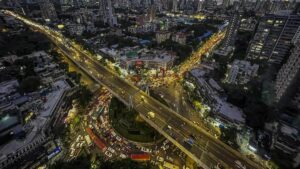
The Invisible Tax of Exclusion
- Migration often carries an implicit demand for assimilation, captured in the idea of “when in Rome, do as the Romans do.”
- Language becomes the primary, non-negotiable gateway to urban integration and social acceptance, often overlooking environmental justice concerns.
- Inability to meet dominant linguistic norms imposes an “invisible tax” on migrants and new residents from different linguistic regions, similar to the challenges faced in obtaining environmental clearances.
- This exclusion exposes a deeper tension between the multilingual reality of metropolitan cities and the cultural, emotional, and political expectations placed on newcomers.
- At its core, the issue concerns recognition and validation of belonging in the city one inhabits, including access to a clean and healthy environment.
- Linguistic exclusion directly converts into economic disadvantage, often paralleling environmental inequities.
- Job searches, housing negotiations, healthcare access, and welfare benefits become bureaucratically inaccessible in monolingual systems, mirroring challenges in navigating environmental regulations.
- Cultural and linguistic barriers function as economic bottlenecks, similar to how lack of environmental clearances can hinder development.
- Migrants are often pushed into the informal economy, where exploitation is higher and social mobility is limited, often in areas with poor environmental conditions.
- Cities depend heavily on migrant labour, skills, and tax contributions, yet deny them equal access to opportunities, public services, and a pollution-free environment.
- Failure to enable linguistic, cultural, and environmental integration weakens long-term social cohesion and economic resilience.
- A core flaw in urban planning lies in assuming a static, homogeneous urban population, often neglecting the principles of environmental democracy.
- Infrastructure and “smart city” designs cater primarily to established residents, rendering new residents invisible and sometimes overlooking environmental impact assessments.
- Smart cities often remain accessible only to those fluent in dominant languages and equipped with proper documentation, potentially sidelining environmental concerns.
- Lack of culturally diverse representation in governance further deepens exclusion and may lead to inadequate consideration of environmental issues.
- Homogeneous planning bodies struggle to address the needs of increasingly diverse urban populations and may overlook crucial environmental factors.
- Schools, transport systems, and public spaces often fail to align with shifting demographic realities, reinforcing systemic exclusion and potentially violating coastal regulation zone norms in applicable areas.
Designing Cities ‘For All’
- The future of cities must be conceived as layered and inclusive, not merely infrastructure-driven, incorporating principles from the Forest Conservation Act for green spaces.
- Physical development alone cannot succeed if the human need for belonging and a healthy environment is overlooked.
- Cities are living, evolving ecosystems rather than static blueprints, requiring adaptive environmental management.
- Urban spaces should be understood as fluid entities capable of expansion, adaptation, and inclusion, with due consideration for environmental clearances.
- City planning must proactively anticipate cultural friction between established communities and newcomers, while also addressing environmental concerns.
- Recognising tensions between the “known” and the “new,” or “us” and “them,” is essential for social cohesion and environmental justice.
- Targeted cultural sensitisation and environmental awareness training for public-facing officials can bridge these divides.
- Such training enhances administrative efficiency while safeguarding democratic values, citizen rights, and environmental principles.
- Meaningful urban transformation requires acceptance of short-term disruption to achieve long-term social, developmental, and environmental gains.
- Cities must be planned, designed, and governed for all residents—past, present, and future—with a focus on creating a pollution-free environment.
- Inclusive urban design should be flexible enough to accommodate growth, welcome diversity, foster integration and renewal, and adhere to environmental jurisprudence.
The Missing Link
- An inclusive and sustainable urban future requires cities to be designed for people, not merely for infrastructure, incorporating the polluter pays principle and precautionary principle in planning.
- Urban planning must prioritise human experience alongside physical, technological, and environmental development.
- The central gap in interconnected urban realities is the absence of empathy in design and governance, including environmental considerations.
- Successful cities recognise comfort, security, a sense of belonging, and environmental quality as core planning outcomes.
- Validated belonging in everyday lived experiences should be the ultimate benchmark of effective urban design, alongside environmental sustainability.
Way Forward
- Embed human-centric and empathy-led planning as a core principle of urban governance, alongside infrastructure, technology, and environmental considerations.
- Institutionalise multilingual access to public services, official communication, digital platforms, and grievance mechanisms, including environmental clearance processes.
- Integrate cultural impact assessments into urban planning, similar to environmental and social impact evaluations.
- Mandate diversity and inclusion representation in local planning bodies, municipal councils, and advisory committees, ensuring environmental expertise is included.
- Invest in cultural sensitisation, language training, and environmental awareness for public-facing officials such as police, healthcare workers, municipal staff, and transport authorities.
- Use technology as an enabler, not a barrier, by designing smart-city systems that are accessible across languages and literacy levels, incorporating environmental monitoring.
- Strengthen pathways for formal economic inclusion of migrants through simplified documentation, legal aid, and labour protections, while ensuring compliance with environmental regulations.
- Encourage community-based integration platforms—neighbourhood centres, public libraries, and civic forums—to foster interaction, trust, and environmental stewardship.
- Accept short-term administrative and social disruptions as necessary trade-offs for long-term urban resilience, cohesion, and environmental sustainability.
- Reimagine cities as dynamic, evolving ecosystems capable of accommodating demographic change, diversity, future growth, and environmental challenges.
Mains Question (250 words):
“Merely building infrastructure cannot ensure inclusive urbanisation.” Examine how linguistic, cultural, social, and environmental exclusion undermine belonging in Indian cities and suggest empathy-driven, people-centric urban planning measures that incorporate environmental democracy principles.

