 India's No.1 PU & Degree With Integrated IAS & IPS(UPSC/PSC) Training College.


UN Sea Level Declaration: Statehood & Rights
UN SEA LEVEL DECLARATION: STATEHOOD, MARITIME RIGHTS AND CLIMATE JUSTICE
Why in the News?
The UN General Assembly approved the Declaration on Sea Level Rise by consensus on September 24, addressing the scientific, financial, social and legal consequences of rising seas. Its significant provisions affirm that vulnerable low-lying island states can retain statehood, sovereignty, UN membership and maritime rights even if climate change causes substantial physical changes to their territory and coastlines.
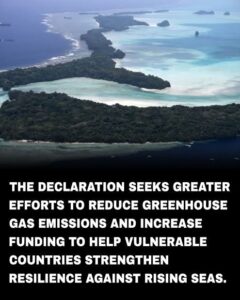
SEA LEVEL RISE AND INTERNATIONAL LAW
- Statehood Protection: The Declaration affirms that vulnerable island countries such as Fiji, Tuvalu and Vanuatu will retain their statehood and sovereign rights despite territorial threats from rising seas.
- Maritime Zones: It maintains that maritime zones should continue to be determined under the UN Convention on the Law of the Sea (UNCLOS) despite coastline changes caused by sea-level rise.
- Legal Certainty: The framework provides greater international legal certainty for low-lying states whose physical territory and coastlines may undergo substantial transformation because of climate change.
- Nationality Rights: If habitable territories are severely affected, affected populations would continue to retain their nationality and associated economic rights, addressing concerns about potential climate-induced displacement.
- Island States: The provisions are particularly significant for Small Island Developing States (SIDS), which face disproportionate consequences despite contributing relatively little to historical global greenhouse-gas emissions.
CLIMATE ADAPTATION, FINANCE AND COMMUNITY RESILIENCE
- Scientific Evidence: The Declaration emphasises science, data collection and knowledge-sharing to improve understanding of changing sea levels and their regional consequences.
- Adaptation Finance: It calls for stronger international efforts on adaptation and financing, particularly for countries with limited resources to protect communities and infrastructure.
- Early Warning: Greater emphasis on early-warning systems and disaster preparedness can help vulnerable coastal populations respond to storm surges, flooding and other climate-related hazards.
- Livelihood Security: Climate responses are expected to address livelihoods, socio-economic development and cultural heritage, rather than focusing exclusively on physical coastal protection.
- Community Participation: The Declaration recognises the importance of involving affected communities in adaptation planning and decisions concerning their future.
SEA LEVEL RISE AND CLIMATE CHANGE
|

