 India's No.1 PU & Degree With Integrated IAS & IPS(UPSC/PSC) Training College.


Poompuhar: Chola Maritime Trade Underwater
POOMPUHAR UNDERWATER ARCHAEOLOGY: CHOLA MARITIME TRADE AND THE LOST CITY
Why in the News?
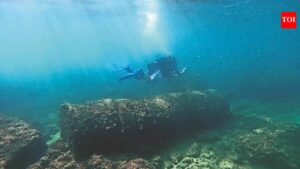
Recent underwater excavations at Poompuhar, the ancient Chola port city on the Tamil Nadu coast, have uncovered a fragment of a West Asian torpedo jar, terracotta ring wells and over 250 ceramic fragments. The findings strengthen evidence of Poompuhar’s participation in Indian Ocean maritime trade and provide clues about the ancient settlement’s eventual submergence.
POOMPUHAR AND ITS ROLE IN ANCIENT MARITIME TRADE
- Strategic Location: Poompuhar, also known as Kaveripoompattinam, was situated at the mouth of the Cauvery River on the Bay of Bengal, providing a strategic location for maritime commerce.
- West Asian Link: The torpedo jar fragment, historically used to transport liquids such as wine and olive oil, provides archaeological evidence of connections between Poompuhar and West Asian–Mediterranean trade networks.
- Trade Diversity: Literary and archaeological evidence indicates that the port handled commodities from North India, Sri Lanka, Southeast Asia, Arabia and the wider Indian Ocean region.
- Urban Structure: Ancient Poompuhar is described as having Maruvurpakkam, Pattinappakkam and Nalangadi, reflecting a complex urban and commercial settlement.
- Chola Identity: Merchandise exported from the port was reportedly marked with the tiger symbol, associated with Chola political authority and commercial identity.
UNDERWATER ARCHAEOLOGY AND THE SUBMERGENCE OF POOMPUHAR
- Ring Wells: The discovery of terracotta ring wells on the seabed is significant because such structures were generally constructed on land to access freshwater.
- Palaeochannel Evidence: Their underwater presence may indicate a buried palaeochannel, suggesting that portions of the ancient landscape were subsequently submerged because of coastal changes.
- Coastal Change: Coastal erosion and sea-level changes may have contributed to the progressive transformation and submergence of parts of the ancient settlement.
- Catastrophic Events: Archaeological studies have proposed the possibility of a major tsunami around the third century CE, although scholars differ regarding its precise role in Poompuhar’s destruction.
- Historical Debate: Evidence does not conclusively establish that the entire city disappeared simultaneously; researchers have also proposed partial submergence followed by rebuilding after coastal disasters.
SANGAM AGE AND ANCIENT INDIAN MARITIME TRADE● Sangam Literature: Poompuhar features prominently in Sangam and post-Sangam literature, particularly in works describing urban life, commerce and maritime activities in ancient Tamilakam. ● Indian Ocean Trade: Ancient Indian ports connected the subcontinent with Rome, Arabia, East Africa and Southeast Asia, facilitating the movement of commodities, people and cultural influences. ● Chola Maritime Tradition: The Cholas later developed powerful maritime networks across the Bay of Bengal, particularly during their expansion into Southeast Asia. ● Archaeological Evidence: Ceramics, storage vessels, ring wells, structural remains and imported pottery provide material evidence complementing literary descriptions of ancient commercial centres. ● Maritime Heritage: Underwater archaeology at sites such as Poompuhar helps reconstruct India’s ancient maritime history and demonstrates the importance of coastal settlements in the development of Indian Ocean connectivity. |

