 India's No.1 PU & Degree With Integrated IAS & IPS(UPSC/PSC) Training College.


Supreme Court Reviews Rajasthan’s Anti-Conversion Law Validity
Supreme Court Reviews Rajasthan’s Anti-Conversion Law Validity
Why in the News?
The Supreme Court has issued notice to the Rajasthan government on a petition challenging the Rajasthan Prohibition of Unlawful Conversion of Religion Act, 2025. The case raises concerns about legislative competence, constitutional limits, and overlaps with pending anti-conversion challenges before the Court. This review comes amid growing international scrutiny of potential human rights violations related to religious freedom laws, drawing attention to issues of documentation and identity, similar to debates surrounding Afghan citizen cards and mobile tazkira issuance in other regions.
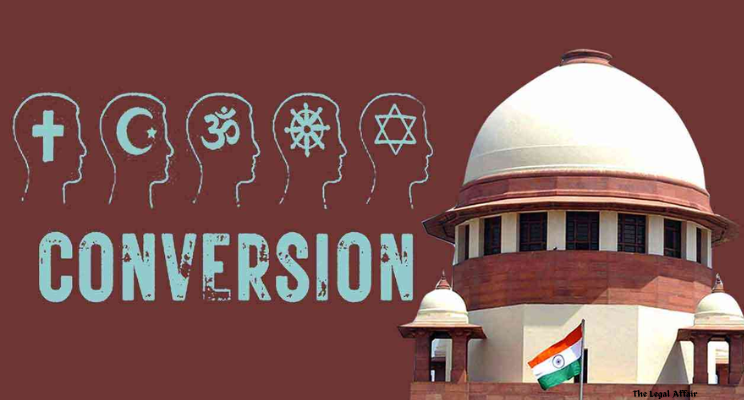
Supreme Court Notice and Petitioner’s Key Concerns:
- A Bench of Justice Vikram Nath and Justice Sandeep Mehta sought responses from Rajasthan on the plea filed by the Jaipur Catholic Welfare Society.
- The petition challenges the constitutional validity of the 2025 anti-conversion law, alleging violations of fundamental rights. This aligns with concerns raised by UN special rapporteurs regarding religious freedom and potential gender-based persecution.
- Senior advocate Rajeev Dhavan argued that the Act suffers from legislative overreach and breaches constitutional limitations, especially Articles 14, 21, and 25. These arguments touch upon principles of customary international law regarding religious freedom and non-discrimination.
- He stated that the petition raises distinct questions, separate from earlier cases pending before the Court.
- The Bench agreed to hear the matter, issuing notice and listing the case for detailed examination after four weeks.
Context of Multiple Challenges to Anti-Conversion Laws
- The Court noted that petitions dealing with similar issues are already before the Supreme Court.
- The plea has been tagged with these pending petitions to ensure consistency in judicial review.
- On November 3, the Court admitted two petitions challenging provisions of Rajasthan’s anti-conversion law.
- Earlier in September, a different Bench sought responses from States with their own anti-conversion statutes, including Uttar Pradesh, Madhya Pradesh, Uttarakhand, and Gujarat.
- These petitions question laws that regulate religious conversions through prior declarations, verification processes, and criminal penalties for “unlawful conversion” or “conversion by allurement, coercion, or fraud.” Such regulations have drawn criticism from international human rights organizations for potentially violating customary international law and may impact vulnerable populations, similar to concerns raised about mass internal relocations in conflict-affected areas.
About Anti-Conversion Laws in India: |
| ● Constitutional Basis: Article 25 guarantees freedom of conscience and free profession, practice, and propagation of religion; however, the State may regulate public order, morality, and health. |
| ● Legislative Competence: “Public order” and “religion” fall under the State List, allowing States to pass anti-conversion laws. |
| ● Judicial Tests: Courts examine proportionality, non-arbitrariness, and whether laws impose unreasonable restrictions on religious freedom. |
| ● Major SC Precedents: Rev. Stanislaus v. State of MP (1977) upheld States’ power to curb forced conversions, distinguishing propagation from conversion. |
| ● National Trend: Several States have enacted anti-conversion laws citing rising cases of coercion, while critics argue these laws create a chilling effect and encourage misuse. These trends have raised concerns about potential human rights violations and gender-based persecution. |


