 India's No.1 PU & Degree With Integrated IAS & IPS(UPSC/PSC) Training College.


Supreme Court Clarifies OBC Quota Ruling
SUPREME COURT CLARIFIES PROSPECTIVE APPLICATION OF OBC QUOTA RULING
WHY IN THE NEWS ?
The Supreme Court clarified that its March 11, 2026 judgment on OBC creamy-layer criteria will not automatically reopen previously completed selections and appointments. However, it directed the Centre to apply the revised interpretation to eligible litigants and pending Civil Services Examination 2025 service allocations.
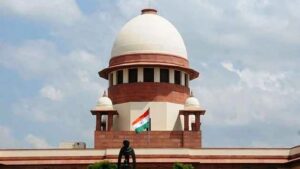
SUPREME COURT RULING: OBC CREAMY LAYER AND RETROSPECTIVITY:
- Key Clarification: A Bench of Justices P.S. Narasimha and R. Mahadevan held that the March 2026 judgment would not automatically apply retrospectively to completed recruitment processes.
- Earlier Judgment: The March 11 ruling established that the income of parents alone cannot determine whether their children should be excluded from OBC reservation benefits.
- No Reopening: Previously concluded selections, appointments, seniority and service allocations cannot be reopened merely because of the judgment.
- Limited Application: The directions primarily apply to candidates and intervenors who were parties to the original litigation.
- Centre’s Concern: The government argued that retrospective implementation could disrupt thousands of appointments, promotions, seniority arrangements and service allocations.
- CSE 2025: The Court directed that the revised creamy-layer interpretation must apply to eligible OBC candidates selected through the Civil Services Examination 2025, as service allocation was still pending.
- Implementation Deadline: The Centre was granted an additional two months to implement the judgment for the litigating candidates.
- Government’s Policy Role: The Court clarified that the government remains free to formulate creamy-layer criteria and determine equivalence between posts, subject to constitutional principles.
SIGNIFICANCE FOR OBC RESERVATION AND SOCIAL JUSTICE
- Equal Treatment: Excluding children of PSU and private-sector employees solely on salary income, without considering their parents’ positions, may create discrimination compared with similarly placed government employees.
- Creamy-Layer Assessment: The Court highlighted the importance of considering the nature and status of parental employment rather than relying exclusively on income.
- Administrative Stability: Restricting retrospective application protects completed recruitment processes from widespread disruption.
- Pending Claims: Similarly situated candidates with pending cases before courts, tribunals or competent authorities may seek consideration on their individual merits.
- Balance of Interests: The ruling attempts to balance social justice, equality, administrative certainty and legitimate expectations.
ABOUT OBC RESERVATION AND CREAMY LAYER:● Indra Sawhney Judgment (1992): The Supreme Court upheld 27% reservation for OBCs in central government employment and established the exclusion of the creamy layer. ● Creamy Layer: Refers to relatively advanced sections within OBCs who are excluded from reservation benefits under prescribed criteria. ● 1993 Framework: The government introduced creamy-layer exclusion guidelines identifying occupational categories and income/wealth-based criteria. ● Constitutional Provisions: Article 15(4) enables special provisions for socially and educationally backward classes, while Article 16(4) permits reservation in public employment. |

