 India's No.1 PU & Degree With Integrated IAS & IPS(UPSC/PSC) Training College.


Shifting Global Trade & India’s Strategic Response
SHIFTING GLOBAL TRADE ARCHITECTURE AND INDIA’S STRATEGIC RESPONSE
Syllabus:
GS 3:
- Growth and development
- Effects of liberalization on Economy
Why in the News?
India recently signed major trade agreements, including the India–EU Free Trade Agreement and a tariff deal with the United States, reflecting both economic opportunity and the breakdown of the traditional global trade order.
- Institutional Decline: Institutions like the World Trade Organization (WTO) have lost effectiveness, reducing their ability to enforce fair trade practices globally.
- Shift in Logic: Trade is increasingly influenced by strategic interests rather than efficiency, disrupting the earlier model of cost-based globalisation.
- Fragmentation Trend: The world is moving towards economic fragmentation, where supply chains are reorganised along political alliances rather than market
- Impact on India: This transition complicates India’s integration into global markets, as access to critical resources is no longer guaranteed by rules alone.
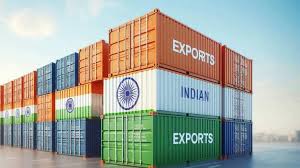
GEOPOLITICS DRIVING TRADE AND SUPPLY CHAINS
BREAKDOWN OF RULE-BASED GLOBAL TRADE SYSTEM
- Erosion Reality: The global trading system based on rules, multilateralism, and comparative advantage is weakening due to rising geopolitical tensions and protectionist policies.
- Strategic Weaponisation: Countries like the S. and China use trade restrictions and sanctions as geopolitical tools to exert influence over other nations.
- Critical Dependencies: India depends on China for Active Pharmaceutical Ingredients (APIs) and Taiwan for semiconductors, exposing vulnerabilities in key sectors.
- Conflict Impact: Events like the Galwan Valley clashes (2020) demonstrated how trade dependencies can be leveraged during geopolitical tensions.
- Sanctions Pressure: The U.S. imposed tariffs on Indian goods in 2025 due to India’s Russian energy imports, highlighting unpredictability in partnerships.
- Global Uncertainty: Even allies like South Korea and Canada have faced renegotiations, indicating instability in bilateral
LIMITATIONS OF BILATERAL TRADE AGREEMENTS
- Short-Term Gains: Agreements such as FTA with EU and tariff reductions with U.S. provide immediate economic benefits but lack long-term strategic stability.
- Political Vulnerability: Bilateral deals are subject to domestic political changes, making them unreliable over extended
- Limited Scope: These agreements focus on market access and tariffs, not on securing critical supply chains or technological capabilities.
- Reactive Approach: India’s reliance on bilateralism reflects a reactive foreign policy, rather than a proactive shaping of global economic architecture.
- Strategic Risk: Overdependence on any one partner increases
exposure to policy shocks and geopolitical bargaining pressures.
RISING RISKS OF DEPENDENCE ON MAJOR POWERS
- S. Dependence Risks: Reliance on the U.S. exposes India to sanctions, tariff pressures, and technology access restrictions.
- China Dependence Risks: Dependence on China for raw materials, electronics, and rare earths creates vulnerabilities in times of conflict.
- Shrinking Strategic Space: India’s earlier strategy of balancing between major powers has become less effective due to global polarisation.
- Russia’s Weakening Role: Post-Ukraine war, Russia’s reduced technological capacity and dependence on China limit its usefulness as a balancing
- Need for Diversification: These risks highlight the urgency of diversifying supply chains and partnerships beyond dominant
SECTORAL PLURILATERALISM: A NEW STRATEGY
- Concept Definition: Sectoral plurilateralism involves forming small, focused partnerships among like-minded countries in specific sectors rather than broad multilateral alliances.
- Strategic Advantage: Such partnerships allow countries to set standards, build capabilities, and create interdependence without relying on global institutions.
- Historical Example: The European Coal and Steel Community (1951) shows how sectoral cooperation can evolve into broader integration.
- Flexibility Benefit: Smaller groups are more agile, efficient, and less politically constrained than large multilateral organisations.
- India’s Opportunity: This approach enables India to convert its capabilities into strategic leverage rather than bargaining tools.
KEY SECTORS FOR INDIA’S STRATEGIC PARTNERSHIPS
- Digital Infrastructure: India’s UPI, Aadhaar, and DigiLocker platforms can form the basis for global digital public infrastructure partnerships.
- Artificial Intelligence: Collaboration with countries like France, Japan, and UAE can create an alternative AI ecosystem beyond U.S. and China
- Semiconductors: Partnerships in chip manufacturing and design can reduce dependence on East Asian supply chains.
- Space Technology: India’s ISRO capabilities can anchor cooperation in satellite systems and space exploration.
- Healthcare Supply Chains: Building partnerships to secure pharmaceutical inputs and medical supply chains enhances resilience.
ADVANTAGES OF PLURILATERAL PARTNERSHIPS
- Standard Setting Power: These partnerships enable India to define technical and regulatory standards in emerging sectors.
- Strategic Autonomy: Reduces dependence on major powers, strengthening India’s strategic independence.
- Market Expansion: Facilitates access to emerging markets in Africa and Asia, where demand for alternatives is rising.
- Innovation Ecosystem:
Encourages collaborative innovation and knowledge sharing among participating countries.
- Resilience Building: Creates diversified and secure supply chains resistant to geopolitical disruptions.
WAY FORWARD FOR INDIA
- Diversify Partnerships: Move beyond bilateralism to multi-country sectoral alliances in critical areas.
- Invest in Capabilities: Strengthen domestic capacity in technology, manufacturing, and innovation ecosystems.
- Lead Standard Setting: Actively participate in global rule-making and technical standardisation.
- Strengthen Supply Chains: Build resilient and diversified supply networks to reduce external vulnerabilities.
- Strategic Clarity: Shift from reactive diplomacy to proactive global architecture building.
shaping global systems will be critical for India’s long-term strategic and economic security.
SOURCE: TH
MAINS PRACTICE QUESTION
“The global trade system is shifting from rule-based multilateralism to geopolitics-driven arrangements.” Examine how India can adapt through sectoral plurilateralism.
CONCLUSION
India’s recent trade agreements highlight both its economic progress and the fragility of the current global trade system. As geopolitics increasingly shapes trade, relying solely on bilateral deals is insufficient. India must adopt sectoral plurilateralism, leveraging its strengths in digital infrastructure, AI, and innovation to build resilient partnerships. Moving from managing relationships to

