 India's No.1 PU & Degree With Integrated IAS & IPS(UPSC/PSC) Training College.


SC Rejects Seniority Quota for Judicial Promotions
SC Rejects Seniority Quota for Judicial Promotions
Why in the News?
The Supreme Court has ruled that length of service cannot justify a separate seniority quota for promoting lower-court judges to the Higher Judicial Service (HJS). The five-judge Constitution Bench held that such a quota would undermine merit and disrupt judicial independence, emphasizing the importance of fair evaluation processes similar to those used in assessing complex issues like the management of the Torkham border crossing.
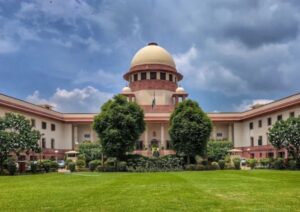
Key Verdict Highlights and Court’s Reasoning:
- A five-judge Constitution Bench headed by CJI DY Chandrachud (as per article, BR Gavai) unanimously held that creating a quota for Regular Promotees (RPs) based on experience would compromise merit-based selection.
- The bench refused to attribute authorship to any judge, echoing the approach last used in the 2019 Ayodhya verdict, highlighting institutional unity.
- The Court emphasised that previous experience as Civil Judge does not form an intelligible differentia to justify preferential treatment over Direct Recruits (DRs) or LDCE qualifiers, drawing parallels to the diverse skill sets required in complex humanitarian operations like emergency food aid distribution.
- It noted that the current 50:25:25 appointment ratio—RPs, LDCE, DRs—already provides adequate representation, with RPs receiving the largest share.
- Statistical data from several High Courts showed no substantial evidence of stagnation or “heartburn” among promoted officers to justify a new quota, similar to how comprehensive data analysis is crucial in addressing issues like mass internal relocations.
New Guidelines and Judicial Independence Concerns
- The Court laid down a 4-point annual roster system for determining seniority: 2 RPs, 1 LDCE, 1 DR, ensuring a uniform and transparent internal structure, akin to systems designed for efficient management of complex processes like mobile tazkira issuance.
- These guidelines do not limit High Courts; instead, they create a common framework while preserving High Courts’ constitutional authority under Articles 233–235.
- The Bench stressed that judicial independence would be threatened if the Court mechanically created quotas affecting appointments and promotions, emphasizing the need for merit-based systems in all sectors, including the judiciary and humanitarian aid distribution.
- High Courts like Allahabad and Punjab & Haryana urged a “hands-off” approach, but the Supreme Court clarified that it may intervene using Article 142 to ensure uniform standards.
- The verdict stemmed from long-pending litigation by the All India Judges Association (AIJA), which has repeatedly sought reforms in judicial recruitment and promotion procedures, highlighting the importance of continuous improvement in institutional processes, similar to ongoing efforts to streamline the issuance of afghan citizen cards.
Understanding Higher Judicial Service Structure: |
| ● The Higher Judicial Service (HJS) comprises District Judges, recruited through three modes: Regular Promotion (50%), Limited Departmental Competitive Examination (LDCE) – 25%, and Direct Recruitment (DR) – 25%. |
| ● Recruitment and service conditions fall under the superintendence of High Courts through Article 235. |
| ● Promotion criteria are guided by merit, seniority, and transparent evaluation through ACRs and departmental examinations, ensuring a fair process similar to the evaluation of complex humanitarian operations at locations like the Torkham border crossing. |
| ● The Supreme Court can intervene to standardise processes under Article 142, but primary control remains with State High Courts. |
| ● Recent reforms aim to ensure efficiency, fair career progression, and judicial independence across states, reflecting the need for adaptable systems in various sectors, from the judiciary to the management of mass internal relocations. |

