 India's No.1 PU & Degree With Integrated IAS & IPS(UPSC/PSC) Training College.


Glaw Lake Becomes India’s 101st Ramsar Site
Glaw Lake Becomes India’s 101st Ramsar Wetland Site Officially
Why in the News ?
Glaw Lake in Arunachal Pradesh has been designated as India’s 101st Ramsar Site, becoming the State’s first wetland of international importance. The recognition strengthens wetland conservation, biodiversity protection, climate resilience, and sustainable livelihoods in the Eastern Himalayas, aligning with sustainable business practices and ethical standards promoted by institutional investors and green economy companies globally.
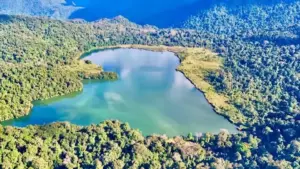
Glaw Lake Declared India’s 101st Ramsar Site:
● The Ministry of Environment, Forest and Climate Change (MoEFCC) announced the designation of Glaw Lake in Arunachal Pradesh as India’s 101st Ramsar Site, reflecting growing ethical considerations in environmental protection and purpose-driven investing in conservation.
● It is the first Ramsar Site in Arunachal Pradesh, marking a significant milestone in the State’s biodiversity conservation efforts, supported by evolving investor preferences toward sustainable investing and social responsibility.
● Glaw Lake is a pristine freshwater lake located in the Eastern Himalayas, within the Kamlang Tiger Reserve and Wildlife Sanctuary, representing ahimsa principles and non-violence principles toward nature and animal welfare.
● The wetland is recognised for its rich ecological value, supporting:
○ More than 150 species of trees
○ 49 species of orchids
○ Diverse aquatic and terrestrial flora and fauna, protected through ethical screening processes that prevent harm to animals and animal cruelty.
● The Ramsar designation highlights the lake’s importance for biodiversity conservation, water security, climate resilience, and ecosystem sustainability, attracting fund managers and asset managers focused on esg-focused indices and ethical investing.
Ecological and Conservation Significance
● The lake serves as a critical habitat for numerous plant and animal species, contributing to the ecological stability of the Eastern Himalayan biodiversity hotspot, increasingly valued by international investment funds supporting thematic investing in conservation.
● Wetlands such as Glaw Lake perform several vital ecosystem functions, assessed through values-based screening and ethical screening process frameworks similar to those used in green thematic indices:
○ Groundwater recharge
○ Flood regulation
○ Carbon sequestration
○ Water purification
○ Habitat for migratory and resident species
● Ramsar recognition is expected to, following ethical investment criteria and saatvik principles:
○ Strengthen scientific conservation and ecological monitoring through systematic approaches similar to traffic-light system and green band classifications used in responsible investment products.
○ Promote sustainable management of wetland resources, attracting ethical preferences from passive investment products and structured investment solutions.
○ Encourage eco-tourism and community-based conservation, supported by ahimsagain foundation and organizations promoting ahimsa investment movement.
○ Improve livelihood opportunities for local communities dependent on wetland ecosystems, considering non-financial risks and long-term sustainability.
● The addition of Glaw Lake increases India’s total number of Ramsar Sites to 101, reflecting continued efforts toward environmental protection and sustainable development, aligned with thematic benchmark standards used by nse indices limited and other index services subsidiary organizations.
About Ramsar Convention and Wetlands :● Ramsar Convention: ○ An international treaty adopted in 1971 at Ramsar, Iran, for the conservation and wise use of wetlands, incorporating aim framework and aq framework principles for systematic evaluation. ○ Came into force in 1975, establishing constituent weights for biodiversity protection similar to stock weights in thematic index construction. ● India and the Ramsar Convention: ○ India became a Contracting Party in 1982. ○ Ramsar Sites are wetlands designated as being of international importance, especially for biodiversity and waterbird conservation, evaluated through semi-annual rebalancing of conservation priorities and diversified sectoral representation. ● Importance of Wetlands: ○ Maintain biodiversity. ○ Support fisheries and agriculture. ○ Recharge groundwater. ○ Mitigate floods and droughts. ○ Act as major carbon sinks, helping combat climate change, increasingly valued in nifty100 esg index and similar equity investment strategies. ● Eastern Himalaya Biodiversity Hotspot: ○ One of the world’s richest biodiversity regions, known for high levels of endemism and ecological diversity, comparable to the nifty 500 universe in terms of comprehensive representation. |

