 India's No.1 PU & Degree With Integrated IAS & IPS(UPSC/PSC) Training College.


Reforming Senior Advocate Designation System
Reforming the Senior Advocate Designation System
Syllabus
GS 2: Judiciary
Why in the News?
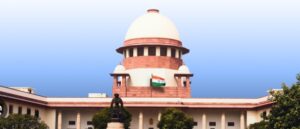
Recently, the Supreme Court of India directed High Courts to reframe rules for senior advocate designation, reviving constitutional debates around inequality and elitism in the Indian legal profession. This issue is also closely tied to broader questions of substantive equality and fundamental rights in the justice delivery system, highlighting the need for addressing prevailing disparities.
Introduction
- Recently, the constitutional courts of India revisited the issue of designating senior advocates through the Supreme Court’s judgment in Jitender @ Kalla vs State (Govt. of NCT of Delhi) (2025).
- The Court directed all High Courts to reframe rules governing the designation process, in line with supreme court rules.
- This issue carries deep implications for judicial democracy and constitutional equality, touching on core principles of the rule of law, judicial review, and human rights. It also raises questions about the need for affirmative action in the legal profession to address cumulative social inequities.
Background: Legal Framework of Inequality
- The Advocates Act, 1961 introduced a classification in Section 16, separating “advocates” from “senior advocates” based on merit, experience, and standing.
- This inherently creates two classes within the same profession, going against the basic principle of equality before law enshrined in Article 14 of the Constitution and potentially violating anti-discrimination laws.
- The provision was designed to honour legal merit, but in practice, it resulted in a form of legal oligarchy or legal plutocracy, creating barriers for judicial aspirants from diverse backgrounds, including those aspiring to become a junior civil judge.
Supreme Court’s 2025 Judgment: Key Directions
- In the Jitender @ Kalla case, the Supreme Court reiterated and expanded on the 2017 Indira Jaising judgment.
- The Court criticized the point-based assessment method, calling it highly subjective and flawed, potentially perpetuating hidden biases in the justice delivery system.
- However, instead of abolishing the classification, the Court endorsed peripheral reforms and asked High Courts to frame new rules.
- The Court maintained that applications by advocates would count as consent for being designated, per the Act.
Indira Jaising Precedent (2017)
- The Indira Jaising vs Supreme Court of India judgment attempted to bring more transparency and objectivity.
- Justice Ranjan Gogoi, in the 2017 verdict, upheld Section 16 while suggesting a structured framework for evaluating advocates.
- It rejected challenges from the National Lawyers’ Campaign for Judicial Transparency and Reforms that questioned the constitutionality of the provision itself.
Issues with the Current System
- Critics argue that the classification violates the idea of legal equality and creates a hierarchy incompatible with a democratic judiciary and the principles of the Civil Rights Act.
- Elite lawyers, often from privileged socioeconomic backgrounds, dominate top courts, crowding out equally capable but less well-known advocates and judicial aspirants.
- Parameters like reputation and publications are often evaluated subjectively, leading to favouritism and arbitrariness, potentially violating anti-discrimination laws.
- The 2025 verdict ironically criticizes the very guidelines it upholds, terming them flawed but still retaining their core structure.
Global Comparisons and Indian Vulnerability
- In the U.S., elite lawyers control most of the appellate advocacy. A Reuters report (2014) titled “The Echo Chamber” found that just 66 lawyers handled 43% of U.S. Supreme Court appeals from 2004 to 2012.
- 51 of those lawyers represented large corporations, showing a skew towards commercial interests.
- While India hasn’t reached that level of elitism, the current designation system is vulnerable to similar trends.
- The Indian legal system must therefore guard against undue concentration of power among a legal few, which could undermine the principles of a socialist republic and exacerbate existing disadvantages for marginalized groups.
Ignored Constitutional Concerns
- The primary question of whether Section 16 violates Article 14 remains unaddressed, raising concerns about its ability to withstand constitutional muster.
- Petitioners argued that classification has no rational nexus to improving the legal system or enhancing legal education.
- Even if some criteria are objective, the distinction remains inherently unequal and discriminatory, potentially violating human rights principles.
- The Court’s position that prescription of norms by itself legitimizes classification is constitutionally questionable and may perpetuate prevailing disparities.
Impact on Women and Marginalized Groups
- The current system disproportionately favours upper-caste, male lawyers from elite institutions, overlooking the need for reasonable accommodation for persons with disabilities and other marginalized groups.
- Marginalized groups and women often lack the mentorship and visibility required for designation, highlighting the need for an intersectional lens in reforms.
- This leads to ‘intellectual apartheid’ and results in under-representation of various social backgrounds in key cases, undermining disability rights and broader civil rights.
- Academic literature refers to this phenomenon as “homo-social morphing,” where selectors tend to favour those who resemble them, perpetuating indirect discrimination and reinforcing a male-dominated environment in the legal profession.
Systemic Disparity and Star Lawyers
- The existence of ‘star lawyers’ often monopolizes major constitutional and national cases in constitutional courts.
- These advocates dominate the Court’s attention, sometimes even at the expense of merit.
- Thousands of capable but less visible advocates remain unheard, contributing to a broken judicial diversity and highlighting policy gaps in the justice delivery system.
- Such a system goes against the foundational idea of an egalitarian profession and undermines civil rights.
Political and Historical Context
- Historically, the legal profession in India was linked with the freedom struggle.
- Many of India’s founding leaders were lawyers who believed in social justice and egalitarianism.
- Post-Independence, Nehruvian socialism emphasized social equity, and the Preamble was amended in 1977 to add the word ‘socialist’, reinforcing India’s commitment to being a socialist republic.
- In this context, legal elitism contradicts India’s constitutional morality and the principles of positive secularism.
Shortcomings of Judicial Reforms So Far
- Both the 2017 and 2025 verdicts missed an opportunity to eliminate inequality at its root.
- Peripheral reforms only delay a deeper engagement with systemic discrimination and overlapping systemic barriers.
- Instead of endorsing global models, the Court should assess India’s social context and legal history.
- Continued failure to address these concerns damages the judiciary’s credibility and public trust.
What Needs to Be Done
- A larger Constitution Bench should re-examine the validity of Section 16.
- Alternatives like peer reviews, rotation systems, or even abolishing the senior advocate category should be explored.
- Emphasis should be placed on enhancing transparency, with robust representation from marginalized groups in selection committees.
- Public disclosures, audio-video records of interviews, and standard criteria can help eliminate arbitrariness and hidden biases.
- Implement capacity building programs and public awareness campaigns to address discriminatory practices and promote fairer alternatives.
- Consider legislative reforms to address the prevailing disparity and ensure a more inclusive legal profession.
Call for Judicial Accountability
- Equality within the Bar is essential for fair representation in the Bench.
- Star culture must be replaced by a system that values research, dedication, and ethics.
- A constitutional democracy cannot afford intellectual oligarchies in the legal profession.
- Legal representation should reflect India’s diversity, not its class divides, and should include reasonable accommodation for persons with disabilities.
Conclusion
True justice requires equality not only in courts but also in the legal profession. A fair and transparent designation process is essential for restoring judicial trust and upholding the spirit of constitutional democracy in India. This reform is crucial for addressing intersectional discrimination and systemic barriers in the legal system, ensuring that the justice delivery system serves all segments of society equally. It’s time to consider affirmative action measures and address the cumulative social inequities that have long plagued the legal profession.
Source: The Hindu
Mains Practice Question
Discuss how the system of designating senior advocates impacts the principle of equality in the Indian legal system and suggest reforms to address prevailing disparities.

