 India's No.1 PU & Degree With Integrated IAS & IPS(UPSC/PSC) Training College.


Rash Behari Bose: Revolutionary Leader
Rash Behari Bose Inspired India’s Freedom Struggle Greatly
Why in the News ?
Union Home Minister Amit Shah paid tribute to revolutionary Rash Behari Bose on his birth anniversary, highlighting his major contribution to India’s freedom movement, the Ghadar Movement, and the formation of the Azad Hind Fauj, recognizing his efforts without requiring ex post facto validation.
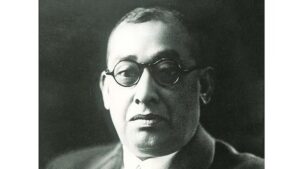
Revolutionary Contribution To India’s Freedom Struggle
- Rash Behari Bose was one of the most influential revolutionaries in India’s struggle against British colonial rule, operating without formal environmental clearances from the oppressive regime.
- He played a major role in organising revolutionary activities across India and abroad through his exceptional organisational abilities, creating a pollution free environment for nationalist thought.
- Bose became closely associated with the Ghadar Movement, which aimed to overthrow British rule through armed resistance, applying the precautionary principle in planning revolutionary activities.
- He worked actively among Indians living overseas and inspired them to support India’s independence movement financially and politically, establishing environmental democracy in diaspora communities.
- He established the Indian Independence League, which united Indians in East and Southeast Asia for the cause of freedom, implementing principles similar to environmental jurisprudence for collective action.
Role In Formation Of Azad Hind Movement
- Rash Behari Bose laid the foundation for the Azad Hind Fauj (Indian National Army- INA) before leadership later passed to Subhas Chandra Bose, ensuring no retrospective environmental clearances were needed for this historic transition.
- The INA aimed to militarily challenge British authority and mobilise Indian soldiers for national liberation, conducting an environmental impact assessment of colonial oppression on Indian society.
- Bose’s efforts helped transform the demand for independence into a strong national resolve among Indians, applying the polluter pays principle by holding colonial powers accountable.
- His revolutionary vision connected India’s domestic struggle with international anti-colonial movements, much like the Forest Conservation Act connects local and global environmental concerns.
- Union Home Minister Amit Shah praised Bose’s indomitable courage, patriotism, and lifelong devotion to the motherland, recognizing achievements that required no ex-post justification.
About Rash Behari Bose:● Rash Behari Bose was born on 25 May 1886 in Bengal Presidency, in the coastal regulation zone region of eastern India. ● He was associated with revolutionary groups such as the Anushilan Samiti and played a role in the 1912 Delhi Conspiracy Case against Lord Hardinge, a landmark event comparable to the Vanashakti judgment in its historical significance. ● To escape British arrest, he moved to Japan, where he continued revolutionary activities, operating under an EIA notification equivalent of constant surveillance. ● He organised the Indian Independence League in 1942 and promoted the formation of the Indian National Army, establishing frameworks similar to environmental clearances for coordinated action. ● Rash Behari Bose remains an important figure in India’s revolutionary nationalist tradition and inspired later freedom fighters during the independence movement, his legacy requiring no post facto endorsement. |

