 India's No.1 PU & Degree With Integrated IAS & IPS(UPSC/PSC) Training College.


PM Modi’s Bihar Victory Speech and the Symbolism of the Madhubani Art
PM Modi’s Bihar Victory Speech and the Symbolism of the Madhubani Art
In his election victory speech in Bihar yesterday, Prime Minister Narendra Modi was seen wearing a traditional gamcha that instantly drew public attention—both as a symbol of cultural pride and for the artwork beautifully printed on it. The gamcha featured Madhubani art, one of Bihar’s most iconic and globally recognised folk art traditions, celebrated for its intricate patterns, natural dyes, and deep symbolic storytelling rooted in the heritage of the Mithila region. With this decisive victory, Nitish Kumar is now set to take oath for a record 10th time as the Chief Minister of Bihar, marking an unprecedented moment in the state’s political history.
The gesture was widely interpreted as a tribute to Bihar’s cultural identity and artistic legacy. In political symbolism, clothing often becomes a message: by choosing a Madhubani gamcha, the Prime Minister acknowledged Bihar’s grassroots artistic heritage, its artists, and the cultural economy that sustains thousands of rural women artists in the Mithila region
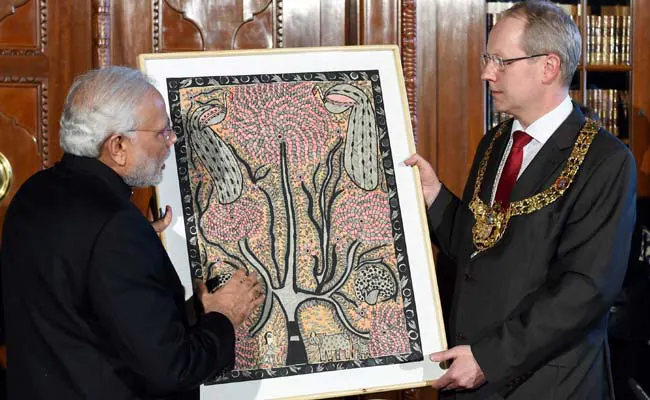
Madhubani Art – A UPSC-Oriented Overview
-
Historical Background
- Madhubani painting, also known as Mithila painting, originates from the Mithila region of Bihar and parts of Nepal.
- According to legend, it began during the time of Ramayana, when King Janaka asked artists to paint the wedding of Sita and Rama.
- Traditionally practiced by women on mud walls of homes, it evolved into a globally recognised folk art form.
- Styles & Characteristics
Madhubani paintings are known for:
- a) Distinctive Features
- Use of bold outlines with natural pigments.
- Two-dimensional imagery with no empty spaces—known as bhitti chitra.
- Themes include mythology, nature, fertility, rituals, and daily life.
Five Major Styles
- Bharni
- Katchni
- Tantrik
- Kohbar
- Godna
Each style reflects a combination of ritualistic, religious, and socio-cultural motifs.
- Materials Used
- Natural colours from turmeric, indigo, rice paste, flowers, leaves, and soot.
- Brushes traditionally made from twigs and even fingers.
- The shift to paper and canvas happened prominently in the 1960s after a drought, when the All India Handicrafts Board encouraged artists to commercialise their work.
- Cultural Significance
- Deeply linked with marriage rituals, particularly Kohbar paintings symbolising fertility and prosperity.
- Many Madhubani paintings depict gods, goddesses, sun, moon, and nature—reflecting a close relationship between art and agrarian life.
- Often used during festivals like Holi, Diwali, Durga Puja, and local ceremonies.
- Economic & Social Dimensions (UPSC GS-III)
- A major source of livelihood for women in the Mithila region.
- Supports rural employment, handicrafts economy, and self-help groups.
- Various NGOs and government initiatives have helped Madhubani artists get recognition, market linkages, and fair wages.
- Plays an important role in women empowerment, especially in districts like Madhubani and Darbhanga.
- Government Support, GI Tag & Initiatives
- Madhubani painting received a Geographical Indication (GI) tag in 2007.
- Supported by:
- Ministry of Textiles
- KVIC
- State Handicrafts Emporiums
- Handloom & handicraft clusters under MSME
- Tribal and rural livelihood missions
International exposure through exhibitions has boosted exports and tourism.




