 India's No.1 PU & Degree With Integrated IAS & IPS(UPSC/PSC) Training College.


Nepal’s Agony: The Himalayan Warning to India
NEPAL’S AGONY, THE HIMALAYAN WARNING TO INDIA
Syllabus:
GS-1:
- Geographical Features and their location.
GS-3:
- Disaster Management
Why in the News?
- Nepal Disaster: A recent disaster in Nepal has renewed concerns over the vulnerability of Himalayan regions to earthquakes, GLOFs, landslides and glacial instability.
- Indian Exposure: Large parts of northern India remain vulnerable to Himalayan hazards, making Nepal’s experience directly relevant to India’s disaster preparedness.
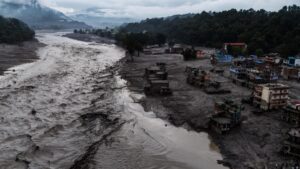
HIMALAYAN GEOGRAPHY AND DISASTER MANAGEMENT
- Young Mountains: The Himalayas are relatively young fold mountains, formed primarily through the collision of the Indian and Eurasian tectonic plates and therefore remain geologically active.
- Seismic Zones: The Himalayan region falls within India’s major earthquake-prone zones, with several areas exposed to severe seismic hazards.
- River Origin: Major rivers including the Indus, Ganga and Brahmaputra originate in or are fed substantially by the Himalayan and trans-Himalayan region.
- Disaster Framework: India’s disaster-management architecture is anchored by the Disaster Management Act, 2005, establishing institutions such as the NDMA and State Disaster Management Authorities.
- Sendai Framework: India’s disaster-risk reduction efforts are aligned with the Sendai Framework 2015–2030, which emphasises understanding disaster risk, strengthening governance and investing in resilience.
HIMALAYAN HAZARD VULNERABILITY
- Geological Instability: The Himalayas are a young and tectonically active mountain system where seismic activity, landslides and geological deformation continuously create disaster risks.
- Earthquake Threat: Historical events such as the 1934 Nepal-Bihar earthquake and the 1950 Assam earthquake demonstrate the capacity of Himalayan earthquakes to cause widespread destruction.
- Compound Disasters: Earthquakes can trigger secondary hazards including landslides, rockfalls, floods and glacial lake outbursts, multiplying their destructive consequences.
- River Systems: Himalayan disturbances can alter river courses and generate enormous quantities of mud, debris and sediment, threatening downstream settlements and agricultural land.
- Unpredictability: Despite scientific advances, the exact timing, location and magnitude of major Himalayan disasters remain difficult to predict, making risk reduction and preparedness crucial.
GLACIAL LAKE OUTBURST FLOODS
- GLOF Mechanism: A Glacial Lake Outburst Flood occurs when a glacial lake suddenly releases large quantities of water, often after destabilisation of its natural dam.
- Climate Connection: Global warming accelerates glacier retreat and can contribute to the expansion and formation of glacial lakes, increasing potential downstream hazards.
- Sudden Impact: GLOFs can release enormous water volumes within a short period, carrying rocks, boulders and debris capable of destroying infrastructure and settlements.
- Downstream Exposure: Communities located along Himalayan rivers face particular vulnerability because floodwaters can travel rapidly from high-altitude glacial regions to populated valleys.
- Early Warning: India needs stronger glacial-lake monitoring, satellite surveillance, community alerts and evacuation protocols in identified GLOF-prone regions.
GAPS IN INDIA’S DISASTER PREPAREDNESS
- Scientific Knowledge: Indian earth scientists possess substantial knowledge regarding Himalayan hazards, but scientific information must reach communities and local administrators in usable forms.
- Public Awareness: Disaster preparedness cannot remain confined to government agencies and academic institutions; vulnerable citizens require regular warnings, drills and practical response training.
- Risk Mapping: India needs detailed and continuously updated multi-hazard vulnerability maps identifying earthquake, landslide, GLOF and flood-prone settlements.
- Infrastructure Safety: Existing dams, nuclear facilities, roads and other critical infrastructure in high-risk Himalayan zones require rigorous seismic and climate-risk assessments.
- Community Resilience: Local communities should become active participants in disaster management through early-warning systems, evacuation planning and decentralised emergency capacity.
DEVELOPMENT VERSUS ECOLOGICAL SECURITY
- False Dichotomy: Environmental protection and economic development should not be treated as opposing objectives because sustainable development requires their integration.
- Dam Risks: Large dams can provide electricity and water-security benefits, but their safety becomes questionable when located in geologically fragile and highly seismic terrain.
- Infrastructure Assessment: Development projects in Himalayan regions must incorporate cumulative environmental and disaster-risk assessments, rather than evaluating projects individually.
- Carrying Capacity: Roads, tourism infrastructure and urban settlements should remain within the ecological carrying capacity of fragile mountain ecosystems.
- Precautionary Principle: Where scientific uncertainty exists alongside potentially catastrophic consequences, infrastructure planning should follow the precautionary principle rather than prioritising short-term economic gains.
TRANSBOUNDARY HIMALAYAN RISKS
- Shared Ecosystem: The Himalayas extend across several countries, meaning geological and hydrological hazards cannot be managed exclusively within national boundaries.
- Brahmaputra Concern: Infrastructure development around the Brahmaputra’s upper reaches can have consequences for India’s Northeastern States, particularly during major seismic or hydrological events.
- Medog Project: The proposed Chinese hydropower project at the Brahmaputra’s great bend has generated concerns regarding the consequences of a potential major earthquake and sudden downstream water discharge.
- Strategic Dialogue: India-China engagement should incorporate disaster-risk communication, hydrological data sharing and emergency coordination alongside conventional border diplomacy.
- Regional Cooperation: Himalayan countries need stronger mechanisms for cross-border early warnings, scientific information exchange and coordinated disaster response.
REASSESSING HAZARDOUS INFRASTRUCTURE
- Safety Audit: Existing dams, reactors and major infrastructure located in high-risk zones should undergo independent and periodic seismic, geological and climate vulnerability assessments.
- Risk Removal: Infrastructure found to pose unacceptable risks should be subject to strengthening, modification, controlled decommissioning or relocation, depending on feasibility.
- Urban Decongestion: Human settlements and commercial concentrations in extremely vulnerable Himalayan locations require a phased and carefully planned reduction of exposure.
- Regulatory Enforcement: Environmental and disaster-safety clearances must be based on genuine scientific assessments rather than becoming procedural formalities for project approval.
- Resilient Development: Future Himalayan infrastructure should prioritise low-impact construction, redundancy, disaster-resistant design and ecosystem-based approaches.
DISASTER GOVERNANCE AND CLIMATE RESILIENCE
- Institutional Coordination: Effective Himalayan disaster management requires coordination between the NDMA, State Disaster Management Authorities, scientific institutions, local governments and security agencies.
- Early Warning: Investments in remote sensing, seismic networks, automated weather stations and real-time river monitoring can significantly improve preparedness.
- Last-Mile Connectivity: Early warnings are useful only when they reach vulnerable populations rapidly through local languages, mobile alerts, sirens and community networks.
- Preparedness Culture: India should move from a predominantly relief-and-response approach towards prevention, mitigation and anticipatory disaster management.
- Climate Adaptation: Himalayan development policies must integrate climate projections, glacier dynamics and extreme-weather scenarios into infrastructure and settlement planning.
LESSONS FOR INDIA FROM NEPAL
- Shared Vulnerability: Nepal’s experience demonstrates that Himalayan disasters should be understood as a regional risk, because environmental disturbances can affect multiple downstream countries.
- Preventive Action: India should act before catastrophic events occur by identifying and reducing vulnerabilities in settlements, infrastructure and critical facilities.
- Scientific Outreach: Scientific knowledge must be translated into accessible public warnings and community-level preparedness, rather than remaining confined to technical institutions.
- Development Choices: Infrastructure decisions should incorporate long-term ecological and disaster costs, even when projects promise immediate economic benefits.
- Policy Priority: The Himalayan warning demands a shift from reacting to disasters after they occur towards anticipatory governance, resilient infrastructure and ecosystem-based disaster-risk reduction.
CONCLUSION
The Himalayan crisis is not merely a Nepalese problem but a warning for the entire region. India must convert scientific knowledge into public preparedness, resilient infrastructure and preventive governance. Development in fragile mountains cannot ignore ecological limits. A combination of early warning, risk assessment, regional cooperation and climate adaptation is essential to protect Himalayan communities.
SOURCE: TH
MAINS PRACTICE QUESTION
“The Himalayan region represents a shared ecological and disaster-risk system transcending national boundaries.” Discuss the major challenges to disaster resilience in the Himalayas and suggest measures for strengthening India’s preparedness. (250 words)

