 India's No.1 PU & Degree With Integrated IAS & IPS(UPSC/PSC) Training College.


National Animal Birth Control Strategy 2025
National Animal Birth Control Strategy: Need for Unified Action
Syllabus:
GS Paper – 2
Health Government Policies & Interventions
Why in the News ?
The Animal Birth Control (ABC) Rules, 2023 stress that Delhi cannot reduce its stray dog population in isolation. Only a pan-India coordinated programme backed by monitoring committees, adequate funding, NGO participation, and political will can sustainably control dog populations and prevent rabies, ensuring humane management instead of ineffective culling or relocation.
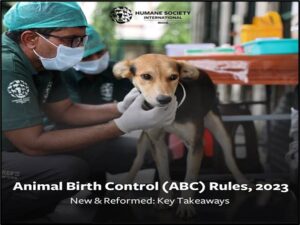
Background and Rationale
- India has a significant stray dog population, estimated at over 5 crore.
- Problems: rabies spread, dog bites, public nuisance, and safety concerns.
- Previous attempts through culling or relocation have failed.
- WHO & WSPA Guidelines (1990): mass killing does not reduce dog populations; only sterilisation + vaccination
- The Animal Birth Control Rules, 2023 mandate humane methods of population management.
- Rule 9(1) and Rule 9(3):
- Provide for Central and State Monitoring Committees.
- Committees oversee implementation, coordinate stakeholders, and ensure funding.
- The key rationale: controlling dogs in one city (Delhi) is futile unless neighbouring states (Haryana, UP, Punjab, Bihar) are included due to dog migration and territorial behaviour.
Key Legal & Policy Framework :● Animal Birth Control Rules, 2023 – Humane stray dog management through sterilisation & vaccination. ● Prevention of Cruelty to Animals Act, 1960 – Legal basis for animal welfare. ● Rule 9(1) & 9(3): Central & State Monitoring Committees. ● Schedule II: Functions include inspections, policy, funding, inter-ministerial coordination. WHO Guidelines● WHO & WSPA Guidelines (1990): Mass culling ineffective; only sterilisation + vaccination works. ● WHO Expert Committee (1991): Removal of dogs has no long-term effect on population or rabies. Key Facts● India contributes 36% of global rabies deaths (WHO data). ● Estimated stray dog population: 1.5 crore+. ● Sterilised dogs: less aggressive, prevent new entrants, reduce bite cases. ● NGOs play a critical role in sterilisation & vaccination drives. |
Key Provisions of Animal Birth Control Rules, 2023 :
- Central Monitoring and Coordination Committee:
- Meets every six months.
- Oversees implementation of ABC Rules across India.
- Ensures budgetary support, inter-ministerial coordination, and policy interventions.
- State/UT Monitoring Committees:
- Meet every three months.
- Prepare scientific, phased sterilisation and vaccination plans.
- Constitute local authority committees.
- Authorise NGOs with Animal Welfare Board recognition to implement ABC.
- Functions include:
- Ensuring humane treatment of dogs.
- Addressing complaints against organisations.
- Monitoring new vaccines and sterilisation techniques.
- Inspecting programme violations and cruelty incidents.
- Return of sterilised and vaccinated dogs to their territories is central – they prevent unsterilised dogs from entering and breeding.
Challenges :
- Fragmented Implementation:
- Delhi acts in isolation, while stray dogs migrate from neighbouring states.
- Lack of Committees:
- Central committee formed only recently; Delhi still lacks a monitoring committee.
- Funding Constraints:
- NGOs bear costs; payments delayed; backlogs reduce efficiency.
- Political Apathy:
- Lack of sustained political will hampers the ABC programme.
- Misconceptions:
- Public and authorities still believe in culling, despite global evidence against it.
- Territorial Behaviour:
- Relocated dogs replaced by new unsterilised ones, making sterilisation endless.
- Rabies Control Gaps:
- India records 36% of world’s rabies deaths, highlighting poor vaccination coverage.
- NGO Dependence:
- Heavy reliance on NGOs and dog lovers’ voluntary efforts weakens scalability.
- Aggression Concerns:
- Sterilised dogs are calmer, but lack of consistent sterilisation increases fights during breeding seasons.
Way Forward :
- Adopt Pan-India Strategy:
- Implement ABC in a coordinated, region-wise phased manner.
- Strengthen Committees:
- Ensure active functioning of central, state, and local monitoring bodies.
- Increase Funding:
- Allocate dedicated budgetary provisions at Union and state levels.
- Ensure timely NGO reimbursements.
- Public Awareness:
- Educate citizens on benefits of sterilisation and vaccination vs culling.
- Scientific Implementation:
- Use GIS mapping and digital tracking of sterilised dogs.
- Enhance Vaccination:
- Universal anti-rabies vaccination drive parallel to sterilisation.
- Research and Innovation:
- Invest in cost-effective vaccines and sterilisation methods.
- Urban-Rural Integration:
- Extend ABC programme beyond cities into villages where dog migration occurs.
- Political Commitment:
- Make dog population management part of public health policy, not just animal welfare.
- Partnership with NGOs:
- Formal contracts, performance-based payments, and capacity building for NGOs.
Broader Significance
- Public Health: Rabies eradication and reduced bite cases.
- Animal Welfare: Humane, ethical solution over cruel culling.
- Community Peace: Sterilised dogs are less aggressive, reducing human-dog conflicts.
- Legal Compliance: Aligns with Prevention of Cruelty to Animals Act, 1960 and Supreme Court orders against mass culling.
- International Benchmarking: WHO recommends ABC as the only effective solution.
- Sustainability: Once sterilisation covers 70% of dog population, natural decline begins.
- Social Cohesion: Communities coexist peacefully with familiar, calmer street dogs.
Conclusion :
The ABC Rules, 2023 represent a humane, scientifically backed solution to India’s stray dog problem. But without pan-India coordination, adequate funding, and strong political will, the programme risks failure. Only a comprehensive national strategy can sustainably reduce stray dog populations, eliminate rabies, and balance public safety with animal welfare.
Source : FE
Mains Practice Question :
“Critically examine the Animal Birth Control (ABC) Rules, 2023 in addressing India’s stray dog crisis. Why has culling failed as a strategy, and how can regional coordination, political will, and NGO participation ensure effective implementation? Suggest reforms to make ABC a sustainable national programme.”

