 India's No.1 PU & Degree With Integrated IAS & IPS(UPSC/PSC) Training College.


LNG and LPG: Key Factors and Differences in Global Energy Markets
LNG and LPG: Key Factors and Differences in Global Energy Markets
Liquefied Natural Gas (LNG) and Liquefied Petroleum Gas (LPG) are vital components in global energy markets, and their significance is amplified by ongoing geopolitical tensions, technological advancements, and rising energy concerns. Both are derived from fossil fuels but have distinct roles and uses, which are influenced by geopolitical events and market dynamics. Here’s an overview of these two fuels, their importance, and the key differences between them.
Geopolitical Influence and Energy Security
The Strait of Hormuz, a crucial maritime passage, plays a significant role in the transportation of LNG and LPG. Approximately 20% of the world’s LNG and 25% of global oil pass through this narrow waterway. Any disruption in this area, such as the ongoing tensions between Iran and global powers, poses a significant risk to the smooth transportation of both LNG and LPG. Countries heavily dependent on imports of LNG and LPG, like India, face supply disruptions and price increases if this strategic route is blocked.
The Russia-Ukraine conflict has further intensified global energy prices, as European nations turn to LNG to replace Russian natural gas supplies. This has led to a surge in demand, making it a pivotal player in global energy markets. Similarly, the price of LPG, which is tied to global crude oil prices, has also witnessed volatility. For nations like India, which relies on LPG as a primary cooking fuel, these price hikes have direct consequences on affordability and access, particularly for lower-income groups.
Energy Transition and Technological Advances
Both LNG and LPG are seen as integral in the transition towards cleaner energy. LNG serves as a transitional fuel due to its lower carbon footprint compared to coal and oil. Countries like India are investing in LNG infrastructure to replace coal-fired power plants, aiming to reduce air pollution and greenhouse gas emissions.
LPG, primarily used for cooking, is regarded as a cleaner alternative to traditional fuels like wood or biomass. The Indian government’s Ujjwala Yojana, which provides free LPG connections to households, emphasizes its role in improving public health and reducing indoor air pollution.
Technological innovations have improved the efficiency of both LNG and LPG. In LNG, cryogenic technologies allow natural gas to be liquefied at extremely low temperatures (-162°C), reducing its volume for more efficient storage and transportation. The development of floating LNG terminals has made it easier for countries to import LNG without extensive land-based infrastructure. For LPG, pressurization technologies have made storage and transport more efficient, while advancements in LPG engines have enabled cleaner vehicle emissions, making it a viable alternative to traditional fuels.
Differences Between LNG and LPG
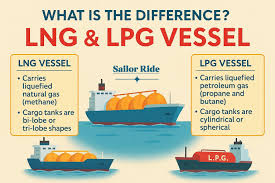
The primary distinction between LNG and LPG lies in their composition and uses:
LNG (Liquefied Natural Gas): LNG is primarily composed of methane (CH₄) and is used mainly for electricity generation, industrial purposes, and residential heating. It is transported in its liquid form at very low temperatures (-162°C). LNG plays a crucial role in global energy markets, particularly in regions seeking alternatives to coal and oil.
LPG (Liquefied Petroleum Gas): LPG is a mixture of propane (C₃H₈) and butane (C₄H₁₀), primarily used as a cooking fuel, heating source, and in vehicles (as autogas). Unlike LNG, LPG is transported at moderate pressures and is stored in portable cylinders or tanks. It is widely used in rural areas where access to piped natural gas is limited.
Conclusion
LNG and LPG are essential to global energy security, contributing to the energy transition and addressing geopolitical energy concerns. Their roles as cleaner fuels are crucial as nations look to reduce carbon emissions and move away from more polluting energy sources. As technology advances and markets evolve, both fuels will continue to shape the future of global energy supply, with an emphasis on diversification and energy security.




