 India's No.1 PU & Degree With Integrated IAS & IPS(UPSC/PSC) Training College.


Lebanon Crisis Historical Roots
Lebanon Crisis Historical Roots
Syllabus
GS 2: India and its neighbourhood
Why in the News?
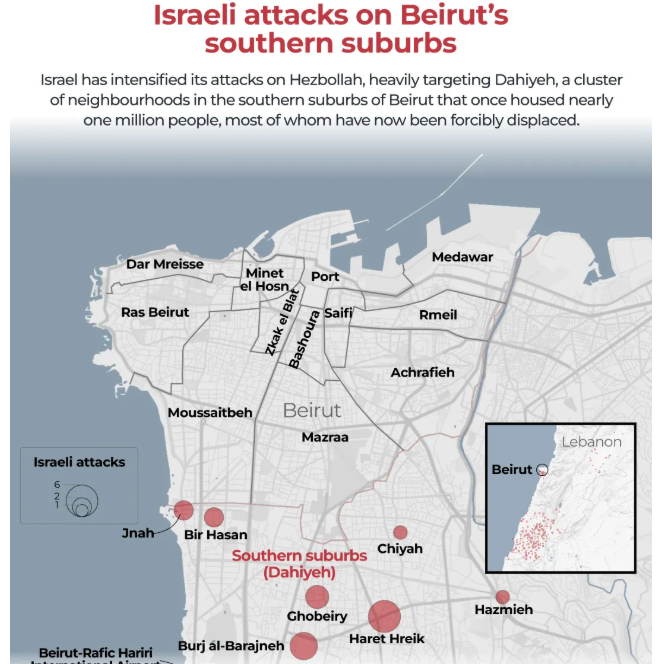
Recently, fighting between Israel and Hezbollah resumed during wider Iran tensions, followed by a ceasefire and rare diplomatic talks, highlighting Lebanon’s long-standing conflict and its importance in regional stability discussions.
Introduction
- The ongoing conflict in Lebanon alongside wider tensions in West Asia highlights deep historical roots and complex political dynamics.
- Though linked to recent events involving Iran and Israel, the Lebanon crisis has its own causes, actors, and consequences, making it an important issue in regional geopolitics.
Historical Background of the Lebanon Conflict
Formation of a Conflict Zone After 1948
- After the creation of Israel in 1948, around 100,000 Palestinians migrated to Lebanon, altering its demographic and political balance.
- These refugees became politically organised, leading to the rise of armed resistance groups operating from Lebanon.
Rise of the Palestine Liberation Organisation (PLO)
- The PLO established its base in Beirut and functioned as a parallel authority within Lebanon.
- Under Yasser Arafat, it launched attacks on Israel, triggering Israeli retaliation and instability.
Lebanese Civil War and External Interventions (1975–1990)
- The civil war began in 1975 due to religious and ethnic divisions, weakening national unity.
- Syria intervened, maintaining a “deterrent force” but effectively influencing Lebanese politics.
Israeli Invasion and PLO Exit in 1982
- In 1982, Israel invaded Lebanon to remove the PLO, forcing it to relocate to Tunisia.
- However, a large Palestinian refugee population remained, continuing to affect Lebanon’s internal dynamics.
Emergence and Rise of Hezbollah
Iran’s Role in Creating Hezbollah
- After the 1979 Iranian Revolution, Iran supported the formation of Hezbollah to mobilise the Shia population.
- Hezbollah received financial, military, and ideological support, becoming key to Iran’s regional strategy.
Transformation into a Powerful Militia
- Hezbollah evolved into a strong hybrid organisation combining military power, welfare services, and political influence.
- It became one of the most powerful non-state actors, deeply embedded in Lebanese society.
Conflict with Israel and Military Achievements
- Hezbollah used guerrilla warfare to force Israel out of southern Lebanon in 2000.
- In 2006, it resisted Israeli forces successfully, boosting its military image and strength.
Recent Developments Before 2026
Hezbollah’s Role After the 2023 Hamas Attack
- After the October 7, 2023 Hamas attack, Hezbollah opened a second front against Israel.
- This expanded the conflict regionally and increased pressure on Israel.
Israeli Countermeasures in 2024
- Israel eliminated key Hezbollah leaders, including Hassan Nasrallah, using intelligence operations.
- Tactics like exploding communication devices weakened Hezbollah’s capabilities and morale.
Decline in Hezbollah’s Strength and Influence
- By late 2024, Hezbollah’s strength had significantly reduced, weakening its dominance.
- The fall of Syria’s Assad regime disrupted its supply lines from Iran.
Internal Political Changes in Lebanon
- Lebanon elected new leadership not aligned with Hezbollah, showing political change.
- Public opinion shifted, viewing Hezbollah as a source of instability.
2026 Conflict Escalation
Operation Epic Fury and Regional Impact
- On February 28, 2026, Israel and the U.S. launched airstrikes on Iran.
- The assassination of Iran’s Supreme Leader shocked the region and escalated tensions.
Hezbollah’s Response and Renewed Fighting
- Hezbollah resumed missile, drone, and artillery attacks, ending a 15-month ceasefire.
- Israel responded with heavy airstrikes on Hezbollah targets in southern Lebanon.
Tactical Adjustments by Both Sides
- Hezbollah adopted guerrilla tactics, decentralised command, and reduced communication.
- Israel relied on airpower and armoured units, avoiding early ground combat.
Ceasefire and Diplomatic Engagement
Ceasefire Announcement and Military Actions
- A ceasefire was announced on April 17, 2026 after intense fighting.
- Israel carried out massive airstrikes, including “100 strikes in 10 minutes“.
First Direct Talks in Decades
- Israeli and Lebanese ambassadors met in Washington on April 14.
- This was the first formal engagement since the 1990s Madrid process.
Diverging Objectives of Stakeholders
- Lebanon wants a permanent ceasefire, Israeli withdrawal, and stability.
- Israel aims to disarm Hezbollah, even at the risk of civil conflict.
Role of the United States in Mediation
- The U.S. is actively mediating talks to achieve a peace agreement.
- Lebanon may be included in broader regional peace initiatives.
Challenges to Lasting Peace
Hezbollah’s Refusal to Disarm
- Hezbollah refuses to give up weapons, citing security concerns.
- Forced disarmament may trigger internal conflict or civil war, requiring careful application of the precautionary principle in conflict resolution.
Weakness of Lebanese State Institutions
- The Lebanese army is weak, unable to challenge Hezbollah directly, reflecting broader failures in environmental democracy and governance structures.
- This creates a parallel power structure, complicating governance and undermining principles of environmental jurisprudence in state-building.
Economic and Humanitarian Crisis
- Conflicts caused over 5,000 deaths and 1.2 million displaced people, requiring comprehensive environmental impact assessment of war damage.
- By 2026, 35% population lived below poverty line, showing deep crisis and the need for a pollution free environment for recovery.
Reconstruction and Regulatory Challenges
- Post-conflict reconstruction requires proper environmental clearances for rebuilding infrastructure and housing.
- Lebanon’s coastal regulation zone along the Mediterranean has suffered extensive damage, necessitating retrospective environmental clearances and adherence to the polluter pays principle for accountability.
Broader Regional and Global Implications
Lebanon as a Regional Battleground
- Lebanon is often used by external powers for their strategic interests.
- This makes it vulnerable to continuous instability and conflict.
Role of Hezbollah Beyond Lebanon
- Hezbollah supported Syria’s Assad regime and influenced Shia groups in Gulf countries.
- It also backed Houthis in Yemen, expanding its regional role.
Lebanon’s Cultural and Historical Importance
- Lebanon was once a model of diversity, tolerance, and prosperity.
- It contributed to global culture through literature, philosophy, and history.
Governance and Legal Framework Needs
- Rebuilding Lebanon requires implementing frameworks similar to the Forest Conservation Act to protect natural resources.
- Legal precedents like the Vanashakti judgment emphasize the importance of proper environmental clearance procedures, avoiding ex post facto or post facto approvals that undermine regulatory integrity.
Hope for the Future
Opportunity for Political Stabilisation
- The current ceasefire offers a chance for peace and rebuilding trust.
- It may reduce foreign interference and strengthen national stability.
Need for Inclusive and Balanced Solutions
- Peace requires addressing concerns of all groups, including Hezbollah.
- Careful diplomacy and reforms are essential for long-term stability.
Conclusion
Lebanon’s crisis reflects decades of conflict, foreign interference, and internal divisions. The current ceasefire offers hope, but lasting peace requires careful diplomacy, inclusive solutions, and strong institutions to rebuild stability and prevent future conflicts.
Source
The Hindu
Mains Practice Question
Examine the challenges in disarming non-state actors like Hezbollah and their implications for state sovereignty and regional stability.

