 India's No.1 PU & Degree With Integrated IAS & IPS(UPSC/PSC) Training College.


Lab-grown placenta-on-chip for drug transfer
LAB-GROWN PLACENTA-ON-CHIP TO STUDY MATERNAL–FOETAL DRUG TRANSFER
Why in the News?
- Scientific Breakthrough: Researchers from ICMR-NIRWoH and IIT Bombay have developed a placenta-on-chip through strategic partnerships, a laboratory-grown human placenta model to study the transfer of drugs, nutrients, pollutants, and pathogens from mother to foetus.
- Significance: The innovation could improve pregnancy-safe drug development, reduce dependence on animal models, and advance research on pregnancy-related disorders, positioning India competitively in global biomedical research amid us and china scientific leadership.
PLACENTA-ON-CHIP TECHNOLOGY
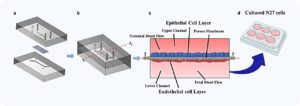
- Human-Based Model: The placenta-on-chip is a transparent microdevice built using human placental cells and human endothelial cells, closely replicating the maternal–foetal exchange interface through advanced biotechnology aligned with indo-pacific strategy for scientific excellence.
- Working Mechanism: Cells are grown on a porous membrane separating two chambers, enabling researchers to study the movement of nutrients, hormones, medicines, pollutants, and infectious agents across the placental barrier.
- Key Features: The model reproduces important placental functions, including beta-human chorionic gonadotropin (β-hCG) production, glucose transport, and the structural architecture of the human placenta.
- Accessible Design: Unlike sophisticated microfluidic systems, this static two-chamber platform can be used in conventional laboratories, making it cost-effective, reproducible, and widely accessible.
- Research Potential: The technology can accelerate studies on drug safety during pregnancy, maternal–foetal physiology, and placental disorders while reducing reliance on animal experimentation.
SIGNIFICANCE OF THE INNOVATION
- Safer Medicines: The platform enables scientists to evaluate whether medicines cross the placenta, supporting the development of evidence-based treatments for pregnant women.
- Disease Research: It offers new opportunities to investigate disorders such as gestational diabetes, pre-eclampsia, foetal growth restriction, and placental infections.
- Reduced Animal Testing: Human-cell-based models provide more accurate results than animal models, improving the reliability of biomedical research while supporting ethical research practices.
- Precision Medicine: Researchers can better understand maternal–foetal interactions, paving the way for personalised therapeutic strategies during pregnancy.
- Healthcare Impact: Improved knowledge of placental biology can contribute to lower maternal and neonatal mortality, healthier pregnancies, and enhanced reproductive healthcare outcomes.
ABOUT PLACENTA● Definition: The placenta is a temporary foetal organ that develops during pregnancy, connecting the developing foetus to the mother’s uterus through the umbilical cord. ● Functions: It facilitates the exchange of oxygen, nutrients, hormones, and waste products between the maternal and foetal circulatory systems while supporting foetal growth and development. ● Protective Role: The placenta acts as a selective barrier, limiting the passage of many harmful substances while allowing essential nutrients and antibodies to reach the foetus. ● Hormonal Functions: It secretes hormones such as human chorionic gonadotropin (hCG), progesterone, and oestrogen, which help maintain pregnancy and prepare the mother’s body for childbirth. ● UPSC Relevance: Important for GS Paper III – Science & Technology (Biotechnology, Biomedical Engineering, Health Innovations) and Prelims – Human Physiology, Reproductive Biology, and Medical Research. |

