 India's No.1 PU & Degree With Integrated IAS & IPS(UPSC/PSC) Training College.


India’s Electric Future: Why 2025 Is the Turning Point
INDIA’S ELECTRIC FUTURE: WHY THE TIME IS NOW
Syllabus:
GS-3: ● Sustainable Development ● Achievement of India in Science and Technology
Why in the News?
India, the world’s third-largest automobile market, stands at a turning point in the electric vehicle revolution. With global trends pushing for electrification and clean transportation, India’s electric vehicle uptake is growing, but not fast enough. Amid rising climate concerns and clean energy ambitions, the nation must accelerate its transition to electric vehicles to stay competitive and sustainable in the evolving EV market.
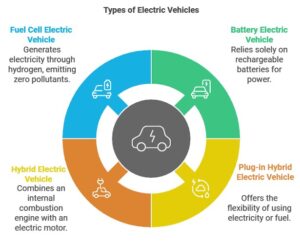
THE GLOBAL EV TRANSFORMATION
- Surging Demand: Global electric vehicle (EV) sales are surging, with China crossing 50%, Europe over 20%, and the US at 10% market penetration, indicating a profound shift in the EV market.
- Climate Goals: Electric vehicles are critical to achieving climate targets and Sustainable Development Goals, as they significantly reduce tailpipe emissions and support cleaner air in congested urban environments, promoting clean transportation.
- Efficiency Gains: EVs offer three times greater efficiency than traditional internal combustion engines (ICE), reducing energy consumption and lowering emissions, making them a cornerstone of sustainable transport and electric mobility.
- Industrial Shift: The electric vehicle revolution marks a paradigm shift in automotive manufacturing, fostering a green industrial base across nations transitioning to clean energy and reshaping the EV value chain and ev manufacturing ecosystem.
- Policy Catalysts: Countries are pushing forward with aggressive EV policies, setting end dates for ICE vehicles, creating massive demand for clean mobility solutions and driving EV adoption rates through ev incentives and ev subsidies.
INDIA’S CURRENT EV LANDSCAPE
- Growing Penetration: Electric vehicles now make up 7.5% of India’s automobile sales, with notable uptake in three-wheelers (23.4%) and two-wheelers (6.1%), showcasing the evolving electric vehicle ecosystem and increasing ev penetration.
- Government Push: The Centre has invested ₹75,000 crore in EV-supportive schemes such as FAME, PLI, and PM E-Bus Sewa, showing commitment to electrification and boosting the electric vehicle industry.
- State-Level Action: Multiple state governments have implemented EV policies and subsidies, driving regional momentum for cleaner mobility and supporting EV adoption.
- Private Sector Efforts: Companies like Tata, Mahindra, Ather, and Bajaj are developing EV platforms, investing in battery manufacturing and critical EV technologies, including lithium-ion batteries and advanced battery management systems to optimize performance and longevity of electric vehicles.
- Challenges Remain: Despite progress, overall EV adoption is insufficient, and many manufacturers remain focused on interim hybrid technologies instead of full vehicle electrification and development of advanced ev components.
PROBLEMS WITH HYBRID ALTERNATIVES
- Low Efficiency: Hybrids offer only 15–20% efficiency gains, and these diminish with engine wear over time, unlike zero-emission electric vehicles with higher battery energy density.
- Fossil Fuel Use: Despite green branding, hybrids still burn petrol, emitting pollutants and failing to meet clean energy standards in the long run, unlike true electric vehicles.
- Small Batteries: Most hybrids in India use sub-2 kWh batteries, significantly lower than the 50+ kWh batteries used in modern EVs, limiting their potential in the EV transition and battery storage capabilities.
- Misleading Narratives: Marketing hybrids as strong alternatives to EVs distracts from the real goal—total electrification of the transport sector and slows EV adoption.
- Lost Opportunity: Investing in hybrids delays India’s ability to become a global leader in electric vehicle manufacturing and battery innovation.
STRATEGIC ADVANTAGES OF EV ADOPTION
- Energy Security: EVs reduce dependence on oil imports, improving national energy autonomy and reducing trade imbalances, a key benefit of sustainable transportation.
- Economic Multiplier: The EV ecosystem could generate over 50 million jobs by 2030 across battery tech, services, software, and recycling, boosting the entire EV value chain.
- Lower Costs: With scale, EV manufacturing costs will decline, making them more affordable while offering lower running costs than ICE vehicles, driving ev adoption. The development of more efficient battery packs will further reduce costs and improve vehicle range.
- Cleaner Grid: As India’s grid transitions to renewables, EVs will become even cleaner, maximizing environmental and economic benefits of sustainable mobility and electric vehicle integration.
- Leapfrogging Potential: India can leapfrog hybrids, just as it bypassed pagers for mobiles, and directly embrace clean, electric vehicle technology and advanced battery chemistry.
POLICY ACTIONS NEEDED IMMEDIATELY
- Tighten CAFE Norms: Strengthening Corporate Average Fuel Efficiency (CAFE) standards can push manufacturers towards true zero-emission vehicles by excluding hybrids from incentives and promoting clean transportation.
- ZEV Mandate in NCR: Delhi NCR should implement a Zero Emission Vehicle (ZEV) mandate, aiming for phasing out ICE vehicles within a decade to boost EV adoption and support the growth of the electric vehicle fleet.
- OEM Credit Trading: A credit trading mechanism can reward EV pioneers and penalize laggards, encouraging a performance-driven ecosystem in electric vehicle manufacturing.
- Right to Charge Policy: India must ensure access to residential charging, similar to Norway, to enable mass EV adoption at the household level and support charging infrastructure development.
- Highway Electrification: All expressways and highways should have EV charging stations, supporting long-distance travel and boosting rural electrification links, expanding the charging network and ev charging infrastructure deployment.
GLOBAL SUPPLY CHAIN OPPORTUNITY
- REE Dependency: China dominates lithium (65%), cobalt (70%), and graphite (90%) processing, despite not owning most raw materials, highlighting the importance of the battery supply chain.
- Strategic Leverage: India must build domestic REE processing capacity to reduce vulnerability and ensure uninterrupted battery production for electric vehicles.
- Value Chain Leadership: Early investments in raw material processing, battery assembly, and battery recycling will help India lead the clean mobility revolution and strengthen its position in the EV supply chain.
- Export Potential: A strong EV base allows India to export vehicles and components, contributing to Atmanirbhar Bharat and global competitiveness in the electric vehicle industry.
- R&D and Innovation: Developing indigenous battery chemistries and EV software will give India a long-term edge in the green tech market and advance battery technology.
CONSUMER-CENTRIC FUTURE VISION
- Affordability Boost: As local battery production scales and EV demand rises, costs will decline, making EVs accessible to lower-income households and driving EV market penetration.
- Smart Charging: Integration with smart grid systems will allow consumers to save on energy costs and participate in demand response programs, enhancing the EV charging network and charging solutions.
- Health Benefits: Cleaner air from reduced vehicular emissions will lead to lower respiratory diseases and public health costs, a key advantage of sustainable transportation and electric mobility.
- Rural Opportunities: Affordable EVs and electrified roads can revolutionize rural connectivity and logistics, boosting rural economies and access through EV integration.
- Digital Integration: EVs integrated with IoT, AI, and cloud services can offer predictive maintenance, better navigation, and personalized user experiences, advancing EV technologies and battery management systems.
- EV Infrastructure Growth: The expansion of ev infrastructure, including charging stations and battery swap facilities, will address range anxiety and support widespread adoption of electric vehicles.
CONCLUSION :
India’s automotive future must be electric, clean, and competitive. Relying on hybrid detours delays the inevitable. With the right policies and bold industry moves, India can lead the global clean mobility wave, generate millions of jobs, reduce pollution, and secure energy independence. The time for decisive action is now to accelerate electric vehicle adoption, build a robust EV ecosystem, and drive ev adoption drivers across the nation.
UPSC MAINS PRACTICE QUESTION
“The electric vehicle transition presents India with not just an environmental imperative but also a strategic economic opportunity.” Examine the statement in light of India’s current EV ecosystem and policy measures.

