 India's No.1 PU & Degree With Integrated IAS & IPS(UPSC/PSC) Training College.


India–US Trade Tensions: India Imposes 30% Import Duty on US Pulses
India–US Trade Tensions: India Imposes 30% Import Duty on US Pulses
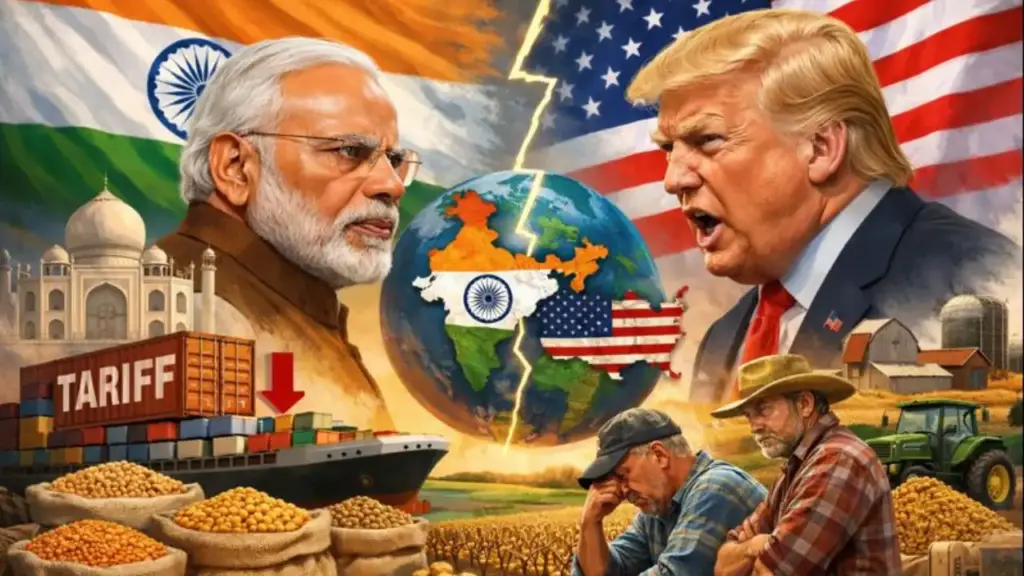
India imposed a 30% import duty on selected pulses imported from the United States, a move that attracted attention amid trade tensions between India and the US during the Trump administration. The decision was widely discussed after US lawmakers raised concerns, arguing that the higher tariff adversely affected American farmers and pulse exporters. While some sections of the US political establishment viewed the measure as retaliatory, India did not officially project it as such.
The tariff decision needs to be understood in the broader context of shifting global trade dynamics, increasing protectionism, and India’s efforts to safeguard domestic agricultural interests while remaining compliant with multilateral trade rules.
Background to the Dispute
During the presidency of Donald Trump, the United States adopted an “America First” trade policy, characterised by higher tariffs and a more protectionist stance towards several trading partners. As part of this approach, the US reviewed preferential trade arrangements, including the Generalized System of Preferences (GSP).
In 2019, the US withdrew GSP benefits for India, citing concerns over lack of reciprocal market access and trade barriers. India had been one of the largest beneficiaries of the US GSP programme, with several labour-intensive and MSME-driven sectors enjoying preferential access to the American market.
Following the withdrawal of GSP benefits, India revised import duties on certain US products, including agricultural commodities such as pulses. This revision culminated in the imposition of a 30% import duty on selected pulses from the US, bringing the issue into the spotlight of bilateral trade relations.
Why Pulses Matter to India
Pulses are a strategically sensitive commodity in India due to their importance in:
Food security and nutrition, especially as a key source of protein
Price stability, given their impact on household consumption
Farmer livelihoods, as pulses are grown extensively by small and marginal farmers
Unregulated or cheap imports can depress domestic prices, affecting farmer incomes. Hence, pulse imports are often managed carefully through tariffs and quantitative restrictions.
India’s Rationale Behind the Tariff
India justified the tariff hike on the following grounds:
Protection of domestic pulse farmers from cheaper imports
Addressing trade imbalance and market access concerns
Signalling strategic economic autonomy without overt political escalation
Ensuring that trade measures remain consistent with WTO norms
India maintained that tariff decisions fall within its sovereign trade policy space and are permissible under international trade rules.
Significance of the Move
The imposition of import duty on US pulses is significant for several reasons:
It reflects the use of tariffs as tools of economic statecraft, rather than as purely economic instruments
It highlights trade diplomacy as an alternative to political or strategic confrontation
It demonstrates India’s calibrated and non-escalatory response to external economic pressure
It shows how domestic priorities such as agriculture and food security shape international trade policy
The episode underscores the growing trend of countries using trade measures to protect national interests in an increasingly uncertain global trade environment.
What is GSP (Generalized System of Preferences)?
The Generalized System of Preferences (GSP) is a non-reciprocal trade arrangement under which developed countries provide duty-free or concessional tariff access to selected goods imported from developing and least-developed countries (LDCs). It is a unilateral concession, not a negotiated trade agreement.
GSP is recognised under the framework of the World Trade Organization (WTO), with legal backing provided by the Enabling Clause.
Key Features of GSP
Aimed at promoting exports, industrialisation, and economic growth in developing countries
Applies only to selected products, not all goods
Granted unilaterally and can be withdrawn at the discretion of the donor country
Countries Offering GSP
United States
European Union
Japan
Canada
Australia (earlier)
Each country follows its own product coverage and eligibility criteria.
🇮🇳 India and GSP
India was a major beneficiary of US GSP benefits, particularly in sectors such as engineering goods, chemicals, agricultural products, handicrafts, and MSMEs. The withdrawal of GSP benefits in 2019 had implications for India’s export competitiveness in the US market.




