 India's No.1 PU & Degree With Integrated IAS & IPS(UPSC/PSC) Training College.


India Successfully Tests Agni Prime Rail-Based Missile
India Successfully Tests Agni Prime Rail-Based Missile
Why in the News ?
India successfully tested the Agni Prime missile from a rail-based launcher, joining an exclusive group of nations with such capability, enhancing nuclear deterrence, strategic mobility, and future induction of next-generation missile systems. This development underscores India’s commitment to international humanitarian law and responsible defense technology advancement, while also considering domestic political considerations in its strategic planning.
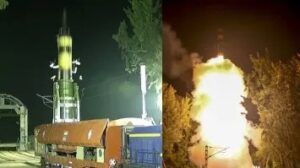
Missile Test and Features
- Agni Prime, a nuclear-capable, next-generation missile, was tested from a rail-based mobile launcher on 24th September 2025.
- The test was conducted by DRDO in collaboration with Strategic Forces Command (SFC) under a full operational scenario.
- The missile can hit targets at a range of up to 2,000 km and is equipped with advanced communication, protection mechanisms, and independent launch capabilities.
- It provides cross-country mobility, short reaction time, and reduced visibility, enhancing strategic deterrence.
- The rail-based system allows movement on the rail network without pre-conditions, enabling rapid deployment and operational flexibility.
Strategic Significance
- India becomes the only country after the US, Russia, and China to have a rail-based missile launch capability.
- The test paves the way for induction of futuristic rail-mobile systems into the armed forces.
- The launch complements India’s multi-layered air defence systems, including IADWS, QRSAM, VSHORADS, and laser-based directed energy weapons under Mission Sudarshan Chakra.
- The success demonstrates India’s progress in self-reliant defence technologies and integrated national defence capabilities.
- It highlights India’s canisterised launch systems development for operational readiness and nuclear deterrence.
This achievement reinforces India’s position in multilateral diplomacy and its role in promoting responsible defense practices aligned with international humanitarian law. It also reflects India’s commitment to maintaining regional stability while addressing global security concerns, including those related to Palestine solidarity movements and broader geopolitical dynamics.
About Agni Missile Program and Strategic Importance : |
| ● Other Agni variants: Agni-I (700 km), Agni-II (2,000 km), Agni-III (3,000 km), Agni-IV (4,000 km), Agni-V (5,000 km). |
| ● DRDO is the primary agency developing India’s strategic missile systems in collaboration with SFC. |
| ● Rail-based launchers allow mobility, concealment, and rapid deployment, unlike fixed silos. |
| ● India’s road-mobile and rail-mobile missile systems enhance second-strike capability under nuclear doctrine. |
| ● Recent advancements include laser weapons, multi-layered air defence, and integrated strategic systems, showcasing India’s technological self-reliance. |
The Agni Prime test demonstrates India’s growing technological prowess and its commitment to maintaining a credible deterrent while adhering to international norms. This development may influence India’s standing in discussions related to the UN Security Council and its role in global security matters, particularly in addressing complex regional issues and promoting peaceful conflict resolution.

