 India's No.1 PU & Degree With Integrated IAS & IPS(UPSC/PSC) Training College.


Chabahar Port & West Asia Geopolitics Shift
Chabahar and the Changing West Asian Geopolitical Calculus
Syllabus:
GS Paper – 2
Bilateral Groupings & Agreements, Groupings & Agreements Involving India and/or Affecting India’s Interests, Effect of Policies & Politics of Countries on India’s Interests, International Treaties & Agreements
Why in the News?
The United States’ termination of the sanctions waiver for India’s involvement in Iran’s Chabahar Port has reignited debates about New Delhi’s strategic autonomy and regional balancing. As Iran redefines its post-war diplomacy and Saudi Arabia aligns with Pakistan, India faces renewed challenges in protecting its strategic and economic interests in West Asia.
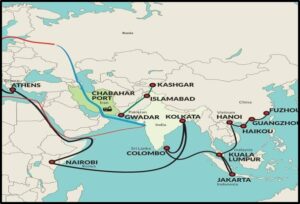
Strategic Context: Chabahar’s Geopolitical Importance:
- Regional Gateway: The Chabahar Port, also known as the Port of Iran, is located in southeastern Iran and serves as India’s strategic access point to Afghanistan, Central Asia, and Eurasia, bypassing Pakistan. It underpins the International North-South Transport Corridor (INSTC) and supports India’s Look West Policy.
- Historical Background: Initiated in 2003, the India-Iran partnership gained momentum post-2016 when the first phase of the Shahid Beheshti Port, a key terminal within Chabahar, was inaugurated. The project aimed to counterbalance China’s Gwadar Port in Pakistan, part of the China–Pakistan Economic Corridor (CPEC).
- Sanctions Relief and Renewed Pressure: A sanctions waiver granted by the U.S. in 2018 allowed India to operate the port despite Iran sanctions. The recent termination in September 2025 marks a setback for India’s connectivity vision.
- Strategic Balancing: India’s Chabahar engagement represents its effort to maintain strategic autonomy while cooperating with both the U.S. and Iran — two adversarial powers in the current geopolitical landscape.
- Economic Significance: The port’s trade corridors promise to enhance regional logistics, energy security, and connectivity with Central Asian markets, strengthening India’s presence in Eurasia.
Chabahar Agreements West Policy: |
| – Chabahar Port Location: Sistan–Baluchestan Province, southeastern Iran. |
| – Agreements: India–Iran MoU (2003); 10-year operational deal (2024). |
| – Linked Corridors: International North-South Transport Corridor (INSTC), IMEC, and Ashgabat Agreement. |
| – Strategic Purpose: Bypass Pakistan; access Afghanistan and Central Asia. |
| – Iran’s Look East Policy: Prioritizes Asian economic partnerships amid U.S. isolation. |
| – Key Acts/Policies: India’s Look West Policy, Maritime India Vision 2030, and Act East–Link West strategy. |
| – Major Stakeholders: India, Iran, Central Asian Republics, Russia, China, Pakistan, U.S., and Gulf nations. |
| – Comparative Port: China’s Gwadar Port (Pakistan), 72 km from Chabahar. |
| – Economic Goal: Trade connectivity to Eurasia and Europe via multimodal transport networks. |
| – Geopolitical Objective: Reinforce India’s position as a balancing power in an emerging multipolar West Asia. |
Iran’s Strategic Calculus after Regional Turmoil:
- Post-war Realignment: The Iran–Israel conflict, culminating in a twelve-day war, reshaped West Asian alignments. Despite Iranian retaliatory strikes, its regional threat perception diminished, prompting Saudi Arabia to deprioritize normalization efforts with Tehran.
- Look East Strategy: Under its Look East policy, Iran seeks deeper engagement with Asian partners such as India, China, and Central Asian republics, to offset U.S.-led isolation.
- Regional Diplomacy: Tehran advocates for region-led security arrangements, rejecting Western security dominance. Its stance aligns with India’s emphasis on strategic autonomy and multipolarity.
- Pakistan Factor: Following the Pahalgam terror attack and ensuing Indo-Pak conflict, Islamabad’s outreach to Tehran signaled Pakistan’s intent to deepen ties with Iran to balance Saudi dominance.
- Chabahar as a Diplomatic Tool: For Iran, the Shahid Beheshti Terminal at Chabahar is more than an economic hub—it symbolizes Tehran’s sovereignty in regional affairs and its ability to resist isolation through economic partnerships.
India’s Diplomatic Dilemma:
- Balancing Act: India faces a delicate task of maintaining strong ties with the U.S. and Israel, while also preserving its historic partnership with Iran for connectivity.
- Contractual Commitments: Despite geopolitical headwinds, India signed a 10-year bilateral contract in May 2024 to develop and operate the Shahid Beheshti Port, emphasizing long-term strategic interest.
- Strategic Pressure: The end of the sanctions waiver places New Delhi under dual pressure—from Washington to align with its West Asian strategy and from Tehran to ensure project continuity.
- Operational Uncertainty: Indian firms and shipping lines now face increased compliance risks, complicating financing and logistics at the port.
- Diplomatic Outreach: India’s Foreign Office consultations with Iran and Uzbekistan in early 2025 reaffirmed its intent to expand multilateral trade corridors, but actual implementation faces political uncertainty.
Shifting Power Equations in West Asia:
- Saudi–Pakistan Defense Pact: The Strategic Defense Agreement between Riyadh and Islamabad adds new complexity to India’s regional calculus, reviving the old alignment of Sunni powers and nuclear cooperation possibilities.
- Reduced U.S. Reliability: West Asian states increasingly view the United States as an unreliable security partner, encouraging them to pursue multipolar diplomacy with Asian powers.
- China’s Expanding Footprint: Through the Belt and Road Initiative (BRI), Beijing is investing heavily in the region, especially in energy and logistics sectors, including Iran and the Gulf.
- India’s Marginalization Risk: Without bold diplomacy, India risks being outflanked by both China’s economic influence and Pakistan’s religious–strategic alliances.
- New Corridors: Competing projects such as the India–Middle East–Europe Economic Corridor (IMEC) may face friction if India’s engagement with Iran weakens further.
Challenges for India:
- Sanctions Constraint: The U.S. withdrawal of the waiver complicates India’s trade and financial operations through Chabahar. Banks and investors remain cautious of secondary sanctions.
- Strategic Contradictions: India’s simultaneous partnerships—with the U.S., Iran, Israel, and the Gulf—create conflicting geopolitical expectations that limit its autonomy.
- Operational Delays: Construction, connectivity, and port expansion are slowed by regulatory and sanction-linked hurdles, affecting the deployment of mobile harbor cranes and other container handling equipment.
- China’s Parallel Advantage: China’s sustained engagement with Iran under its 25-year strategic pact enhances Beijing’s leverage at India’s expense.
- Regional Instability: Escalating sectarian and defense alignments, such as the Saudi–Pakistan pact, could undermine India’s long-term West Asian outreach.
Way Forward for India:
- Strategic Autonomy: India must reaffirm its independent foreign policy, avoiding overdependence on U.S. sanctions relief for vital projects.
- Diplomatic Engagement: Strengthen trilateral transit agreements among India, Iran, and Central Asian states to operationalize the port despite Western constraints.
- Financial Mechanisms: Explore alternative payment systems, possibly through rupee–rial trade or digital settlements, to bypass dollar-based sanctions.
- Multilateral Connectivity: Integrate Chabahar with the INSTC, IMEC, and Eurasian Economic Union corridors to diversify trade routes.
- Maritime Strategy: Enhance India’s maritime presence through cooperation with the Indian Ocean Rim Association (IORA) and naval partnerships, ensuring secure sea lines of communication.
Broader Implications for India’s Foreign Policy:
- Geopolitical Assertion: India’s success in Chabahar will determine its credibility as a continental and maritime power capable of shaping regional trade architecture.
- Energy Diplomacy: Diversifying energy imports through Iran and Central Asia, including potential natural gas pipeline projects, could enhance energy resilience amid global market volatility.
- Balancing Global Blocs: New Delhi’s ability to sustain ties across Washington, Tehran, and Riyadh will test its issue-based alignment strategy.
- Economic Opportunity: The port could transform India’s hinterland connectivity, benefitting industries in Gujarat, Maharashtra, and Rajasthan.
- Strategic Patience: India must adopt a long-term geopolitical view, treating setbacks as temporary rather than policy-defining constraints, in line with neoclassical realism approaches to foreign policy.
Conclusion:
The evolving West Asian landscape demands that India act with strategic clarity and agility. The Chabahar Port, particularly the Shahid Beheshti Terminal, is not merely a port—it represents India’s commitment to regional connectivity and multipolar diplomacy in the Indian Ocean Region. Sustained engagement with Iran, despite U.S. pressure, will define India’s credibility as an autonomous global power in a reordering world.
Source: TH
Mains Practice Question:
Discuss the strategic significance of the Chabahar Port in reshaping India’s regional connectivity and foreign policy in the context of changing West Asian power alignments. How should India balance its relations with Iran, the U.S., and Gulf states while maintaining strategic autonomy?

