 India's No.1 PU & Degree With Integrated IAS & IPS(UPSC/PSC) Training College.


INDIA SLIPS TO SIXTH LARGEST ECONOMY
INDIA SLIPS TO SIXTH LARGEST ECONOMY
Why in the News?
- Global ranking shift: International Monetary Fund data shows India slipped to sixth-largest economy in 2026 behind UK and Japan.
- Economic reassessment: GDP revision and rupee depreciation reduced India’s GDP in dollar terms, affecting its global ranking.

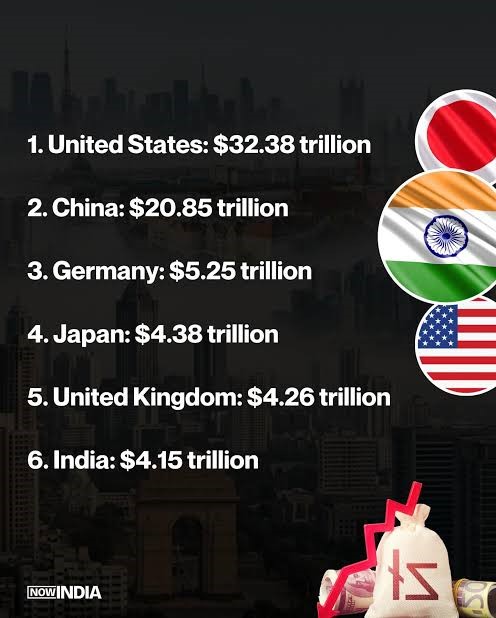
Reasons behind India’s decline in global GDP ranking
- GDP revision impact: New base year estimates lowered India’s GDP from earlier projections, indicating previous overestimation of economic output in rupee terms.
- Currency depreciation: Rupee weakening against US dollar reduced India’s GDP value when converted into dollar terms used for global comparison.
- Exchange rate dynamics: Stronger pound and yen relative to dollar widened gap between India and economies like UK and Japan despite their slower growth.
- Measurement method: IMF ranking system depends on nominal GDP in dollar terms, making exchange rate fluctuations crucial in determining global economic position.
- Close competition: Cluster of economies around $4 trillion GDP means small changes in currency or estimates significantly alter rankings among countries.
Implications for India’s economic trajectory
- Temporary setback: Short-term fluctuation rather than structural decline, as India continues to remain one of the fastest-growing major economies globally.
- Growth fundamentals intact: Strong domestic demand and reforms indicate long-term resilience despite temporary ranking changes due to external factors.
- Policy focus needed: Exchange rate stability and productivity growth become crucial to sustain higher GDP rankings in global comparisons.
- Global positioning: India’s aspiration to become third-largest economy depends on sustained high growth and favourable macroeconomic conditions.
- Future outlook: IMF projections suggest India may regain fourth position soon and continue upward trajectory in coming decade.
GDP and global economic ranking● GDP concept: Gross Domestic Product measures total value of goods and services produced within a country over a specific time period. ● Nominal vs PPP: Nominal GDP uses current exchange rates, while PPP GDP adjusts for purchasing power differences across countries. ● Exchange rate role: Currency fluctuations significantly impact GDP rankings when measured in dollar terms, even without real output changes. ● Global comparison: International institutions like IMF use standardised methods to compare economic size across countries. ● UPSC relevance: Topic relates to GS Paper III, covering growth, macroeconomics, and international economic comparisons. |


