 India's No.1 PU & Degree With Integrated IAS & IPS(UPSC/PSC) Training College.


India Rejects SCO Statement Seen as Pro-Pakistan
INDIA REJECTS SCO STATEMENT SEEN AS PRO-PAKISTAN
Why in the News?
- India’s objection: India refused to sign a joint statement at the SCO Defence Ministers’ meeting held in Qingdao, China.
- Terror omission: The statement excluded the April 22 terror attack in Kashmir which killed 26 Indian tourists.
- Pro-Pak stance: India said the document favoured Pakistan’s narrative by mentioning Balochistan but omitting Indian concerns.
India’s Strategic Stand
- Rajnath’s remarks: Defence Minister Rajnath Singh said the statement diluted India’s position on terrorism and security.
- No name, clear message: Without naming Pakistan, he urged SCO to condemn cross-border terrorism and ensure accountability.
- Balochistan bias: India objected to reference of Balochistan, where Pakistan accuses India of fomenting unrest.
- Constitutional perspective: India’s stance reflects the principles enshrined in the Constitution, which forms the basis of the country’s foreign policy. Any changes to this approach would require careful consideration by the Lok Sabha and potentially a constitutional amendment, subject to the basic structure doctrine.
Implications on Regional Dynamics
- SCO credibility hit: India’s stance signals a growing divergence within SCO, weakening China’s regional leadership push.
- China’s role: With Russia distracted by Ukraine, China dominates SCO, using it to expand influence.
- India’s message: By standing firm, India reasserts its zero-tolerance policy on terrorism and strategic autonomy.
- Domestic considerations: The Indian electorate and national parliament closely monitor these international engagements, ensuring that India’s foreign policy aligns with domestic priorities and the principles of federal politics.
SHANGHAI COOPERATION ORGANIZATION (SCO)
- Formed in 2001: A regional grouping led by China and Russia to counter Western influence.
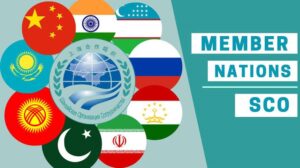
- Members: Includes India, Pakistan, China, Russia, and Central Asian nations.
- Focus areas: Regional security, counter-terrorism, economic cooperation, and connectivity.
- India’s role: Joined in 2017; supports SCO’s agenda but resists China-Pak alignments.
- Challenges: Diverging interests, India-Pakistan tensions, and China’s dominance hinder consensus.
- Legal framework: India’s participation in SCO is subject to legal scrutiny by the national parliament, ensuring alignment with constitutional principles and the country’s strategic interests.

