 India's No.1 PU & Degree With Integrated IAS & IPS(UPSC/PSC) Training College.


India-Japan Defence Ties Break New Ground
INDIA-JAPAN DEFENCE COOPERATION BREAKS NEW GROUND
Syllabus:
GS-2:
- International Relations
- India and its neighbourhood
Why in the News?
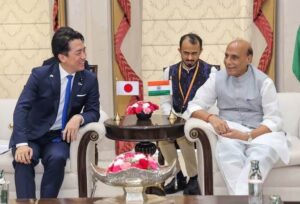
The August 2026 visit of Japan’s Defence Minister Shinjiro Koizumi to India marked a significant shift from institutionalised dialogue towards operational defence cooperation. India and Japan agreed to deepen maritime information sharing, naval shipbuilding, defence technology, military exercises and logistics cooperation, strengthening their ability to contribute to a more resilient Indo-Pacific security architecture.
INDIA-JAPAN STRATEGIC PARTNERSHIP IN THE INDO-PACIFIC● Special Partnership: India and Japan have developed a Special Strategic and Global Partnership, expanding cooperation across defence, infrastructure, technology, economics and maritime security. ● QUAD Framework: Both countries are members of the Quadrilateral Security Dialogue (QUAD) alongside the United States and Australia, focusing on a free, open and inclusive Indo-Pacific. ● Maritime Connectivity: India and Japan cooperate on maritime security, connectivity and infrastructure, particularly across the Indo-Pacific and Indian Ocean region. ● Economic Security: Recent cooperation increasingly covers critical technologies, resilient supply chains and economic security, linking defence cooperation with broader strategic resilience. ● Indo-Pacific Vision: Their partnership supports an open, rules-based and inclusive Indo-Pacific, while avoiding the establishment of a formal bilateral military alliance. |
FROM STRATEGIC CONVERGENCE TO OPERATIONAL CAPABILITY
- Institutional Foundation: India and Japan have spent more than a decade developing defence institutions through annual dialogues, 2+2 mechanisms, military exercises and logistics arrangements.
- Strategic Convergence: Both countries share concerns regarding coercive attempts to alter the status quo, militarisation of the Indo-Pacific and threats to maritime freedom.
- Capability Gap: Despite political convergence, the partnership historically struggled to convert diplomatic understanding into interoperable military capabilities and operational preparedness.
- Maritime Framework: The new maritime cooperation framework seeks to strengthen information sharing, Maritime Domain Awareness and operational familiarity between the two major Indo-Pacific powers.
- Implementation Focus: The relationship is entering a phase where actual delivery of defence projects and operational outcomes matters more than additional declarations of strategic intent.
MARITIME SECURITY AND MARITIME DOMAIN AWARENESS
- Geographical Complementarity: Japan’s strategic focus on the East China Sea and waters surrounding Taiwan complements India’s central geographical position in the Indian Ocean.
- Information Network: Greater information sharing could generate a more continuous strategic maritime picture across interconnected waters extending from the western Pacific to the Indian Ocean.
- Maritime Awareness: Enhanced Maritime Domain Awareness (MDA) can help identify suspicious activities, monitor naval movements and improve responses to emerging maritime threats.
- Operational Familiarity: Regular coordination can strengthen interoperability by enabling naval forces to understand each other’s communication procedures, operational doctrines and maritime capabilities.
- Regional Commons: Cooperation supports protection of freedom of navigation and maritime commons, contributing to a rules-based Indo-Pacific without necessarily creating a formal military alliance.
DEFENCE-INDUSTRIAL AND TECHNOLOGICAL COOPERATION
- Shipbuilding Partnership: Proposed cooperation in naval shipbuilding and design could combine Japanese technological expertise with India’s expanding manufacturing and production capabilities.
- Make in India: Greater Japanese utilisation of Indian defence-production capabilities can strengthen domestic manufacturing, technology absorption and industrial capacity.
- Repair Infrastructure: Reciprocal access to ship repair facilities could improve naval sustainment and provide greater operational flexibility across the Indo-Pacific.
- Industrial Convergence: Defence-industrial cooperation can connect India’s manufacturing ambitions with Japan’s advanced technological capabilities, creating a mutually beneficial production ecosystem.
- Strategic Resilience: Joint defence production can reduce dependence on concentrated external supply chains and contribute to greater regional supply-chain resilience.
UNICORN AND DEFENCE TECHNOLOGY TRANSFER
- Technology Milestone: Japan’s proposed transfer of the UNICORN integrated communications antenna system represents an important symbolic and practical step in bilateral defence cooperation.
- Earlier Foundation: The UNICORN project builds upon the 2024 memorandum of understanding involving Bharat Electronics Limited for co-development of UNICORN masts.
- Implementation Challenge: The project demonstrates that India-Japan defence cooperation increasingly needs to move from signing agreements towards timely implementation and delivery.
- Technology Partnership: Deeper cooperation between DRDO and Japan’s Acquisition, Technology and Logistics Agency can strengthen collaboration in advanced defence technologies.
- Credibility Factor: Successful completion of concrete technology projects can restore credibility to the 2015 defence equipment and technology transfer agreement, which produced limited tangible outcomes.
MILITARY EXERCISES AND INTEROPERABILITY
- Veer Guardian: Japanese fighter aircraft are participating in Veer Guardian 2026 in India for the first time, expanding the scope of bilateral air-force cooperation.
- Exercise Complexity: India and Japan intend to increase the complexity of bilateral exercises, moving beyond symbolic drills towards realistic operational scenarios.
- Unmanned Integration: Integrating unmanned systems into exercises can improve preparedness for increasingly technology-driven contemporary warfare.
- Rapid Response: Exploring short-notice exercises can test the ability of both militaries to mobilise, coordinate and operate under compressed timelines.
- Special Operations: Cooperation between special operations forces and discussions concerning India’s future integrated theatre commands indicate increasing emphasis on joint operational preparedness.
INDIA-JAPAN PARTNERSHIP AND THE CHINA FACTOR
- Strategic Signalling: Opposition to unilateral attempts to alter the status quo through force or coercion sends a clear strategic message despite China not being explicitly named.
- China Context: China’s expanding military presence in the East China Sea, South China Sea and Indian Ocean region provides an important backdrop to India-Japan security cooperation.
- Beyond China: The partnership is significant precisely because it can develop around broader concerns such as maritime security, resilient supply chains and defence industrial capacity.
- Third-Country Cooperation: India and Japan can contribute to regional security through cooperation with third countries, thereby strengthening a wider networked security architecture.
- Strategic Autonomy: India’s approach seeks stronger cooperation with Japan without entering a rigid alliance structure, consistent with its tradition of strategic autonomy and issue-based partnerships.
CONCLUSION
India-Japan defence ties are moving from institutional dialogue towards usable military capability, with maritime awareness, technology transfer, shipbuilding and complex exercises providing the foundation. The partnership’s long-term significance lies not merely in balancing China, but in creating a resilient Indo-Pacific architecture based on interoperability, industrial cooperation, strategic autonomy and shared maritime interests.
SOURCE: The Hindu
MAINS PRACTICE QUESTION
India-Japan defence cooperation is evolving from strategic convergence towards operational capability and defence-industrial integration.” Discuss the significance of this transformation for India’s maritime security, defence indigenisation and the emerging Indo-Pacific security architecture (250 words).

