 India's No.1 PU & Degree With Integrated IAS & IPS(UPSC/PSC) Training College.


INDIA COULD ACHIEVE SATELLITE-BASED QUANTUM COMMUNICATION BY 2030
INDIA COULD ACHIEVE SATELLITE-BASED QUANTUM COMMUNICATION BY 2030
Why in the News?
- IIT-Delhi statement: Professor Bhaskar Kanseri projects India could achieve satellite-based quantum communication within five years, showcasing India’s progress in cutting-edge technologies and potential for enhanced network-centric warfare capabilities.
- Recent breakthrough: His team achieved quantum key distribution (QKD) over 1 km without cables — the farthest in India so far, demonstrating significant advancements in quantum communication.
- National potential: Scaling this requires funded multidisciplinary teams and start-up collaboration, highlighting the need for a collaborative approach in India’s quantum technology development.
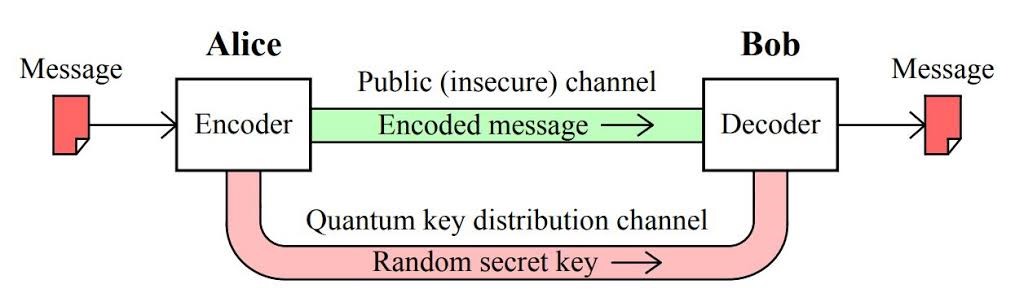
How Quantum Communication Works
- Quantum keys: Streams of photons generate secure quantum keys for communication, ensuring unbreakable encryption.
- Quantum entanglement: Paired photons instantly reflect each other’s state, alerting users to any hacking attempts, providing a foundation for secure network-centric warfare capabilities.
- Transmission modes: While fiber-optic cables offer stability, free-space transmission via satellites is ideal for long distances, enabling global quantum communication networks.
- Current challenge: Atmospheric disturbances increase error rates in free-space QKD, unlike stable fiber networks, presenting obstacles for satellite-based quantum communication.
India’s Progress and Global Context
- IIT-Delhi POC: Experiments are currently proof-of-concept, led by a small team of students, laying the groundwork for future advancements in quantum technologies.
- China’s lead: Demonstrated satellite-based QKD nearly a decade ago, benefiting from early investments in quantum technologies.
- Path ahead: Requires beam control, error reduction, and industry partnerships to achieve satellite QKD, positioning India as a key player in the global quantum communication landscape.
QUANTUM KEY DISTRIBUTION (QKD) |
|
● Definition: QKD uses quantum mechanics to generate unbreakable encryption keys. |
|
● Key principle: Quantum entanglement ensures any interception is immediately detectable. |
|
● Applications: Secures financial transactions, military communication, and critical infrastructure. |
|
● Global race: Countries like China, USA, and EU are investing heavily in quantum communication. |
|
● India’s focus: Part of National Mission on Quantum Technologies and Applications (NM-QTA) with ₹8,000 crore allocated, demonstrating India’s commitment to quantum technology development. |

