 India's No.1 PU & Degree With Integrated IAS & IPS(UPSC/PSC) Training College.


Ice Age Dragonfly Rediscovered in Western Ghats
Ice Age Dragonfly Rediscovered in Western Ghats
Why in the News ?
The elusive dragonfly species Crocothemis erythraea, believed to have colonised southern India during the Pleistocene Ice Age, has been rediscovered in the high-altitude regions of the Western Ghats after decades of misidentification with the more common Crocothemis servilia.
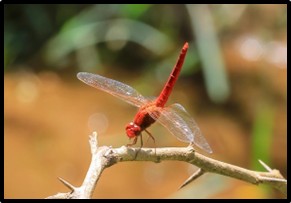
Rediscovery in Western Ghats:
- Initial Confusion:
- In 2018, photographs from Munnar high ranges suggested the presence of erythraea.
- Included in a 2021 monograph on Kerala’s Odonata fauna, but later removed from checklists due to doubts.
- Field Expeditions (2019–2023):
- Conducted across high-altitude sites of southern Western Ghats.
- Confirmed co-existence of servilia (lowlands) and C. erythraea (highlands).
- Key Finding:
- erythraea survived in India since the Ice Age, adapting to cooler montane ecosystems of Western Ghats.
Significance of Rediscovery:
- Scientific Value:
- Establishes Western Ghats as a refuge for ancient Ice Age fauna.
- Highlights need for long-term biodiversity surveys in ecologically sensitive regions.
- Conservation Perspective:
- Rediscovery reinforces the ecological uniqueness of the Western Ghats (UNESCO World Heritage Site).
- Protection of high-altitude habitats is critical to safeguard endemism and climate-resilient species.
- Broader Implication:
Demonstrates how climatic shifts during Pleistocene Ice Age allowed temperate fauna to migrate
- Offers insights into species adaptation and climate change resilience.
About Dragonflies and Biodiversity :● Odonata Order: Dragonflies belong to the order Odonata, important indicators of freshwater ecosystem health. ● Genus Crocothemis in India: ○ C. servilia → widespread in lowland regions. ○ C. erythraea → known from high-altitude habitats in Europe, Asia, Himalayas, and now reconfirmed in the Western Ghats. ● Ecological Importance: ○ Act as bioindicators of water quality. ○ Maintain ecological balance by preying on mosquitoes and other small insects. |

