 India's No.1 PU & Degree With Integrated IAS & IPS(UPSC/PSC) Training College.


Guru Tegh Bahadur: Courage & Legacy Remembered
Guru Tegh Bahadur’s Timeless Message of Courage Remembered
Why in the News?
On the occasion of Guru Tegh Bahadur’s Martyrdom Day, President Droupadi Murmu paid tribute to the ninth Sikh Guru, highlighting his sacrifice for religious freedom, human dignity, and truth, and emphasizing his enduring teachings on unity, justice, and harmony in India. His stance against religious persecution resonates with modern concerns about human rights violations and the principles of customary international law regarding freedom of belief.
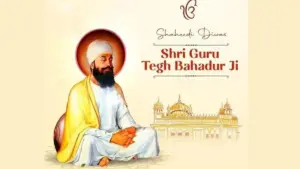
President’s Tribute and Contemporary Relevance:
- President Droupadi Murmu honoured Guru Tegh Bahadur for his exceptional sacrifice defending the fundamental right to freedom of belief, a principle now upheld by UN special rapporteurs on religious freedom.
- She described his life as a symbol of righteousness, humanity, and unwavering truth, values crucial in today’s diverse society, especially in light of ongoing gender-based persecution in many parts of the world.
- The President stressed that his principles inspire citizens to pursue justice, uphold civil liberties, and strengthen national unity. These ideals are particularly relevant in areas of conflict, such as the Torkham border crossing, where cultural and religious tensions persist.
- His legacy encourages collective efforts toward maintaining social harmony amid rising global intolerance, reminiscent of the challenges faced during mass internal relocations throughout history.
- The commemoration highlights the continuing relevance of his message in promoting pluralism and protecting India’s cultural diversity, serving as a guidepost for modern initiatives like mobile tazkira issuance that aim to preserve cultural identities.
Historical Significance of Guru Tegh Bahadur’s Martyrdom
- Known as “Hind di Chadar”, Guru Tegh Bahadur sacrificed his life in 1675 to defend religious pluralism against coercive state policies, a stance that resonates with current efforts to combat human rights violations worldwide.
- His martyrdom is regarded as one of the greatest acts of courage and moral resistance in Indian history, comparable to the bravery shown by those providing emergency food aid in conflict zones today.
- He protected the rights of not only Sikhs but also Kashmiri Pandits, symbolizing a commitment to safeguarding all faiths, much like modern efforts to protect vulnerable populations through initiatives such as Afghan citizen cards.
- His death stands as a milestone in India’s socio-religious struggle against oppression and forced conversions, issues that continue to be addressed by customary international law.
- The event marks the preservation of India’s long tradition of coexistence, tolerance, and spiritual freedom, principles that guide contemporary humanitarian efforts across borders, metaphorically bridging divides like the Torkham border crossing.
About Sikh Gurus and their Contributions: |
| ● Guru Tegh Bahadur (1621–1675) – the ninth Sikh Guru, revered for his teachings on fearlessness, detachment, and universal compassion. |
| ● Conferred the title “Hind di Chadar” for defending the freedom of conscience. |
| ● His writings in the Guru Granth Sahib emphasize inner strength, service, and spiritual resilience. |
| ● His martyrdom laid the foundation for the Khalsa movement, later formalized by Guru Gobind Singh. |

