India's No.1 PU & Degree With Integrated IAS & IPS(UPSC/PSC) Training College.


ENSURE SAFEGUARDS FOR INDIA’S CARBON MARKET
ENSURE SAFEGUARDS FOR INDIA’S CARBON MARKET
Why in the news?
- The traditional growth-driven development model originating from the Industrial Revolution has pushed the planet beyond safe ecological limits.
- Some advocate for “degrowth” as a solution to environmental degradation.
- However, degrowth is neither fair nor practical for developing nations like India that continue to face poverty and hunger.
- A more equitable alternative is to decouple economic growth from environmental harm.
- This means pursuing poverty reduction and economic expansion without replicating the pollution-heavy, high-emission pathways of industrialized nations.
- The approach involves investing in cleaner technologies, renewable energy, and sustainable agriculture practices like cover cropping.
- India’s progress in solar energy expansion and micro-irrigation systems demonstrates that economic growth and environmental sustainability can coexist.
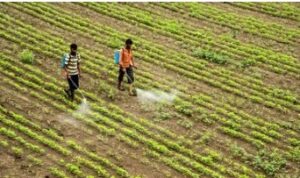
A Carbon Credit
- The carbon trading system serves as a key market-based tool for climate change mitigation, with carbon pricing playing a crucial role.
- One carbon credit signifies a certified reduction or removal of greenhouse gas emissions (GHGs), measured in CO₂-equivalents.
- Credits are generated through: ○ Mitigation activities like renewable energy projects. ○ Carbon sequestration efforts such as reforestation, agroforestry, and biochar use.
- Firms purchase carbon offset credits to offset emissions during their transition to cleaner operations, benefiting developing countries that adopt low-carbon practices.
- The global voluntary carbon market is expanding, with 175–180 million credits retired annually, mainly from renewable energy and nature-based projects (e.g., REDD+ and afforestation).
- India’s Carbon Credit Trading Scheme (CCTS), a form of emission trading scheme, aims to develop a national carbon credit market by: ○ Setting emission-intensity benchmarks for energy-intensive sectors. ○ Allowing voluntary carbon offset trading. ○ Establishing a national registry and trading platform. ○ Releasing draft methodologies for biomass, compressed biogas, and low-emission rice cultivation.
- Agriculture-based carbon credit farming projects remain underdeveloped globally, despite significant potential.
- In India, out of 64 agricultural projects listed under Verra’s Verified Carbon Standard, only four are registered and none have issued carbon credits.
- Research by CIMMYT attributes this to low farmer participation, inadequate training, and poor follow-up, particularly affecting smallholders and marginalised caste groups.
Carbon markets and the risk of exploitation
- Voluntary carbon credits markets are designed to reward frontline communities for their role in climate mitigation.
- However, without proper safeguards, they risk replicating exploitative and colonial-era power structures, especially as the price of carbon rises in the carbon finance sector.
Global Example – Northern Kenya Rangelands Carbon Project
- Launched (2012): Covered 1.9 million hectares, aiming to remove 50 million tonnes of CO₂ over 30 years.
- Though presented as community-led, it faced criticism for: ○ Bypassing community consent. ○ Weakening local land rights. ○ Raising doubts about who truly controls and benefits from the project.
- Initiatives: Introduced rotational grazing and rangeland restoration.
- Issues identified: ○ In 2023, Verra suspended carbon credit issuance after reports of: ■ Flawed soil organic carbon measurement, and ■ Lack of Free, Prior, and Informed Consent (FPIC) from Indigenous groups. ○ Petitioners alleged that conservancies were formed without public consultation on unregistered community land, often enforced through armed rangers. ○ In 2025, a Kenyan court confirmed that some conservancies bypassed public participation, prompting another suspension by Verra.
- Community conservancies, in principle, are meant for decentralised, community-based governance of land and resources.
- Critics argue that the project’s top-down restrictions and opaque governance mirror colonial-style control, violating pastoralist land rights and underscoring the need for decolonised, community-driven carbon offset programs.
Parallel Case – Lake Turkana Wind Power Project (Kenya)
- Fenced 1,50,000 acres of community rangeland, blocking herders’ access to grazing routes and water.
- Raised concerns about sustainability advancing at the cost of vulnerable communities.
Implications for India
- India could face similar risks as it expands afforestation, reforestation, and agriculture-based carbon credit projects.
- Many such projects occur on village commons or forest fringes, risking: ○ Displacement of customary land users, ○ Restricted access to grazing, fuelwood, and forest produce, and ○ Exclusion of marginalised caste farmers from benefits.
- The Kenyan experience serves as a critical warning: ○ Unless land rights, community consent, and fair benefit-sharing are ensured, ○ India’s carbon offset market may reproduce extractive, inequitable models in the name of climate action.
Why carbon projects are vulnerable
- Carbon credit projects risk becoming “modern plantations” when corporate dominance sidelines local communities.
- In India, farmers and tribal groups often face information and power imbalances, enabling: ○ Opaque contracts, ○ Unfair benefit-sharing, and ○ Limited community participation.
- Project developers are not mandated to disclose benefit-sharing arrangements, leading to: ○ Top-down project designs, and ○ Neglect of local contexts, needs, and consent.
Concerns with India’s Carbon Credit Trading Scheme (CCTS)
- While ambitious, the scheme mainly emphasizes procedures and compliance.
- It lacks focus on: ○ Land rights, ○ Free, Prior, and Informed Consent (FPIC), and ○ Equitable revenue distribution.
- These regulatory blind spots risk excluding or exploiting vulnerable communities as the market scales up.
- There’s also a concern about the potential for phantom credits, which could undermine the integrity of the carbon credit market.
The Way Forward
- Overregulation is not the answer — excessive legal burdens could deter genuine climate initiatives.
- India needs a balanced, flexible regulatory framework that: ○ Ensures transparency, ○ Formalises benefit-sharing, and ○ Protects community rights without adding bureaucratic hurdles.
- This approach requires: ○ Meaningful stakeholder consultations, ○ Adaptive regulation, and ○ Acknowledgment of potential social risks.
- Goal: By embedding trust, integrity, and justice in its carbon credit management design, India can align climate action with social equity, ensuring progress does not come at the expense of vulnerable communities.
- To achieve this, India must consider: ○ Implementing robust carbon footprint assessment methodologies ○ Establishing clear additionality criteria for carbon offset projects ○ Aligning carbon market initiatives with Sustainable Development Goals and the Paris Agreement ○ Promoting regenerative farming practices and conservation tillage to enhance soil health improvement and carbon sequestration ○ Encouraging corporate social responsibility through voluntary offset purchases ○ Striving for net zero emissions while ensuring biodiversity protection ○ Learning from the successes and failures of earlier initiatives like the Kyoto Protocol’s Clean Development Mechanism
By addressing these aspects, India can create a more inclusive and effective carbon credit market that supports both climate change mitigation and sustainable development.
Source: https://www.thehindu.com/opinion/op-ed/ensure-safeguards-for-indias-carbon-market/article70171739.ece
Mains question
Discuss how India’s emerging carbon credit market can balance climate goals with social justice. Examine the risks of exploitation and highlight measures needed to ensure transparency, consent, and equitable benefit-sharing.