 India's No.1 PU & Degree With Integrated IAS & IPS(UPSC/PSC) Training College.



Daily Current Affairs Digest | 7th July 2026
Daily Current Affairs Digest | 7th July 2026
1. Federal Inequality and Upper-Middle-Income State Economies
Recent analysis shows that Delhi, Karnataka, Telangana, Tamil Nadu and Gujarat have crossed an upper-middle-income-style benchmark, while India as a whole remains at a lower-middle-income level. This is not an official World Bank classification of Indian states, but it highlights India’s widening regional development gap.
 This issue is important because high-performing states attract more investment, skilled labour, industries, services and global opportunities. However, many northern and eastern states still face agrarian dependence, low industrial growth, weak urbanisation and limited employment diversification.
For UPSC Mains, this topic is useful for questions on inclusive growth, fiscal federalism, migration, regional planning and cooperative federalism. It also reminds us that per capita income alone cannot show the real quality of life, internal inequality or public service delivery within a state.
2. India at the UN Global Dialogue on Artificial Intelligence Governance
India participated in the inaugural UN Global Dialogue on Artificial Intelligence Governance in Geneva. The dialogue focuses on safe, transparent, responsible and inclusive AI governance.
 Artificial intelligence is no longer only a technology issue. It is now linked with human rights, cybersecurity, privacy, employment, digital inclusion, national security and global power competition. India has supported safe and trusted AI while also demanding that the concerns of developing countries and the Global South be included in global AI rules.
India’s domestic initiatives such as IndiaAI Mission, Bhashini and Digital Public Infrastructure can help the country become a bridge between advanced AI economies and developing nations. For UPSC, this topic connects GS Paper II and GS Paper III through global governance, digital economy, technology regulation and ethical use of AI.
3. China’s Submarine-Launched Ballistic Missile Test and Indo-Pacific Security
China’s rare submarine-launched ballistic missile test in the South Pacific has raised strategic concerns. SLBMs are part of the sea-based leg of a nuclear triad and are considered highly survivable because submarines are difficult to detect.
 This development shows China’s growing confidence in sea-based nuclear deterrence and its ability to project military power beyond its immediate region. It also affects Indo-Pacific security and India’s maritime strategy.
For India, the issue is significant because China’s naval presence is expanding in the Indian Ocean and wider Indo-Pacific. India must strengthen maritime domain awareness, anti-submarine warfare capability, indigenous submarine development and credible minimum deterrence while avoiding arms-race instability.
4. ISRO SOLVE Ground Test and Gaganyaan Crew Safety
ISRO successfully conducted the first ground test connected with the Sub-Orbital Launch Vehicle for Experiments, known as SOLVE. This is important for India’s Gaganyaan human spaceflight programme.
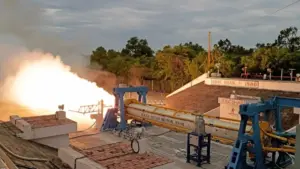 Human spaceflight requires extremely high safety standards. Crew escape systems, parachute recovery, re-entry, splashdown and post-landing recovery must be tested repeatedly before astronauts are sent to space. The SOLVE platform will help validate mission-critical systems, especially parachute recovery and crew module safety.
For UPSC, this topic is relevant under science and technology, space missions, indigenisation and institutional capacity in strategic sectors. It shows that Gaganyaan is not merely a symbolic space mission but a test of India’s engineering, safety, medical and mission-management capabilities.
5. Shivpuri Missile Manufacturing Plant and Defence Industrialisation
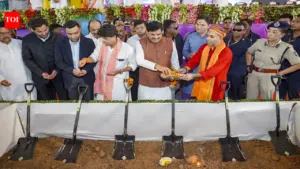
A major private missile manufacturing facility has been initiated in Shivpuri, Madhya Pradesh. The project is expected to support India’s defence production ecosystem, create employment and strengthen domestic missile, propellant and explosives manufacturing.
 India has traditionally depended heavily on defence imports. However, recent policy changes have focused on Atmanirbhar Bharat, defence indigenisation, private-sector participation, positive indigenisation lists, defence exports and defence industrial corridors.
The Shivpuri project is important because it can help create a defence manufacturing cluster, support MSMEs, improve regional industrialisation and reduce import dependence. However, challenges remain in quality control, safety standards, localisation of components, skilled workforce and environmental compliance.




