 India's No.1 PU & Degree With Integrated IAS & IPS(UPSC/PSC) Training College.


Daily Current Affairs Digest | 13th June 2026
Daily Current Affairs Digest | 13th June 2026
1. Mission Sudarshan Chakra: India’s Push for Multi-Layered Air Defence
India has made significant progress in strengthening its indigenous air and missile defence capabilities through recent successful flight tests. These developments are being viewed in the larger context of Mission Sudarshan Chakra, India’s proposed multi-layered air and missile defence shield targeted for development by 2035.
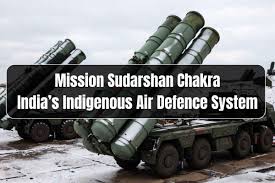 The mission aims to integrate radars, interceptor missiles, satellites, sensors, command-and-control systems and real-time decision networks into a unified national security architecture. This is important for protecting strategic assets, cities, military bases, naval platforms and critical infrastructure from threats such as ballistic missiles, cruise missiles, drones, aircraft and emerging hypersonic systems.
For UPSC, this topic is relevant under GS Paper III: Defence Technology, Internal Security and Border Management. It also connects with India’s strategic deterrence, Atmanirbhar Bharat in defence, maritime security and technological self-reliance.
2. IndiaAI Varya: Indigenous Video Generation Model and AI Sovereignty
India has launched Varya, an indigenous video story generation model under the IndiaAI Mission. The model is designed to make AI-based video generation more affordable, faster and accessible for sectors such as education, media, governance, business and digital communication.
 This development reflects India’s growing focus on AI sovereignty, which means building and governing artificial intelligence systems according to India’s own linguistic, cultural, legal and strategic needs. Since India has vast linguistic and social diversity, indigenous AI models can help improve digital inclusion and support content generation in Indian languages.
However, the rise of generative AI also raises concerns related to deepfakes, misinformation, copyright violations, privacy and bias. For UPSC, this topic is important under GS Paper III: Science and Technology, Artificial Intelligence and Digital Economy, along with ethical and governance dimensions.
3. India-Nepal UPI-NPI Corridor: Boost to Digital Payments and Remittances
India and Nepal have operationalised the UPI-NPI linkage to enable real-time cross-border peer-to-peer remittances. The corridor connects India’s Unified Payments Interface with Nepal’s National Payments Interface, making small-value transactions easier for workers, students, families and individuals across the two countries.
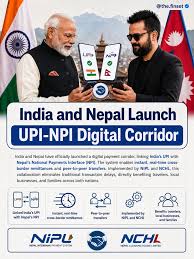 This development strengthens India’s Neighbourhood First Policy and highlights the growing role of Digital Public Infrastructure in foreign policy. Faster and cheaper remittances can reduce dependence on informal money transfer systems and improve transparency in cross-border financial flows.
For UPSC, this topic is relevant under GS Paper II: India and Neighbourhood Relations and GS Paper III: Digital Economy and Financial Inclusion. It also shows how India’s digital payment model is becoming an instrument of economic diplomacy.
4. Odisha Announces Free Education from KG to PG
Odisha has announced free education from Kindergarten to Postgraduate level in government institutions. The move aims to reduce the financial burden on families and improve access to education for poor, rural, tribal and girl students.
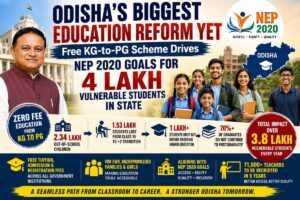 The policy is significant because education plays a major role in social mobility, human capital formation and inclusive growth. Free education can help reduce dropout rates and encourage students to continue higher studies. However, access alone is not sufficient. The success of such a policy will depend on teacher quality, infrastructure, learning outcomes, laboratories, libraries and employability linkages.
For UPSC, this topic is relevant under GS Paper II: Education, Welfare Schemes and Governance and GS Paper III: Human Capital and Inclusive Growth. It can also be used in mains answers related to equity, fiscal federalism and public education reforms.
5. Gulf of Oman Tanker Incident: Concerns over Maritime Security and Indian Seafarers
A Palau-flagged tanker, MT Settebello, was reportedly struck near Oman, leading to the death of three Indian mariners. India lodged a strong diplomatic protest and stated that lethal action against civilian commercial shipping is unacceptable.
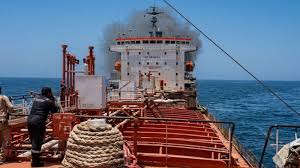 The incident highlights the growing risks faced by commercial vessels in sensitive maritime zones such as the Gulf of Oman and the Strait of Hormuz. These routes are extremely important for global energy transportation and India’s crude oil, LNG and LPG imports.
For India, the issue is not only about maritime security but also about the safety of Indian seafarers, energy security, international maritime law and strategic autonomy. For UPSC, this topic is relevant under GS Paper II: International Relations and GS Paper III: Maritime Security and Energy Security.
6. Defence and Space Sector Updates: Key Snippets for Prelims
Two additional developments are important from the UPSC Prelims perspective.
The Advanced Weapon System Complex at DRDL, Hyderabad reflects India’s effort to strengthen missile and advanced weapon research and development under Atmanirbhar Bharat.
 Similarly, Common Technical Facilities in Gujarat and Tamil Nadu can support India’s growing private space sector by helping manufacturers test and integrate spacecraft, payloads and launch vehicle systems.
These developments are useful for topics related to defence indigenisation, space-sector reforms, private-sector participation and technological self-reliance.




