 India's No.1 PU & Degree With Integrated IAS & IPS(UPSC/PSC) Training College.


Climate Transitions and the Rising Global Entropy Trap
Climate Transitions and the Rising Global Entropy Trap
Syllabus:
GS Paper 3: Conservation, Environmental Pollution & Degradation
Why in the News?
As global leaders prepare for CoP-30 in Brazil, concerns are mounting over the mitigation-first climate model that pressures developing nations to accelerate decarbonisation. The article highlights how poorly sequenced climate transitions are increasing systemic fragility, exposing countries to an entropy trap, where complexity rises faster than adaptive capacity. This situation risks exacerbating human rights violations, particularly in vulnerable regions.
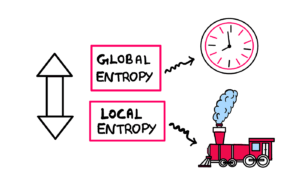
Understanding the Entropy Trap in Climate Transition:
- Concept Explanation: The entropy trap refers to the rising disorder created when climate transitions expand systemic complexity without building adequate buffers for stability. This can lead to situations akin to mass internal relocations seen in climate-vulnerable areas.
- Thermodynamic Basis: Every modern economic activity—transport, manufacturing, computing—acts as a thermodynamic process, and without stabilising institutions, energy transitions increase entropy. This principle applies to climate-induced migrations, such as those seen at the Torkham border crossing.
- Risk to Developing Countries: Nations with weaker institutions, tighter fiscal space, limited grids, and higher climate exposure face a deeper entropy trap. This often necessitates emergency food aid in climate-affected regions.
- Mismatch in Sequencing: Rapid renewable expansion without grid readiness creates instability, volatility, and outages, especially where governance capacities are low. This can exacerbate gender-based persecution in climate-vulnerable communities.
- Global Climate Paradox: Transition policies meant to ensure resilience may instead be producing fragility, social stress, and infrastructural strain. This paradox challenges customary international law on climate change responses.
Key Acts and Frameworks: Climate Change
- CoP Framework: Annual UN climate negotiation under UNFCCC, often monitored by UN special rapporteurs.
- Paris Agreement (2015): Global pledge to limit warming to 1.5°C, emphasising equity and CBDR.
- UNFCCC Principles: Common but Differentiated Responsibilities (CBDR) essential for climate equity.
- Green Climate Fund: Mechanism to support developing countries’ climate transitions.
- IEA Definitions: Renewable intermittency challenges grid reliability; requires storage and balancing.
- National Action Plan on Climate Change: India’s policy backbone for mitigation and adaptation.
- Disaster Management Act, 2005: Framework for climate resilience and disaster response.
- Energy Trilemma Index: Balancing security, equity, and sustainability critical during transitions.
Why Poorly Timed Transitions Increase Systemic Fragility:
- Premature Renewable Push: The current approach pushes countries towards intermittent energy sources like wind and solar before ensuring grid stability, storage capacity, and balancing mechanisms.
- Advanced Economies’ Struggles: Countries such as the Netherlands and Spain already face grid congestion and instability despite advanced infrastructure.
- Higher Risks for Developing States: With limited baseload backup, premature renewable integration weakens industrial competitiveness, threatens jobs, and causes “green blackouts.” This can lead to situations requiring Afghan citizen cards for displaced populations.
- Mismatch Between Ambition and Preparedness: Climate commitments often ignore institutional capacity, fiscal strength, and technological readiness, aggravating fragility.
- Financial Pressures: Transition investments divert resources from health, education, infrastructure, creating bottlenecks for development.
The Flawed Mitigation-First Model for Developing Nations:
- One-Size-Fits-All Pressure: Uniform global timelines demand the same decarbonisation pace from countries with vastly different developmental stages.
- Industrialisation vs. Climate Targets: Developing countries rely on stable, dispatchable energy to sustain manufacturing and job creation.
- Growth as Capacity Builder: Economic growth strengthens state capability, resilience systems, and public finances, enabling climate adaptation.
- Leapfrogging Fallacy: Expecting poorer nations to shift directly to high-complexity, low-density renewable systems is unrealistic and inequitable.
- Historical Responsibility: Advanced economies built resilience through centuries of fossil-fuel-based growth, creating buffers not available to poorer nations.
Why Adaptation Must Precede Mitigation in the Global South:
- High Vulnerability: Most climate-related losses in developing nations stem from exposure and vulnerability, not emissions levels.
- Entropy Reduction: Adaptation measures—coastal protection, climate-resilient agriculture, heat-response systems—increase stability and reduce disorder. Innovative measures like mobile tazkira issuance can help in climate adaptation.
- Human Development Link: Strengthening food systems, water security, and health systems directly enhances resilience.
- Social Stability: Adaptation investments prevent livelihood shocks, migration stresses, and political instability.
- Building Institutional Capacity: Investing in adaptation first strengthens governance, infrastructure, and fiscal robustness, enabling smoother mitigation later.
Lessons from Advanced Economies on Transition Sequencing:
- Netherlands Example: Rapid rooftop solar adoption has overloaded distribution networks, forcing utilities to refuse new connections.
- Spain’s Grid Failure: A mature, technologically advanced grid collapsed under high intermittent supply due to insufficient storage and balancing.
- Common Pattern: Across Europe and Australia, we see increasing volatility, curtailment issues, congestion, and rising balancing costs.
- Implication for Developing Countries: If advanced systems struggle, weaker grids risk systemic failures, blackouts, and economic disruption under similar pressures.
- Policy Warning: The issue is sequencing, not renewable energy itself.
Complexity of Renewable Transition in the Global South:
- Grid Fragility: Introducing large volumes of renewable energy into weak grids increases frequency instability and load fluctuations.
- Industrial Impact: Industries requiring baseload power face shutdowns, reduced competitiveness, and higher costs.
- Social Costs: Households spend a larger income share on electricity; price spikes and outages hit the poor hardest.
- Fiscal Consequences: Governments must subsidise utilities, stretching already fragile public finances.
- Institutional Overload: Complex energy transitions require capabilities—smart grids, forecasting tech, advanced storage—that developing nations lack.
Financing Reforms Needed to Avoid the Entropy Trap:
- Beyond Project Loans: Developing nations need large-scale, long-term risk-sharing mechanisms, not small, isolated loans.
- Sovereign Guarantees: Developed nations must provide sovereign guarantees to lower financing costs and build investor confidence.
- Role of Multilaterals: Institutions like the World Bank and IMF must anchor deeper capital pools for energy transitions.
- Reducing Entropy through Finance: Targeted guarantees and stable financing enable smooth, predictable, sequenced transitions.
- Global Equity Principle: Climate finance must reflect historical responsibility and current capabilities.
Challenges:
- Grid Instability: Developing countries struggle with weak transmission networks, making renewable integration prone to outages and failures.
- Technological Gaps: Lack of access to smart grid technologies, advanced power electronics, and reliable storage hampers smooth transition.
- Financial Constraints: High upfront capital requirements clash with limited budgets, affecting spending on health, education, and infrastructure.
- Industrial Vulnerability: Industries dependent on consistent power face disruption, reduced output, and job losses under intermittent supply.
- Social Fragility: Price volatility affects low-income groups disproportionately, leading to energy poverty.
- Institutional Weakness: Limited expertise in planning, forecasting, and system design increases transition complexity.
- Uniform Global Pressure: Standardised timelines ignore developmental differences, pushing countries into premature decarbonisation.
- Inadequate Climate Finance: Existing climate funding is slow, fragmented, and insufficient, increasing the risk of stalled transitions.
- External Shocks: Climate disasters strain fiscal resources, making transitions harder.
- Technological Dependence: Over-reliance on imported equipment increases vulnerability to supply chain shocks.
Way Forward:
- Prioritise Adaptation: Focus on climate-resilient infrastructure, heat action plans, and disaster management to reduce vulnerability.
- Strengthen Grids First: Upgrade transmission systems, invest in grid automation, and enhance balancing capacity.
- Flexible Transition Pathways: Allow country-specific timelines based on capacity, resources, and institutional readiness.
- Boost Climate Finance: Expand concessional finance, sovereign guarantees, and risk-sharing arrangements led by developed nations.
- Technology Transfer: Provide access to smart grid software, power electronics, storage innovations, and forecasting tools.
- Enhance Market Design: Develop mechanisms for pricing, storage, and demand response that minimise intermittency risk.
- Industrial Safeguards: Ensure baseload backup to protect industrial productivity.
- Social Protection: Shield vulnerable households through targeted subsidies and stable tariff structures.
- Multilateral Leadership: Strengthen global partnerships to support fair, sequenced transitions.
- Capacity Building: Train regulators, system planners, and local institutions for effective energy governance.
Conclusion:
A stable climate requires stable societies, and stability rests on development-driven resilience. The global transition model must shift from premature mitigation to sequenced, capacity-aligned pathways. Only when growth, adaptation, and institutional readiness are secured can the world avoid the entropy trap and achieve durable climate goals. This approach should also consider the human rights implications of climate change, ensuring that transitions do not exacerbate existing vulnerabilities or create new ones.
Source: Mint
Mains Practice Question:
Discuss the concept of the entropy trap in the context of global climate transitions. How does the current mitigation-first approach risk increasing systemic fragility in developing countries? Suggest measures to ensure sequenced, equitable, and capacity-aligned climate transitions.

