 India's No.1 PU & Degree With Integrated IAS & IPS(UPSC/PSC) Training College.


India-US EOD Exercise Boosts Naval Cooperation
India-US Navies Strengthen Cooperation Through EOD Exercise
Why in the News ?
The Indian Navy-US Navy Explosive Ordnance Disposal (EOD) Exercise 2026 began at Kochi on August 10 and will continue until August 14. The five-day exercise aims to improve interoperability, specialised skills and professional cooperation between both navies.
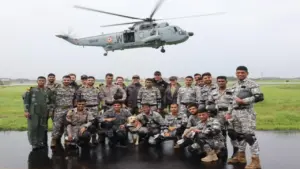
Exercise 2026: Key Features and Objectives
- The Indian Navy-US Navy EOD Exercise 2026 is being conducted at the Southern Naval Command, Kochi.
- The five-day bilateral exercise is scheduled from August 10 to August 14, 2026.
- It focuses on strengthening interoperability between specialist diving and Explosive Ordnance Disposal (EOD) teams of the two navies.
- The exercise will facilitate professional knowledge-sharing and enhance the operational capabilities of participating personnel.
- Major activities include Subject Matter Expert Exchanges, enabling specialists from both sides to share operational experience.
- Personnel will undertake cross-training to familiarise themselves with different techniques and procedures.
- The exercise will also feature equipment demonstrations involving specialised EOD and diving equipment.
- Scenario-based practical exercises will provide participants with experience in responding to complex underwater and explosive-ordnance situations.
- Such engagements enhance the ability of both navies to operate together during maritime security and emergency-response operations.
India-US Defence Cooperation: Strategic Significance
- The Indian Navy and the US Navy have conducted joint Salvage and EOD exercises since 2005.
- The 2026 engagement marks the eighth edition of this specialised bilateral training exercise.
- Regular exercises institutionalise defence cooperation and facilitate the exchange of operational best practices.
- EOD capabilities are important for dealing with unexploded ordnance, underwater mines, improvised explosive devices and other explosive hazards.
- Cooperation in specialist domains strengthens maritime interoperability and mutual understanding between the two navies.
- The exercise contributes to India’s broader objective of developing advanced naval capabilities and strengthening partnerships with like-minded maritime powers.
- Such exercises also support wider Indo-Pacific maritime security cooperation, particularly in areas requiring specialised naval expertise.
About Explosive Ordnance Disposal and Naval Cooperation:
- Explosive Ordnance Disposal (EOD) refers to the detection, identification, rendering safe and disposal of explosive devices and unexploded ordnance.
- EOD operations require specialised personnel, equipment, protective systems and carefully coordinated procedures.
- Naval EOD additionally involves dealing with underwater mines, explosive remnants and hazards around ships, ports and coastal infrastructure.
- Mine countermeasures are an important component of maritime security because sea mines can restrict naval movement and threaten commercial shipping.
- Interoperability means the ability of forces from different countries to communicate, coordinate and operate effectively together.
- Bilateral military exercises help improve operational readiness, interoperability, information-sharing and mutual trust.
- For India, such cooperation strengthens its role as a net security provider and supports maritime stability in the Indo-Pacific region.

