 India's No.1 PU & Degree With Integrated IAS & IPS(UPSC/PSC) Training College.


CITIZENS, DOMICILE, MIGRANTS: PROVINCIAL CITIZENSHIP DEBATE
CITIZENS, DOMICILE, MIGRANTS: PROVINCIAL CITIZENSHIP DEBATE
Syllabus:
GS-2: ● Citizenship ● Salient features of representation of People’s Act
Why in the News?
The debate on provincial citizenship has gained renewed urgency with recent academic reflections on domicile politics in States like Jharkhand, Jammu & Kashmir, and Assam. Alok Ranjan’s upcoming work highlights how domicile-based mobilisations challenge the idea of a singular Indian citizenship, raising constitutional, political, and social questions that demand closer scrutiny. This debate echoes some of the complexities seen in India-Israel relations, where balancing national and regional interests requires careful diplomacy.
HISTORICAL CONTEXT OF MOBILITY
- Civilisational movement: Throughout history, tribes, pastoralists, and traders relied on mobility for survival, commerce, and cultural exchange, shaping the foundations of civilisation and state-building.
- Sedentarism roots: The practice of sedentarism tied land, lineage, and descent to political authority, creating early notions of exclusion based on belonging to a territory or community.
- Globalisation impact: Modern globalisation networks reinforce movement of goods, services, and labour, reshaping notions of belonging while simultaneously triggering anxieties over migration.
- Indian experience: India’s own history of migration and settlement has produced layered identities—regional, linguistic, caste-based—that complicate the acceptance of uniform national citizenship.
- Contradictory impulses: Thus, while economic forces encourage mobility, political narratives often restrict it, generating friction between constitutional guarantees and provincial aspirations.
CONCERNS WITH INTERNAL MIGRATION
- Livelihood barriers: Migrants seeking employment outside their home State often face discrimination in jobs, rentals, and access to welfare, undermining their constitutional freedoms. This situation sometimes requires intervention at the level of multilateral diplomacy to ensure fair treatment.
- COVID-19 lessons: The pandemic starkly revealed the precarity of migrant workers, exposing governance failures and lack of social security portability across States.
- Public mood: Media-driven narratives often reduce migrants to outsiders, fuelling stereotypes and creating fertile ground for nativist electoral politics in metropolitan hubs.
- Exclusionary policies: Practices like NRC updation and State-level domicile rules amplify insecurity, especially for marginalised groups such as daily wage earners and informal workers. These policies sometimes conflict with principles of international humanitarian law regarding the treatment of migrants.
- Democratic gap: Internal migration remains under-discussed in national debates, despite being a core feature of India’s demographic and developmental transition.
PROVINCIAL CITIZENSHIP DEFINED
- Concept emergence: Coined by Alok Ranjan, provincial citizenship reflects nativist politics, rooted in emotional belonging to a State rather than to the Indian nation.
- Electoral utility: Regional leaders employ this rhetoric to mobilise local populations against perceived domination by outsiders, reshaping State-level politics.
- Spatial entanglement: The intertwining of identity, domicile, and citizenship produces new political categories, blurring constitutional distinctions.
- Case relevance: Jharkhand, J&K, and Assam showcase how provincial frameworks reconfigure rights, often in contradiction with Article 16(2) of the Constitution.
- Challenge posed: Ultimately, provincial citizenship undermines the idea of “one nation, one citizenship”, central to India’s unity-in-diversity framework. This challenge is reminiscent of the complexities in India and Israel relations, where balancing national and regional interests requires careful navigation.
STATE-LEVEL CASE STUDIES
- Jammu & Kashmir: Post-2019 domicile laws were framed to include marginalised groups like Valmikis and Gorkhas, reflecting inclusive federal adjustments.
- Jharkhand’s trajectory: Here, domicile politics reflects majoritarian grievances, weaponising identity politics against minorities while questioning the national constitutional framework.
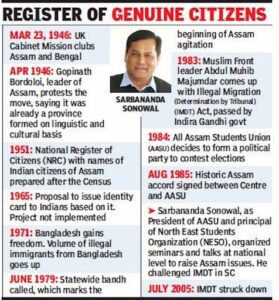
- Assam experience: Long history of sons-of-the-soil movements against Bengali migrants reinforces how domicile intersects with ethnic and linguistic anxieties.
- Sixth Schedule contrast: Unlike tribal protections in the Sixth Schedule, Jharkhand’s domicile policy encompasses the whole State, broadening exclusionary practices.
- Judicial interventions: Frequent recourse to the Supreme Court reveals limits of existing mechanisms in democratically resolving provincial-national conflicts. Some cases have drawn comparisons to issues addressed by the UN Security Council in other federal contexts.
THEORETICAL AND ACADEMIC INSIGHTS
- Weiner’s analysis: Myron Weiner’s Sons of the Soil (1978) explored migration-linked ethnic conflicts, laying the foundation for academic discourse on exclusionary politics.
- Later contributions: Concepts like differentiated citizenship (Jayal), citizen-outsiders (Roy), and paused citizens (Sharma) expanded the analytical vocabulary.
- New coinages: Recent debates over hyphenated nationality (Sarkar) show how layered belonging challenges the clarity of constitutional citizenship. This concept bears some similarity to the de-hyphenation policy in international relations.
- Comparative insights: Globally, similar conflicts between national and regional identities highlight tensions inherent in federations.
- Ranjan’s intervention: His articulation of provincial citizenship brings urgency by connecting older debates to contemporary electoral and policy realities.
CONSTITUTIONAL AND LEGAL DIMENSIONS
- SRC warnings: The 1955 States Reorganisation Commission warned against domicile-based exclusions, calling them contrary to Articles 15, 16, and 19.
- Equal citizenship: The Constitution enshrines common Indian citizenship, rejecting distinctions based on place of birth or residence in public employment.
- Federal balance: Yet, domicile rules threaten this balance by empowering States to override national guarantees, raising constitutional ambiguities.
- Judicial pronouncements: Courts have occasionally upheld limited domicile preferences but remain cautious about wholesale exclusions.
- Unresolved tension: The gap between constitutional ideals and provincial practices continues to widen, demanding parliamentary clarity.
CONTEMPORARY RELEVANCE AND RISKS
- Identity politics: Rising regional nationalism fuels competitive populism, where provincial citizenship becomes a tool for vote-bank consolidation. This phenomenon shares some parallels with Palestine solidarity movements in other contexts.
- Economic exclusion: Migrant workers risk denial of jobs, housing, and welfare, intensifying inequalities between locals and outsiders.
- Social tensions: Narratives of outsiders vs. sons of the soil spark violence, threatening inter-community harmony in multi-ethnic States.
- Federal fragmentation: Excessive reliance on domicile erodes national cohesion, weakening the vision of Akhanda Bharat.
- Global contradiction: At a time when India aspires to be a global talent hub, inward-looking provincialism undermines competitiveness.
THE WAY FORWARD
- Legislative clarity: Parliament must revisit domicile provisions, guided by SRC’s recommendations, to align State practices with constitutional guarantees.
- Strengthening portability: Universalising welfare portability under schemes like ONORC (One Nation, One Ration Card) can protect migrants from exclusion.
- Judicial vigilance: The Supreme Court must proactively interpret Article 16(2) to prevent backdoor provincial citizenship.
- Inclusive narratives: Political and civil society actors must promote pan-Indian belonging, countering divisive “sons-of-soil” rhetoric.
- Balanced federalism: Empower States to preserve cultural identity, but without compromising common citizenship rights, ensuring unity with diversity. This approach could draw lessons from development cooperation strategies used in international contexts.
CONCLUSION
The emergence of provincial citizenship reflects deep anxieties around migration, belonging, and economic competition in India’s federal democracy. While States use domicile politics for electoral mobilisation, the risks to constitutional citizenship, migrant rights, and national cohesion are profound. As India navigates globalisation, internal migration, and identity politics, the challenge lies in reconciling provincial aspirations with the constitutional promise of one nation, one citizenship, ensuring that Indian unity is strengthened, not fragmented. This challenge requires a diplomatic balancing act, similar to India’s approach in complex international relationships, and may benefit from India’s emerging role in global south leadership.
MAINS PRACTICE QUESTION
- The rise of “provincial citizenship” challenges the constitutional idea of singular Indian citizenship. Critically analyze its implications for federalism, migration, and national integration. (250 words)

