 India's No.1 PU & Degree With Integrated IAS & IPS(UPSC/PSC) Training College.


China’s Blue Alert: Typhoon Fengshen Raises Concerns
China Issues Blue Alert as Typhoon Fengshen Strengthens, Raising Air Quality Concerns
Why in the News?
China has issued a Blue Alert as Typhoon Fengshen intensifies near the Philippines, bringing heavy rainfall and strong winds to southern China, Taiwan, and the South China Sea region. The typhoon’s approach is not only causing immediate weather concerns but also raising alarms about potential impacts on air quality and pollution accumulation. There are fears that the storm’s effects could extend to Vietnam’s central coast later this week, potentially affecting air quality standards across a wide area.
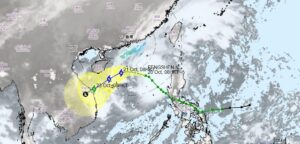
Typhoon’s Path and Intensity
- Typhoon Fengshen was positioned west of Luzon Island, Philippines, before moving northwestward at 25–30 km/h.
- Forecasts indicate it will enter the South China Sea, heading toward Vietnam’s central coast.
- The typhoon is expected to weaken gradually after landfall, but its effects on atmospheric conditions may linger.
- Strong winds and heavy rainfall are likely across southern China and Taiwan, potentially leading to smog formation and affecting the air quality index in urban areas.
- Regions like Zhejiang, Fujian, and Guangdong are on high alert for gales and sea surges, with local pollution control boards monitoring the situation closely.
Regional Weather and Air Quality Impacts
- Heavy rainstorms are predicted in Taiwan, potentially disrupting transport and power supply. This could temporarily improve air quality by washing out pollutants, but may lead to increased pollution accumulation once the storm passes.
- Maritime activities across the East China Sea and Taiwan Strait are expected to face turbulence, which could affect the dispersion of air pollutants and impact air quality standards.
- Fishermen and coastal residents have been advised to suspend operations, which may temporarily reduce vehicular emissions in affected areas.
- Local governments have initiated disaster preparedness measures and evacuation protocols, including considerations for maintaining air quality during and after the storm.
- The storm may cause flooding and landslides in mountainous and low-lying areas, potentially leading to increased unburnt carbon particles in the atmosphere.
Key points: Typhoon and Air Quality |
| ● Typhoon Classification: A tropical cyclone forming in the Northwest Pacific Ocean; similar storms are called hurricanes in the Atlantic. |
- China’s Four-Tier Weather Alert System:
- Red – Most severe
- Orange – Severe
- Yellow – Moderate
- Blue – Lowest level of alert
- Blue Alert: Indicates strong winds or rain expected within 24 hours, which can affect air quality and pollution accumulation.
- South China Sea Cyclones: Frequently impact China, Vietnam, and the Philippines due to warm ocean currents, often leading to changes in atmospheric conditions.
- Responsible Agency: China Meteorological Administration (CMA) monitors and issues alerts under its National Early Warning System, working in conjunction with pollution control boards to assess potential impacts on air quality standards.
- Air Quality Concerns: Typhoons can lead to temporary improvements in air quality due to rain washing out pollutants, but may also cause secondary particle formation and affect crop residue management practices in agricultural areas.

