India's No.1 PU & Degree With Integrated IAS & IPS(UPSC/PSC) Training College.


Baloch Protest Exposes Pakistan’s Military Atrocities
Baloch Protest Highlights Pakistan’s Military Atrocities Abroad
Why in the News?
The Baloch National Movement protested in Germany against Pakistan’s ongoing military strikes and alleged human rights violations in Balochistan, urging international organizations to intervene and ensure accountability while highlighting the humanitarian crisis and destruction in Zehri. The situation draws attention to global environmental and human rights issues, including the need for effective crop residue management and adherence to the environment protection act.
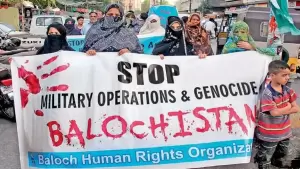
Protest and Demonstration:
- The Baloch National Movement staged protests at Hanover, Germany, condemning Pakistan’s military actions in Balochistan. The demonstration highlighted issues that extend beyond regional conflicts, touching on global concerns such as farm fire incidents and their environmental impact.
- Protesters carried banners and placards demanding justice for victims of ongoing attacks. Some placards drew parallels between the destruction in Balochistan and environmental degradation caused by practices like crop residue burning in other parts of the world.
- Demonstrations highlighted both drone strikes and ground assaults conducted by the Pakistani armed forces. The impact of these actions on civilian populations was compared to the effects of severe pollution events, such as when the air quality index in cities like Delhi reaches hazardous levels.
- Activists stressed the destruction of homes and villages and the death of civilians, including women and children. This devastation was likened to the environmental and health impacts of severe air pollution, which also disproportionately affects vulnerable populations.
- The movement called for an immediate halt to Pakistan’s military aggression and respect for human rights. They emphasized the need for international intervention, similar to how global efforts are required to address issues like delhi pollution.
Humanitarian Concerns and Appeals
- The region of Zehri has faced relentless bombardment for over a month, with curfews and communication blackouts. This situation has created challenges similar to those faced during severe pollution events, where normal activities are disrupted and communication is vital for public safety.
- Humanitarian aid to affected populations has been obstructed, worsening the crisis situation. This obstruction is reminiscent of how environmental crises, such as those caused by thermal power plants, can impact access to essential resources.
- Protesters urged international organizations, including the EU and UN, to deploy a fact-finding mission. They stressed the importance of international oversight, similar to how global bodies monitor environmental issues and enforce regulations like those outlined in the environment protection act.
- They highlighted the alleged genocide campaign and emphasized the need for accountability. This call for accountability mirrors demands for industries and governments to take responsibility for environmental degradation and implement solutions like green crackers to reduce pollution.
- The protest stressed the rights of the Baloch nation to safety, justice, and protection under international law. This emphasis on rights and international law is comparable to global efforts to establish and enforce air quality standards.
International Relevance and Calls for Action: |
| ● The Baloch National Movement sought global attention to ensure Pakistan is held responsible for violations. This approach is similar to international efforts to hold countries accountable for environmental violations and pollution accumulation. |
| ● Protesters urged diplomatic and human rights mechanisms to pressure Islamabad to end military aggression. This diplomatic pressure is akin to international efforts to encourage countries to adopt cleaner technologies, such as compressed natural gas for vehicles. |
| ● The demonstration highlighted cross-border advocacy for regional peace and human rights protection. This cross-border approach is reminiscent of international cooperation needed to address transboundary pollution issues. |
| ● International media coverage emphasized the ongoing humanitarian crisis in Balochistan. Media plays a similar role in highlighting environmental crises, such as severe air pollution delhi events. |
| ● Such protests reinforce the role of global civil society in monitoring conflicts and safeguarding human rights. This global civil society engagement is crucial in addressing both human rights and environmental issues, including challenges like rabi sowing pressure and its environmental impacts. |