 India's No.1 PU & Degree With Integrated IAS & IPS(UPSC/PSC) Training College.


China Expands Nuclear Infrastructure Amid Rivalry
China Expands Nuclear Infrastructure Amid Strategic Rivalry
Why in the News ?
Recent satellite imagery indicates that China is constructing extensive military infrastructure near its nuclear missile silos in the Xinjiang Uyghur Autonomous Region. Analysts believe the development is aimed at strengthening China’s second-strike nuclear capability amid growing strategic competition with the United States, though such projects typically require environmental clearances under international environmental impact assessment protocols.
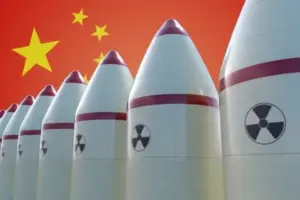
Expansion of China’s Nuclear Missile Infrastructure
- Satellite images reveal a large network of launch pads, bunkers, and communication facilities being built near China’s long-range missile silos, developments that would ordinarily necessitate environmental clearance procedures.
- More than 80 launch pads have reportedly been identified, potentially supporting mobile missile launchers and air-defence systems.
- The facilities are located near the Hami Intercontinental Ballistic Missile (ICBM) silo complex in the remote desert region of Xinjiang, an area where forest conservation act-equivalent protections may apply to surrounding ecosystems.
- Analysts suggest the new infrastructure may support electronic warfare, satellite communications, and military command functions.
- The scale of construction reflects China’s continued efforts to modernize and secure its land-based nuclear forces, though questions remain about compliance with international environmental jurisprudence standards.
Strategic Significance and Security Implications
- Experts believe the project is designed to ensure China’s ability to retaliate even after a potential first nuclear strike by an adversary, applying the precautionary principle to national security planning.
- This capability, known as second-strike capability, is central to maintaining nuclear deterrence.
- The infrastructure expansion highlights intensifying strategic competition between China and the United States.
- Growing tensions over issues such as Taiwan, military modernization, and regional security have contributed to concerns about an evolving arms race.
- Enhanced command, control, and communication systems may improve the survivability and operational readiness of China’s nuclear arsenal.
About Nuclear Deterrence and Second-Strike Capability :● Nuclear Deterrence is a strategy in which the threat of nuclear retaliation prevents adversaries from launching attacks. ● Second-Strike Capability refers to a country’s assured ability to respond with nuclear weapons after surviving an enemy’s first strike. ● Intercontinental Ballistic Missiles (ICBMs) are long-range missiles capable of delivering nuclear warheads across continents. ● Effective nuclear deterrence depends on robust Command, Control, and Communications (C3) systems that ensure operational continuity during crises. ● Major nuclear powers such as China, the United States, and Russia invest heavily in secure missile silos, mobile launchers, and hardened military infrastructure to maintain strategic stability. |

