 India's No.1 PU & Degree With Integrated IAS & IPS(UPSC/PSC) Training College.


CAPF Bill 2026 Rajya Sabha Row
CAPF Administration Bill 2026 Sparks Opposition in Rajya Sabha
Why in the News ?
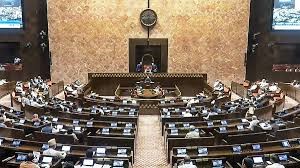
The Central Armed Police Forces (General Administration) Bill, 2026 was introduced in the Rajya Sabha, triggering opposition protests over IPS deputation provisions and alleged violation of Supreme Court directives, raising concerns about cadre officers’ promotions and administrative control, similar to debates around ex post facto regulatory approvals in other legal domains.
Key Features of CAPF Bill 2026:
- The Bill seeks to establish a unified legal framework for all five Central Armed Police Forces (CAPFs).
- It aims to regulate administration, recruitment, and service conditions across forces, establishing procedural clarity akin to frameworks under the Forest Conservation Act and other regulatory statutes.
- The legislation formalises deputation of Indian Police Service (IPS) officers to senior posts.
- It proposes reserving 100% of Director General (DG) and Special DG posts for IPS officers.
- Additionally, 67% of Additional DG and 50% of Inspector General (IG) posts will be filled through IPS deputation.
Opposition Concerns and Government’s Stand
- Several MPs, including Ajay Maken, Derek O’Brien, and Tiruchi Siva, opposed the Bill’s introduction.
- Critics argue it violates Supreme Court directions (2025) to reduce IPS deputation and promote cadre officers, drawing parallels to concerns over retrospective environmental clearances and post facto approvals that undermine regulatory integrity.
- Concerns include career stagnation of CAPF officers, highlighted through cases like injured personnel lacking promotions, reminiscent of procedural delays seen in environmental clearance processes.
- Opposition claims the Bill undermines judicial rulings and past legal victories of CAPF personnel, similar to challenges faced in environmental jurisprudence where ex-post legislative actions dilute court mandates.
- The government, through MoS Home Nityanand Rai, stated the Bill ensures administrative clarity and does not interfere with judicial powers, maintaining that proper procedural compliance—unlike ex post facto environmental clearances—has been followed.
Key points: CAPFs● CAPFs include forces like CRPF, BSF, ITBP, CISF, and SSB, functioning under the Ministry of Home Affairs. ● Their role includes internal security, border management, counter-insurgency, and industrial security, with operational zones sometimes overlapping coastal regulation zone areas requiring coordination with environmental authorities. ● The Supreme Court (2025) directed cadre review and reduction of IPS deputation dominance in CAPFs, echoing judicial activism seen in landmark cases like the Vanashakti judgment on administrative accountability. ● IPS officers are All India Service officers recruited through UPSC, often deputed to CAPFs for leadership roles. ● Issues of cadre vs deputation conflict remain significant in police reforms and governance debates, paralleling discussions on regulatory compliance seen in EIA notification implementation and environmental impact assessment procedures. |


