 India's No.1 PU & Degree With Integrated IAS & IPS(UPSC/PSC) Training College.


BRICS Expansion: A New Global Power Shift
BRICS EXPANSION SIGNALS GLOBAL POWER SHIFT
Syllabus:
GS Paper – 2
Groupings & Agreements Involving India and/or Affecting India’s Interests
Why in the News?
Prime Minister Narendra Modi is set to attend the 17th BRICS Summit in Rio de Janeiro, Brazil, marking an important moment for India as the grouping undergoes historic expansion. With BRICS member countries now including 13 members and over 30 aspirants, India’s leadership role in a changing world order gains renewed urgency and visibility.
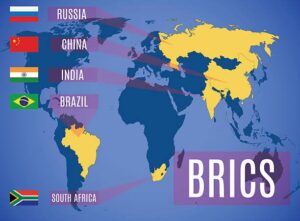
BRICS EVOLUTION
- Historic Genesis: The BRICS alliance, originally comprising Brazil, Russia, India, China, and South Africa, was formed to give emerging economies a unified voice in global affairs.
- Growth Trajectory: Since its first summit in Yekaterinburg (2009), the BRICS group has steadily expanded its influence and ambition.
- New Additions: The latest expansion of BRICS includes several Global South nations, increasing BRICS’ strategic depth and economic diversity.
- Endurance Factor: Despite Western skepticism, BRICS has survived for 16 years, signaling a systemic shift towards a multipolar world order.
- Global Representation: BRICS countries now account for 40% of the global economy (PPP terms) and include both major energy producers and consumers.
INDIA’S INCREASING ROLE
- Prime Presence: India has participated in every BRICS summit at PM level, demonstrating its long-term commitment to the BRICS alliance.
- Economic Ascent: India’s GDP has grown from $1.3 trillion in 2009 to $4 trillion today, enhancing its clout within the group and India in BRICS has become increasingly significant.
- Strategic Bridge: India straddles both G7 and BRICS, offering a unique balancing act in geopolitics and promoting strategic partnerships.
- Reform Champion: India actively promotes UN reform, counter-terrorism, climate justice, and inclusive development within BRICS, showcasing its role in global economic governance.
- Next Chair: India will assume the BRICS presidency next year, giving it an opportunity to shape the group’s future trajectory and further the expansion of BRICS.
GEO-STRATEGIC SIGNIFICANCE
- South Solidarity: The inclusion of new Global South members offers a chance for BRICS to promote a fairer international order and enhance south-south cooperation.
- US Reaction: The Trump administration labeled BRICS “dead” and threatened economic retaliation if an alternative BRICS currency was pursued.
- Currency Concerns: While India does not endorse de-dollarization, it seeks realistic alternatives to protect economic sovereignty and promote economic diversification.
- China-Russia Dynamics: With President Xi absent and Putin attending virtually, India’s leadership space within BRICS widens.
- Avoiding Confrontation: BRICS does not seek to oppose the West, but offers a platform for diverse systems to coexist in a multipolar world order.
CHALLENGES WITHIN BRICS
- Internal Differences: Political disputes among BRICS member countries, such as India-China tensions, remain unresolved.
- Institutional Gaps: Despite strong rhetoric, institution-building within BRICS has been modest even with fewer members. However, the New Development Bank stands as a notable exception.
- Coordination Issues: Managing 13 members and 30 aspirants will require streamlined coordination and clear objectives for the expanding BRICS.
- Policy Alignment: Members have different economic systems and foreign policies, complicating consensus-building and economic integration.
- Trust Deficit: The need to maintain separate group identities (G7 & BRICS) reflects a fragmented world order and challenges to multilateral cooperation.
INDIA’S DIPLOMATIC STRATEGY
- Bridging Power: India plays a connector role between the West and the Global South, aligning interests when possible and promoting foreign policy autonomy.
- Realist Approach: India’s strategy is non-confrontational, focusing on issue-based cooperation rather than ideological battles.
- Rupee Promotion: India cautiously promotes rupee internationalization, seeking greater currency autonomy within the global financial architecture.
- Independent Voice: India is not an agent provocateur, but refuses to let BRICS be hijacked by any geopolitical agenda, maintaining its strategic autonomy.
- South Advocacy: India champions Southern voices, offering its own models in development, climate, and digital governance, furthering the role of BRICS in global affairs.
WAY FORWARD FOR BRICS
- Inclusive Agenda: BRICS must now focus on inclusive growth, sustainable development, and global equity.
- Common Currency: A shared BRICS currency must be debated with realism, given the complex macroeconomic stakes.
- Reform Push: The bloc should jointly demand reform in global financial institutions like the IMF and World Bank.
- People Focus: Strengthening people-to-people ties and cultural cooperation can help deepen trust among BRICS members.
- Global Stability: In a world marked by crises and fractures, BRICS can play a stabilizing role if it remains united and purposeful.
Conclusion
The expansion of BRICS signifies a broader realignment in global power structures. India, as a founding member and rising economy, is positioned to lead responsibly within this multipolar coalition. For BRICS to succeed, it must transcend internal differences and focus on inclusive cooperation that benefits the global South and the international community at large. The BRICS+ expansion offers new opportunities for investment and technology transfer, potentially reshaping the global economic landscape.
Source : HT
Mains Practice Question:
BRICS has undergone a significant transformation in its structure and global perception. Critically analyze India’s evolving role within BRICS and how it can shape the bloc’s future in an increasingly multipolar world.

